Specialty Acquisition
Metal Roofing Leads
Metal roofing leads from Rent Roofing Sites come from the same owned local websites, domains and tracking numbers as the rest of the network, but the intake questions and the territory match are built around one fact: "metal roofing" covers a new install on open framing, a conversion away from shingle or flat membrane, a repair on an existing standing-seam or exposed-fastener roof, and a one-off accessory or trim question, and those four are not the same job.
A homeowner or building owner who types "metal roof cost" or "metal roofing near me" into a search bar is often comparing an idea against a shingle replacement quote they already have, not committing to a material. The intake record captures what they say they want, what roof is currently on the building if they know it, and why they're considering metal at all. It does not confirm panel profile, substrate condition, or whether the structure can take the fastening pattern a given system needs.
Rent Roofing Sites does not decide which of these enquiries your company accepts. Metal installation and metal repair are frequently different skill sets, different crews, and in some companies, different subcontractor relationships entirely. During onboarding you tell the network which metal-roofing services you're actually equipped and licensed to perform, and the delivery gate for this specialty inventory only routes an enquiry to you when it matches.
Whether a metal-roofing territory is open in your market depends on a Roofing Market Review, because the live network is a small number of sites across PA, TX and IL and inventory is reviewed per market, never guaranteed nationally. This page explains how a metal-specific enquiry is captured and matched so you can evaluate the offer against your own crew capability, not a claim that a territory is open right now.
Updated 2026-10-03. Terms, prices and availability are set by the written agreement for your market.
Identifying installation, conversion and repair interest in metal roofing
Metal roofing search traffic is unusually mixed compared with a straightforward shingle-replacement search. Some of the people landing on a network site are building a new structure or adding onto an existing one and have open framing with no roof to tear off at all. Others own a shingle or flat roof today and are shopping the idea of converting to standing-seam or exposed-fastener metal for longevity or appearance reasons. A third group already has a metal roof and is calling about a specific leak, a loose panel, or a failed fastener. A fourth, smaller group has a narrow accessory question — a snow-guard installation, a flashing detail around a new skylight, a color-match question on an addition.
These four buyer types do not sort themselves. A homeowner who says "I need a metal roof" might mean any of the four, and the intake form cannot infer which one from word choice alone. What it can do is ask directly: is there an existing roof on this structure, and if so, what is it; is the project new construction, a conversion, or a repair; and if it's a repair, what specifically is the complaint.
Why the distinction changes the sales conversation
A new-construction metal install is usually priced and scoped against open framing, trusses, and a panel layout plan — closer to a standard installation conversation with a general contractor or builder in the loop. A conversion project has to account for what's being removed, whether the existing deck and structure can support the new system's attachment method, and whether code requires venting changes. A repair call is almost always smaller, faster to close, and far more sensitive to response time than either of the other two, because a failed seam or a popped fastener on a metal roof is actively letting water in.
| Project type | Typical scope signal | Typical urgency |
|---|---|---|
| New construction | Open framing, builder or owner involved | Scheduled, tied to build timeline |
| Conversion from shingle/flat | Existing roof to remove, structural check needed | Planned, comparison shopping common |
| Repair on existing metal | Specific leak, panel, seam or fastener complaint | Often same-week or sooner |
| Accessory/trim question | Single detail, not a full roof project | Low, informational |
Your company sets, during onboarding, which of these four you want routed to you at all. A crew built around standing-seam installation with a dedicated crane and seaming machine may have no interest in a one-panel repair call; a repair-focused metal crew may not want new-construction leads that require a multi-week install schedule. The acceptance list you set is what the specialty inventory gate checks before an enquiry is assigned to your territory.
Qualifying the requested system and the property's existing roof
"Metal roofing" is not one product. Standing-seam panels, exposed-fastener (R-panel or corrugated) panels, stone-coated steel shingles, and metal shingle or shake profiles are different systems with different price points, different installation methods, and in many markets, different crews who specialize in one over another. A homeowner describing their goal as "metal roof" may mean any of these, or may simply mean "not shingles" without a system preference at all.
The intake record captures whatever system preference the caller states, including no preference, and separately records what they say the current roof is if the project is a conversion or repair. This is a stated preference, not a confirmed specification. No online form can verify panel gauge, finish, or manufacturer from a property owner's description, and a caller who says "standing seam" because they saw a photo online may end up choosing a different system once your team explains the cost and maintenance differences.
What the existing roof tells you before a visit
- A property owner who already has an architectural shingle roof and wants metal is weighing a bigger up-front cost against stated longevity — a conversation, not a given.
- A property owner with an existing metal roof calling about a leak may have a roof your company didn't originally install, with a fastening pattern or panel profile your crew needs to identify on site.
- A flat or low-slope building owner asking about metal is often actually asking about a standing-seam retrofit over an existing membrane, which is a structural and drainage conversation, not a simple swap.
- New construction with no existing roof removes the removal and disposal variable entirely, which changes both your price and your schedule.
Where a caller has used chat or voice on a network site and mentions a manufacturer name, a specific panel type, or a color, that detail is recorded in the problem notes exactly as stated. Treat a brand or profile name in a lead record as a starting point for a conversation about what's actually appropriate for the building, the roof pitch, and the local code, not as a locked-in order.
Photos, when a caller supplies them through chat or a form upload, can help your estimator see the general condition and roof type before the first call, but they are not a substitute for an in-person look at fastener condition, seam integrity, or deck condition underneath the panels.
TEACHING DIAGRAM
Metal-project decision tree (illustrative example)
- 1Enquiry
Caller mentions metal roofing on a network site through a call, form or chat.
- 2Existing-roof check
Intake asks whether a roof currently exists and what it is, separating new construction from conversion and repair.
- 3System and reason
Stated system preference and the caller's reason — durability, appearance, storm history — are recorded as given.
- 4Capability match
The enquiry is checked against your stated metal-system capabilities before routing to your territory.
- 5Site visit
Your estimator measures pitch, penetrations and code requirements in person — the only point a real spec is set.
Capturing homeowner goals such as appearance, durability and project timing
Metal roofing buyers, more than buyers of almost any other roofing material, tend to have a specific reason for considering the product, and that reason shapes how your sales conversation should go. Some are driven by stated lifecycle expectations and want to stop replacing a roof every fifteen to twenty years. Others are driven by appearance — a specific panel look, a color that matches a renovation, or a style choice for a new build. Others are reacting to a recent hail or wind event and comparing a metal reroof against another round of shingle replacement they expect to face again later.
The intake form asks for the reason in the caller's own words where it's offered voluntarily, rather than forcing a selection from a fixed list that may not match why they're actually calling. A caller who says "I'm tired of replacing my roof after every storm" is telling your estimator something useful about what claim to make and what not to overpromise — your team should never promise a storm-proof roof, but can honestly describe material differences the caller can evaluate.
Timing signals worth separating from urgency
A homeowner planning a metal reroof for "sometime next year" after they finish saving, or tying it to an upcoming kitchen or addition project, is a very different conversation from someone who wants a quote this week because their shingle roof just failed inspection on a home sale. Both are legitimate metal-roofing enquiries, but the first needs nurturing and a longer follow-up cadence, while the second needs a fast site visit before the deal moves on.
- "No rush, just researching" — appropriate for email or a scheduled call rather than a same-day dispatch.
- "Within the next few months" — worth a site visit scheduled around your actual install calendar, since metal lead times from suppliers can run longer than shingle.
- "As soon as possible" tied to an active leak, storm damage, or a real-estate deadline — worth a faster callback regardless of the system eventually chosen.
Supplier lead time is a detail worth raising early with a metal buyer who has a firm timing goal. Panels are frequently fabricated to order rather than pulled from shelf stock, and if a caller has a hard deadline — a home sale, an insurance claim window, an event at the property — your team benefits from knowing that before committing to a date the supply chain can't support.
None of this — reason, timing, or urgency — is a verified fact about the property or a commitment the caller is bound to. It is what was said at the moment of enquiry, useful for prioritizing your callback order and shaping the first conversation.
Matching leads to the roofer's actual metal-system capabilities
Metal roofing is one of the clearest cases in the network where capability matching matters more than it does for a standard shingle replacement, because the skill, tooling and crew needed for standing-seam work is meaningfully different from a shingle or even a flat-roof crew's normal day. A company without a seaming machine, without crew experience in metal flashing details, or without a supplier relationship for a given panel profile is not well served by a lead asking for that system, even if the company does excellent work on other roof types.
During onboarding, your company states which metal systems it installs and repairs — standing-seam, exposed-fastener, metal shingle, stone-coated steel, or some combination — and whether that work is performed by your own crew or through a subcontractor relationship you manage. The specialty inventory gate on this page's territory uses that capability list, alongside the services and ZIPs you've confirmed, to decide whether a given metal enquiry is routed to you at all.
Why an unmatched lead costs you more than it looks like
A standing-seam conversion lead routed to a company that only does exposed-fastener installs wastes two things: your team's time quoting a job you'd have to sub out or decline, and the homeowner's time waiting on a quote that was never going to be competitive. Keeping your accepted metal-system list current is the single biggest factor in whether metal leads in your territory are worth the rental.
- List every metal system your crew installs directly, separate from systems you'd only quote through a subcontractor.
- State clearly if you perform metal repairs but not full installs, or the reverse — many companies specialize in one.
- Flag if your crew's metal capability is seasonal or tied to a specific installer's availability.
- Update your acceptance list immediately if you add or lose a crew capability, rather than letting it go stale.
| Your stated capability | Lead type routed to you |
|---|---|
| Standing-seam install + repair | New construction, conversion and repair enquiries for standing-seam |
| Exposed-fastener install only | New construction and conversion enquiries; repair calls filtered unless you also accept those |
| Metal repair only, no new install | Repair and troubleshooting calls on existing metal roofs |
MODEL CALCULATOR
Illustrative Metal-Roofing Territory Cost Model
A simple model to frame costs against an assumed close rate. All numbers are inputs you set — not measured results.
- Month-1 cost (rental + setup) (US dollars)
- $1,494
- Modeled jobs won (leads x close rate) (count)
- 0.9
- Modeled revenue (jobs won x average job value) (US dollars)
- $16,200
Illustrative only. Leads-per-month and close-rate are not published figures and must be set by you based on your own market and crew capability; actual results depend on territory, season, and installer availability.
Preparing for measurement, accessories and scope discussions
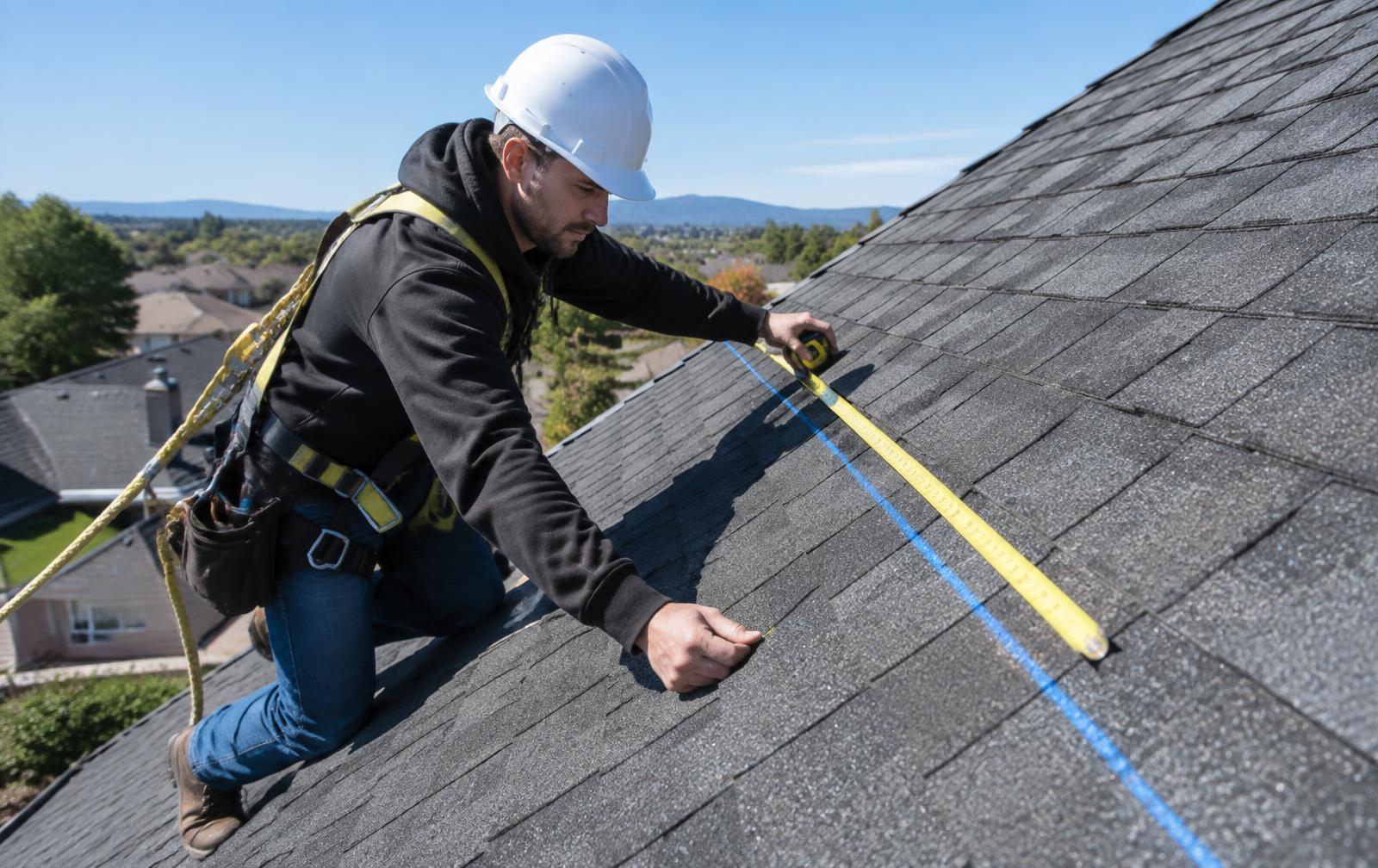
Once a metal-roofing lead is matched and scheduled, the site visit is where the real scope gets defined, because almost nothing about panel quantity, trim length, or accessory needs can be determined from an online form. Roof pitch, valley and hip configuration, penetrations for vents and chimneys, and existing structural condition all have to be measured or assessed in person before a firm price is possible.
What to confirm before or during the visit
- Roof pitch and whether it falls within the manufacturer's installation range for the panel system being discussed.
- Number and type of penetrations — plumbing stacks, chimneys, skylights — each of which needs specific flashing detail.
- Snow-load and wind-load requirements under local code, which affect fastening pattern and sometimes panel gauge.
- Rooftop accessories the owner wants, such as snow guards, solar-ready standoffs, or gutter integration, since these affect both material order and labor time.
- Whether underlayment, decking repair, or ventilation changes are needed, which only becomes clear once old roofing is removed or the structure is inspected directly.
A metal roofing estimate built only from an intake record's square-footage guess or a caller's self-measured roof dimensions is a common source of mis-quoting. Panels are frequently ordered to specific lengths from the ridge or eave, and a measurement error can mean an expensive reorder or a visible seam where one wasn't planned. Field measurement, not the lead record, is what should drive a material order.
Accessory-only enquiries
Not every metal-roofing call is a full project. Some callers only want a snow-guard retrofit, a ridge-vent upgrade, or a color-matched flashing repair on an addition. These are smaller jobs, but they're real revenue and often come from homeowners who already have metal and trust the material — worth keeping distinct in your own CRM from full installation or conversion leads so your team doesn't treat a small accessory request as a stalled big-ticket sale.
Assessing a metal-roofing territory without treating every roof enquiry as suitable
Not every residential or commercial roof in a given territory is a realistic metal-roofing candidate, and not every roof enquiry that mentions metal is a serious one. Some callers are comparing metal against a shingle quote mainly out of curiosity about cost, with no real intention of paying the premium most metal systems carry over asphalt shingle. A territory evaluation for metal leads should account for that mix rather than assuming every enquiry converts at the same rate a straightforward repair lead would.
Rent Roofing Sites does not publish search volumes, conversion rates, or lead counts for metal roofing in any market, because keyword volume, difficulty and CPC data for a given area are unmeasured, and the network does not guarantee lead counts under any circumstance. What a Roofing Market Review can walk through is the structure of the opportunity: whether a site already exists in the territory and what metal-specific content and intake questions it already runs, what the specialty inventory gate requires before metal leads are routed at all, and what the written agreement says about term and exit.
Questions worth bringing to a Roofing Market Review
- Is there an existing site covering this territory, and does its intake already separate metal installation, conversion, repair and accessory enquiries?
- What metal systems does the current content and intake ask about, and does that match what local crews in this market actually install?
- How is the specialty inventory gate applied — does my stated capability list change which enquiries reach me versus a general roofing lead?
- What does the written agreement say about exclusivity and what happens to the territory if I pause or end a rental?
- What CRM delivery options exist for my software, and what status are they in right now — live, built, or in testing?
A worked illustrative model can frame the cost conversation even without published demand figures. If a metal-focused territory runs at the $997 per month site-rental list price plus a one-time $497 setup on the first plan, and your company closes one mid-size metal conversion or installation project in a given month, the revenue from that single job will typically exceed the monthly rental by a wide margin — but this is a labeled assumption about your own average job value and close rate, not a projection Rent Roofing Sites is making about your market.
| Assumption | Value |
|---|---|
| Monthly site rental (list) | $997 |
| One-time setup (first plan) | $497 |
| Metal projects needed to cover month-1 cost | Varies by your average job value — model assumption only |
WORKSHEET
Metal Enquiry Worksheet
Use this to prepare for a first callback on a metal-roofing lead before scheduling a visit.
0 of 9 checked
EXPLAINER VIDEO · 51 SECONDS
Metal Roofing Leads: Fit Your Crew Before You Buy
Narrated explainer with diagrams drawn for this page. No customer data or private screens are shown.
Video transcript
Metal roofing is a different trade from shingles. Standing seam, exposed fastener panels, and custom trim all need the right tools and experience. A metal enquiry can be a small repair, like loose screws or a leaking seam, or a full install or retrofit. Decide which you actually want. Good intake asks about roof shape, the panel type the homeowner has in mind, and their timeline, without quoting a price online. Send metal leads to the estimator who knows metal. The lead is delivered into the CRM you already use. Metal enquiries are a specialty and vary by market. Book a Roofing Market Review to see if your area has them.
STRAIGHT ANSWERS
Questions roofers ask
Can I accept metal installation leads without taking metal repairs?
Yes. During onboarding you state your metal-system capabilities separately for new installation, conversion and repair, and the specialty inventory gate uses that list to decide which metal enquiries are routed to your territory.
Will leads distinguish a system preference from a confirmed specification?
The lead record shows whatever system the caller said they want, such as standing-seam or exposed-fastener, but that is a stated preference, not a verified specification. Pitch, substrate and code requirements still need to be confirmed on site before anything is ordered.
How do you match metal enquiries to specialist roofing partners?
Your stated metal-system capabilities, confirmed during onboarding, are checked against each enquiry's project type and requested system. Only the one roofing company assigned to that territory and matching the relevant capability receives the lead.
Does a metal-roofing lead confirm the roof can structurally support the requested system?
No. Structural suitability — framing, deck condition, and load capacity — can only be assessed by someone physically inspecting the building. The intake record captures what the caller wants and knows, not an engineering determination.
What happens if a caller asks about metal but the property isn't a good fit?
That's a normal outcome of a site visit, not a failure of the lead. Your estimator may find the pitch, structure or budget doesn't support the system the caller asked about, and can offer alternatives or explain why metal isn't the right fit for that building.
Is metal-roofing territory availability guaranteed in my market?
No. Metal-roofing specialty inventory is reviewed per market as part of a small live network across PA, TX and IL, and is never guaranteed nationally. A Roofing Market Review checks what currently exists before any agreement is discussed.
Can I see what reason a homeowner gave for wanting metal before I call them back?
When a caller volunteers a reason — durability, appearance, recent storm damage — it's recorded in the lead's problem notes as stated, which can help your team prepare for the first conversation, though it's not independently verified.
See what exists in your market
A Roofing Market Review is a short call. We check which ZIPs and services you want, whether a network asset or territory is open there, and which plan options would apply. No lead counts or results are promised.