
Repair Acquisition
Roof Repair Leads
A roof repair lead starts as a symptom, not a scope of work: a ceiling stain, a missing shingle after wind, a soft spot a homeowner noticed while walking the attic. Rent Roofing Sites records that symptom through local sites, domains and tracking numbers the network owns and operates in a given market, matches it to a territory, and routes it to the one roofing company assigned there.
Repair work runs on different math than replacement work. Tickets are smaller, drive time matters more relative to the job value, and a diagnostic visit can cost you money before you've billed a dollar if it isn't priced or scheduled with intent. This page is written around that economics, not around a generic lead-gen pitch.
Every repair record includes what the caller actually said: contact details, property address, the problem as described, and urgency where given. It does not include a diagnosis, a measurement, or confirmation that the caller can authorize spending. Your team still makes the call on whether the symptom matches a job your crew can serve profitably, and still confirms access and authority before a truck rolls.
Whether a repair territory is currently open in your market depends on a Roofing Market Review, because the live network is a small number of sites across PA, TX and IL markets and specialty inventory is reviewed per market, never guaranteed nationally. What follows explains how repair leads are built so you can evaluate the offer against your own numbers.
Updated 2026-10-03. Terms, prices and availability are set by the written agreement for your market.
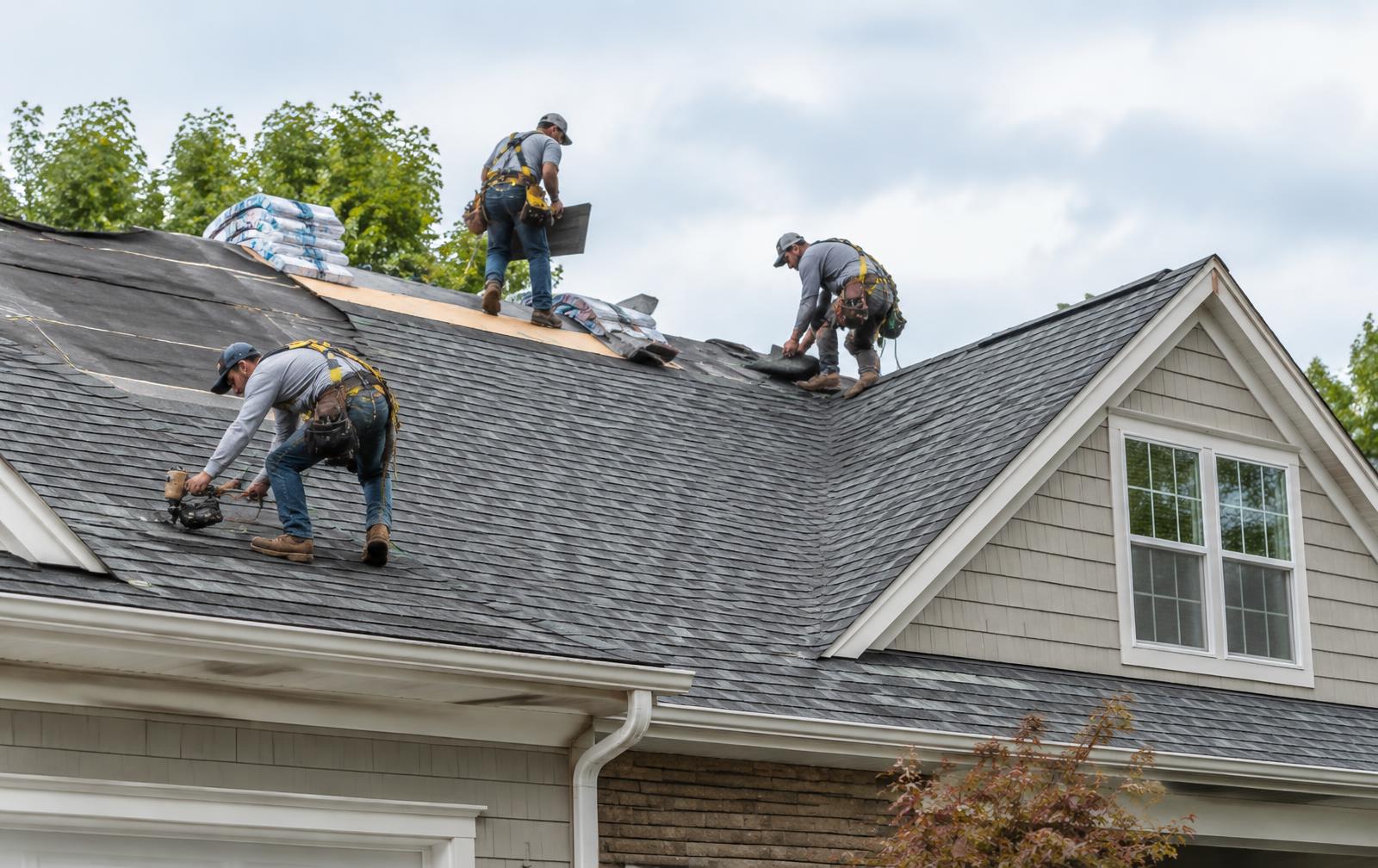
Building a repair lead program around your minimum service economics
A repair call that nets a $280 ticket and a 45-minute drive each way is a different business decision than a repair call five minutes from your shop. Before any repair territory is worth renting, your company needs its own floor: the minimum ticket size, maximum drive time, and diagnostic fee structure that make a repair visit worth sending a truck. Rent Roofing Sites does not set that floor and does not know your crew costs, fuel costs or labor rates well enough to set it for you.
The acceptance list you set during onboarding is where this economics gets applied. If your company only dispatches repair crews inside a 15-mile radius and charges a diagnostic fee for anything under a certain ticket size, that should be stated plainly so enquiries outside your real range aren't routed to you in the first place. A territory match that ignores your drive-time ceiling isn't a benefit, it's a scheduling headache.
Repair margin depends on volume per trip, not ticket size alone
Repair profitability for most companies comes from stacking visits efficiently, not from any single ticket. A crew that can complete three repair calls in a tight geographic cluster on one day earns more than a crew that drives 40 minutes each way for a single job, even if that single job has a larger ticket. This is why the service-radius setting in your onboarding profile matters more for repair than it does for replacement, where a single visit often justifies a longer drive on its own.
- Set a drive-time ceiling for repair separate from replacement, since repair tickets rarely absorb long trips the way a full reroof does.
- Decide whether a diagnostic fee applies, and if so, make sure your team states that on the first call, not after the visit.
- Identify a minimum ticket size below which a repair isn't worth dispatching a crew, and route those calls to a different response (phone guidance, a bundled visit, a referral) instead of a standalone trip.
- Track actual repair margin by territory in your own numbers, not assumed margin, so you can tell the network if a given area's repair mix isn't working for your crew structure.
| Factor | Tight cluster visit | Long single-trip visit |
|---|---|---|
| Drive time (round trip) | 15–20 minutes | 60–90 minutes |
| Visits possible same day | 3–4 | 1 |
| Revenue risk if symptom doesn't match job | Lower — short recovery time | Higher — half a day lost |
Capturing the leak or damage symptom without diagnosing it remotely
A repair intake record reads like a homeowner's description, because that's what it is: "brown ring on the living room ceiling after the last rain," "a few shingles blew off during the storm Tuesday," "soft spot near the chimney flashing." That language is useful for triage — deciding who calls back first and how fast — and useless as a diagnosis. No phone call or web form can tell you whether a stain traces to flashing, a failed pipe boot, ice damming, or a plumbing leak with nothing to do with the roof at all.
Treating a symptom description as a confirmed cause is the single fastest way to misquote a repair before anyone has been on the roof. A "small leak" reported by a homeowner can turn out to be rotted decking once a tech pulls back the shingles, and a "storm damage" call can turn out to be a single lifted tab that a quick seal fixes in ten minutes. The intake exists to route and prioritize, not to replace the person who climbs the ladder.
What the symptom record is good for
- Flagging active-leak language so it reaches a faster queue than a cosmetic concern.
- Giving your tech a starting point — location, recent weather, how long the problem has been present.
- Separating interior-only reports (stains, drips) from exterior-only reports (visible missing material) so the right person is dispatched.
- Noting whether the homeowner has already had another contractor look at it, which can change how the first conversation goes.
What it is not good for
- Quoting a repair price before anyone has seen the roof.
- Assuming the leak source matches where the stain appears — water travels along framing before it shows up.
- Deciding whether the fix is a patch, a section replacement, or something structural.
Where the homeowner used chat or voice on a network site and recording or an AI summary was enabled and permitted, your team may also receive a transcript or call summary alongside the written notes. That additional detail still doesn't substitute for a physical look, but it can tell your tech what questions the homeowner already asked and answered, saving a few minutes of repeat conversation on the doorstep.
TEACHING DIAGRAM
Repair-fit matrix (illustrative example)
- 1Symptom reported
Homeowner describes a leak, stain or missing material through a network-owned repair-market site.
- 2Distance check
Address compared against your set repair-service radius, separate from your replacement radius.
- 3Access notes reviewed
Gate, pet, ladder and roof-pitch details confirmed before the scheduling call ends.
- 4Scope and fee stated
Diagnostic fee (if any) and same-visit repair authority explained to the homeowner upfront.
- 5Diagnostic visit
Tech confirms actual cause and scope on the roof — the only point a real diagnosis happens.
Distinguishing localized repair interest from broader replacement concerns
Some repair enquiries are exactly that — a single, bounded symptom on an otherwise sound roof. Others are a repair question sitting on top of a roof that's close to the end of its service life, where a homeowner describes "a leak" when the underlying situation is years of deferred maintenance and a roof that needs replacing, not patching. The intake form can't tell these two apart, because the homeowner usually can't either.
This is the repair-to-replacement mismatch that matters most for your scheduling and your sales conversation. A homeowner who calls about a single leak but has a 25-year-old roof with granule loss and multiple prior patches is a different conversation than a homeowner with a five-year-old roof and one storm-damaged section. Your first call is where this gets sorted, using a short set of questions rather than assuming either direction from the intake notes alone.
- Ask the roof's approximate age, if the homeowner knows it.
- Ask whether this is the first repair call, or whether they've had other issues (missing shingles, other leaks, prior patch work) in recent years.
- Ask when the current symptom started and whether it's gotten worse.
- Note any visible condition details the homeowner volunteers — granule loss in gutters, curling shingles, visible daylight in the attic.
None of these questions substitutes for a visit, but they help your team decide whether to send a repair tech alone or to schedule a visit that also includes a broader roof assessment. A company that treats every repair call as strictly a patch job risks under-selling a homeowner who actually needs — and may be ready to discuss — a full replacement. A company that pushes replacement on every repair call risks losing the smaller job and the trust that comes with fixing a problem honestly first.
Setting the acceptance boundary clearly
If your company only runs repair crews and refers replacement work elsewhere, or if you only take repair calls on roofs under a certain age, say so during onboarding so your acceptance list reflects it. If you run both repair and replacement crews, your intake notes and first-call script should include a prompt for the tech to flag replacement potential back to your estimating team without promising the homeowner an outcome on that first call.
Using travel distance, access and appointment windows to qualify fit
Repair work is uniquely sensitive to three practical constraints: how far the crew has to drive, whether the roof and problem area are physically reachable, and how tight the appointment window needs to be. A repair enquiry that fails any of these three can turn into a wasted trip even when the underlying job would have been straightforward.
Travel distance
A repair ticket rarely carries enough margin to absorb an hour of drive time each way. Confirm the address against your set repair radius before scheduling, not after a truck is already en route. If your onboarding profile sets a 15-mile repair radius and a lead lands at 22 miles, that's worth flagging back rather than quietly stretching your crew's day.
Access to the problem area
A steep-slope roof, a chimney cricket repair, a second-story-only leak, or a locked gate are not unusual complications on a repair call — they're the norm. If the intake notes mention a locked side gate, a dog on the property, or a roof section that needs a specific ladder setup, confirm those details on the scheduling call so the tech arrives equipped rather than discovering the obstacle on site.
Appointment window tightness
A leak call from a homeowner who works from home and can accommodate a wide window is easier to fit into a repair schedule than one who needs a narrow slot between work shifts. Confirming real availability — not a vague "sometime this week" — during the scheduling call reduces reschedules and no-shows, which cost repair crews more relative to a day's total revenue than they cost a replacement crew with a single scheduled visit.
| Check | Risk if skipped |
|---|---|
| Distance within set repair radius | Trip cost exceeds ticket value |
| Access notes confirmed (gate, pets, ladder placement) | Wasted trip, rescheduled visit |
| Real appointment window confirmed | No-show or repeated rescheduling |
| Symptom matches crew type dispatched | Wrong tools or wrong tech sent |
MODEL CALCULATOR
Repair Acceptance Calculator
Model whether a repair call is worth dispatching, using your own travel cost, diagnostic time and minimum charge. All numbers are inputs you set.
- Modeled drive cost (labor only) (US dollars)
- $33
- Modeled minimum recovered value per visit (US dollars)
- $345
- Modeled day capacity if all slots fill at minimum ticket (count)
- 1,000
Illustrative only. Drive time, labor cost and ticket size are your own estimates, not measured or published figures. Actual margin depends on your crew structure, fuel costs and the mix of jobs that actually come in.
Setting clear expectations for diagnostic visits and repair scope
Homeowners calling about a leak often expect a quick fix at a predictable price, and sometimes that expectation is reasonable — a lifted shingle or a failed pipe boot can be a short, bounded job. Other times the visible symptom is the smallest part of a larger problem, and the homeowner needs to understand, before your tech arrives, that the visit is a diagnosis first and a repair second.
Whatever your company's standard is — a flat diagnostic fee, a fee credited toward the repair if the homeowner proceeds, or no separate fee at all — state it on the scheduling call, not as a surprise when the tech arrives. Nothing damages a repair relationship faster than a homeowner who thought the visit itself carried no cost, and nothing wastes more of your team's time than reopening that conversation on someone's doorstep.
What to confirm before the visit
- Whether a diagnostic or trip fee applies, and what it covers.
- That the fee (if any) does or doesn't apply toward the repair cost if the homeowner proceeds that same visit.
- Whether your tech is authorized to perform a same-visit repair for small, bounded fixes, or whether every job requires a separate quote first.
- What happens if the diagnosis reveals a larger scope than the homeowner described — a follow-up call, a written estimate, or an on-the-spot conversation.
This is also where the repair-to-replacement mismatch resurfaces in practice. A tech who finds rotted decking under a "small leak" needs a clear path to tell the homeowner what they found, what it means, and what the next step is — without over-promising a price before measurements are taken or a formal proposal is written. Having that script ready, before leads start arriving, keeps a diagnostic visit from turning into an awkward improvisation.
Measuring repair enquiries by serviceable opportunities and completed work
The honest way to evaluate a repair territory is against your own outcome data, not against published lead-count or traffic figures Rent Roofing Sites does not publish and does not guarantee. SEO keyword volumes, difficulty and CPC for repair-related searches in a given market are unmeasured, so the useful comparison is between enquiries your team actually received and what happened after your first call — not an assumed volume.
Your portal's outcome tracking (new, contacted, appointment, estimate, won, lost) is the record that matters here. If a repair territory consistently produces enquiries that fall outside your service radius or ticket-size floor, that's visible in how many leads stall at "contacted" without reaching an appointment. If your team is reaching appointments but not closing, that's a different problem — possibly pricing, possibly scheduling, possibly a mismatch between the symptom described and what your crew actually found.
A worked illustrative model
Consider a repair-only territory at the $997/month site rental list price with a one-time $497 setup fee on a first plan. If your company's average repair ticket is a labeled assumption of $450 and your team closes a modeled four repair jobs in a month from that territory, the math can work on paper — but this is an illustrative model with assumed inputs, not a projection of what any specific territory will produce. Actual volume depends on the market, your response speed, your acceptance list, and your crew's capacity that month.
| Assumption | Value |
|---|---|
| Monthly site rental (list) | $997 |
| One-time setup (first plan) | $497 |
| Average repair ticket (your estimate) | Model assumption only |
| Repair jobs needed to cover month-1 cost | Varies by your actual ticket size and close rate |
Pay-per-call access, at a $97 list price per qualified call via prepaid credits, is a separate option from the site rental, not something that stacks automatically on top of it — treat the two as distinct ways to access repair enquiries and discuss which fits your volume needs on a Roofing Market Review call.
WORKSHEET
Repair Lead-Readiness Checklist
Work through this before repair leads start arriving in a territory.
0 of 9 checked
EXPLAINER VIDEO · 54 SECONDS
How to Tell Whether a Roof Repair Lead Fits Your Business
Narrated explainer with diagrams drawn for this page. No customer data or private screens are shown.
Video transcript
A homeowner calls about a brown stain on the ceiling. That is a symptom. Nobody on the phone can diagnose the roof from it. Good intake records what the homeowner sees, where it shows, and when it started. The cause is found on the roof by your team. Next, check fit. Is the address inside your service radius, and can your crew safely reach the roof and attic? Apply your own numbers: travel time, diagnostic time, and your minimum charge. Some repair calls turn out to need replacement, and the homeowner should hear that honestly. The lead arrives in your CRM with the details captured, ready for a scoped visit. Repair inventory varies by market, so book a Roofing Market Review.
STRAIGHT ANSWERS
Questions roofers ask
Can I receive repair enquiries without accepting full replacements?
Yes. During onboarding you set which residential services your company accepts — repair, replacement, or both — and that acceptance list is part of how the network determines whether a given enquiry is routed to you.
Will homeowners know whether the diagnostic visit carries a charge?
That depends on what your company's scheduling team tells them. Rent Roofing Sites does not set your diagnostic-fee policy; your team should state it clearly during the scheduling call so there's no surprise when the tech arrives.
What roof-problem details should a useful repair lead include?
A useful record includes the homeowner's description of the symptom — location, how long it's been happening, recent weather — plus contact details, address and urgency. It does not include a diagnosis, since that only happens once a tech is physically on the roof.
How is a repair lead different from a replacement lead in this program?
Both can arrive through the same intake because homeowners don't always know which their roof needs. A repair lead tends to describe a bounded symptom; a replacement lead more often mentions age, a full reroof, or multiple prior issues. Your first call sorts the two using direct questions, not an assumption baked into the form.
Can I set a minimum ticket size or service radius specific to repair work?
Yes. Many companies run a tighter radius or a different minimum ticket for repair than for replacement, since repair tickets absorb less drive time and overhead. Set this during onboarding so repair enquiries outside your real range aren't routed to you.
Is repair territory availability guaranteed in my market?
No. The live network is a small number of sites across PA, TX and IL, and specialty inventory is reviewed per market. A Roofing Market Review checks whether a repair-eligible territory is open and what assets already exist there.
What happens if a repair call turns out to need a full replacement instead?
Your tech reports the condition found on the diagnostic visit, and your team decides how to present that to the homeowner — as an observation, not a forced sales pitch layered onto a repair call they didn't request.
See what exists in your market
A Roofing Market Review is a short call. We check which ZIPs and services you want, whether a network asset or territory is open there, and which plan options would apply. No lead counts or results are promised.