Specialty Acquisition
Roof Inspection Leads
Roof inspection enquiries from Rent Roofing Sites come from homeowners, buyers, sellers, property managers and building owners who contact a local website, domain or tracking number the network owns and operates in a given market. The common thread across almost every inspection call is that the caller wants someone to look at a roof and tell them something they don't currently know — but what they want to know, and what they plan to do with the answer, varies enormously from one call to the next.
A request for "an inspection" is not one lead type. A homeowner preparing to list a house, a buyer under contract with a ten-day option period, an insurance policyholder documenting storm damage, and a property manager running a scheduled condition review are all technically asking for the same word, but each one needs a different scope, a different report format, and often a different recipient for the findings. Treating every inspection enquiry as identical is the fastest way to send your team to the wrong visit with the wrong expectations.
This page is built around separating those purposes at intake, confirming who is actually authorized to request and pay for the visit, and defining what a written report will and won't say before your estimator sets foot on the roof. None of this promises a free visit — Rent Roofing Sites' intake captures that some inspections carry a site-visit fee your company sets, and that detail is confirmed with the caller before scheduling, not assumed.
Whether an inspection-focused territory is open in your market depends on a Roofing Market Review, because specialty program inventory, including inspection and condition-assessment demand, is reviewed per market and the live network is a small number of sites across PA, TX and IL. This page explains how the lead program is built so you can evaluate the offer — it is not a claim that a territory is open right now.
Updated 2026-10-03. Terms, prices and availability are set by the written agreement for your market.
Qualifying the purpose of a requested roofing inspection
Every inspection enquiry starts with a reason, and that reason should be captured in the caller's own words before anything else happens. A caller who says "I just want to know how much life is left in this roof" has a different need than one who says "my insurance adjuster denied my claim and I need a second opinion," even though both might ask for "a roof inspection" if a form only offers that single checkbox.
Why the stated purpose changes everything downstream
The purpose determines who the report needs to satisfy, how technical the language needs to be, whether photos or a written narrative matter more, and sometimes whether your company is even the right fit for the request. An inspection meant to support an insurance appeal has different documentation requirements than one meant to reassure a buyer before closing, and conflating the two can produce a report that satisfies neither party.
- Record the caller's stated reason for requesting the inspection in their own words.
- Ask directly what they plan to do with the findings — share with a buyer, an insurer, a board, or keep for their own planning.
- Note whether a deadline is attached to the purpose (closing date, claim appeal window, board meeting).
Distinguishing maintenance, purchase, storm and condition-report needs
Most inspection requests fall into a handful of recognizable categories, and sorting a given call into one of them early makes the rest of the intake faster and more accurate.
Maintenance and condition review
A property owner or manager wants a general health check on a roof with no specific trigger event — often tied to a maintenance schedule, a budgeting cycle, or simple curiosity after several years without a look. These callers usually have the most flexible timeline and the least urgency.
Purchase and real-estate transaction
A buyer, seller, or their agent wants a roof assessed as part of a property transaction, often under a contractual deadline like an option period or due-diligence window. These requests are time-sensitive by nature and the report may need to go to a party other than the person who called — an agent, an attorney, or a lender.
Storm or damage documentation
A homeowner or policyholder wants documentation of storm or wind damage, sometimes to support or appeal an insurance claim. These callers often already have a claim number, an adjuster's name, or a denial letter, and the inspection may need to produce a report formatted for that specific insurance process rather than a general condition summary.
Condition report for internal planning
A property manager or building owner wants a formal written record of current roof condition for internal capital-planning purposes, sometimes across multiple buildings at once rather than a single roof.
| Stated purpose | Typical urgency | Typical report recipient |
|---|---|---|
| Maintenance / condition check | Low — flexible scheduling | Owner or property manager themselves |
| Purchase transaction | High — deadline-driven | Agent, attorney, lender, or buyer/seller |
| Storm or claim documentation | Medium to high — claim window | Policyholder, sometimes shared with insurer |
| Capital-planning condition report | Low to medium — budget cycle | Property manager, board, or ownership group |
TEACHING DIAGRAM
Inspection purpose-to-deliverable matrix (illustrative example)
| Purpose | Typical deliverable | Typical recipient |
|---|---|---|
| Condition / maintenance review | Verbal summary or short written report | Owner or property manager |
| Purchase transaction | Written report, often with photos, to a deadline | Buyer, seller, agent, attorney, or lender |
| Storm or claim documentation | Photo-documented report, claim-formatted if requested | Policyholder, sometimes shared with insurer |
| Capital-planning condition report | Formal written assessment across one or more roofs | Property manager, board, or ownership group |
Defining the paid site visit and written-report scope
Rent Roofing Sites does not control or set your company's inspection pricing, and the intake never positions an inspection as a complimentary offer. Whether a given visit carries a fee, what that fee covers, and what format the written report takes are decisions your company makes and communicates directly to the caller before the visit is scheduled.
- Confirm whether this visit carries a site-visit or inspection fee under your company's current policy, and communicate that plainly before scheduling.
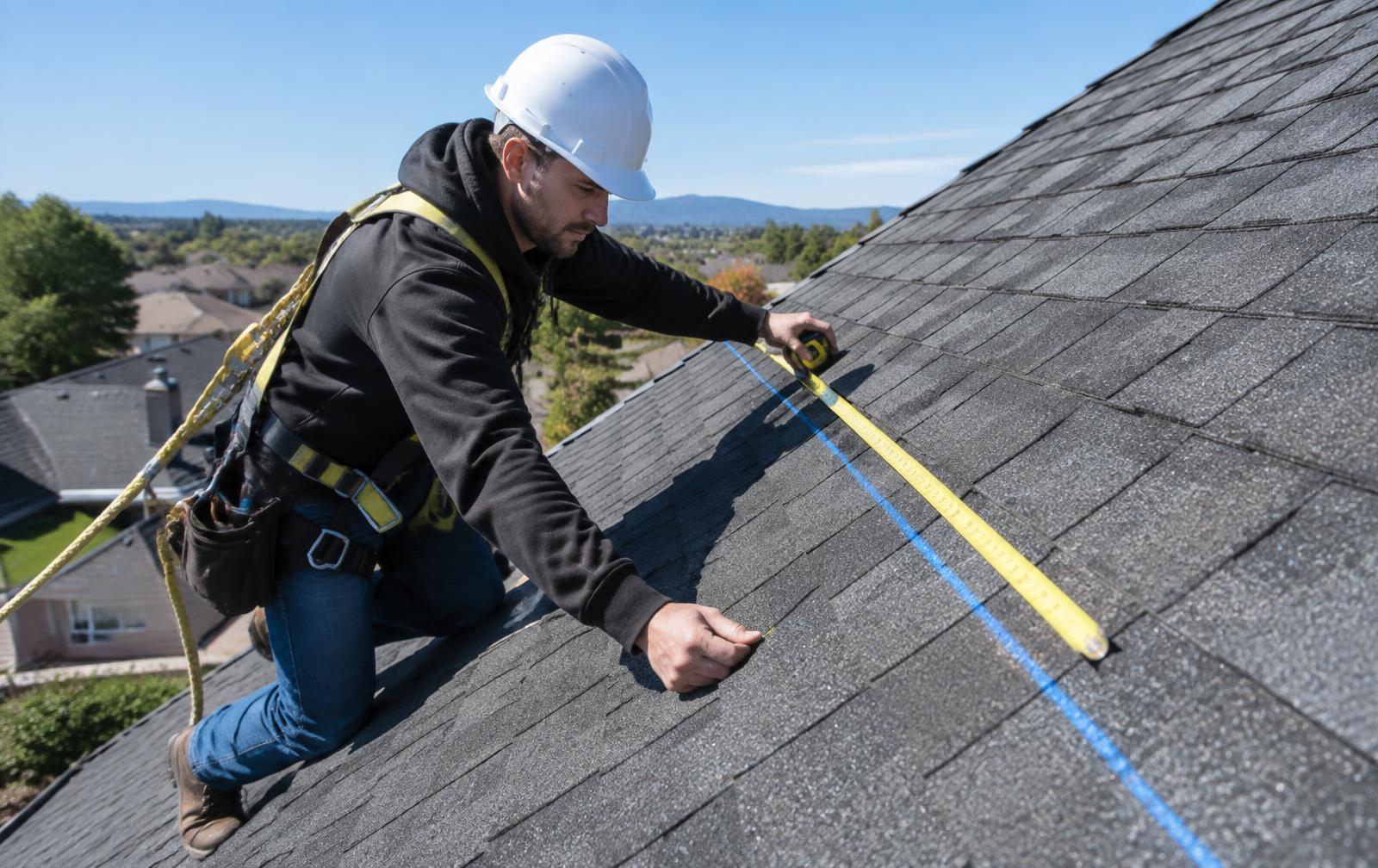
- Define what the visit includes: visual roof walk, moisture scan, attic check, photo documentation, or a combination.
- Confirm what the deliverable will be: a verbal summary, a written narrative report, a photo-based report, or a formal documented assessment.
- Clarify turnaround time for the written report after the visit, if one is requested.
Why scope confusion creates the most friction
The single most common source of a dissatisfied inspection caller isn't the findings themselves — it's a mismatch between what they assumed the visit would include and what actually happened. A caller who expected a full written report for an insurance appeal, but received only a verbal summary on site, will feel misled even if your team never promised a written report explicitly. Setting the scope in plain language before the visit protects both sides.
Matching inspection deliverables to the roofer's actual qualifications
Not every inspection request matches what a given roofing company is actually positioned to deliver. A request for a report formatted to a specific insurance carrier's documentation standard, or for an inspection tied to a structural engineering question, may be outside what a general roofing contractor's team can or should sign off on.
- Confirm the requested report type against what your team is actually qualified and equipped to produce.
- If a request calls for a structural or engineering opinion beyond a roofing condition assessment, flag that distinction to the caller rather than quietly expanding scope.
- Where a specific insurance carrier or legal process has formatting requirements your team hasn't worked with before, confirm those requirements before committing to the deliverable.
Declining or redirecting a mismatched request
It's reasonable for a roofing company to decline or redirect a request that falls outside its actual qualifications — a roof inspection isn't a structural engineering report, and a roofer's team shouldn't present it as one. Declining a mismatched request professionally protects your company's credibility more than stretching to accept every enquiry regardless of fit.
Handing off findings without guaranteeing a transaction or claim outcome
An inspection report is a factual record of roof condition observed on a given day. It is not, and should never be presented as, a guarantee of how a real-estate transaction will close, how an insurance claim will be decided, or what a board will ultimately approve for budget. Those outcomes depend on parties and processes outside your company's control.
This distinction matters most on storm-documentation and transaction-driven inspections, where a caller may hope the report itself will produce a specific outcome — a claim approval, a price reduction in negotiation, a favorable board vote. Your team's role is to document condition accurately and hand that documentation to the requesting party; what happens next in the claim or transaction process is theirs to manage.
Measuring an inspection pipeline honestly
As with other specialty programs, Rent Roofing Sites does not publish search volumes, keyword difficulty, or lead-count figures for inspection demand in any market — that SEO data is unmeasured, and the network does not guarantee lead counts or project volume. What's worth evaluating on a Roofing Market Review call is whether an inspection-capable territory exists, how the current site content and intake flow distinguish purpose categories, and what the written agreement says about exclusivity and term.
- Is there an existing site in this territory, or would this be a new build?
- Does the current intake flow distinguish inspection purpose categories the way your team actually handles them?
- What does the written agreement say about exclusivity and reassignment if the rental ends?
- What CRM delivery options are available for your software, and what status are they in (live, built, in testing)?
- How is inspection-specific intent flagged versus a general repair or replacement enquiry in the lead record?
Illustrative example, clearly labeled: if an inspection-capable territory runs at the $997/month site rental list price plus a one-time $497 setup on the first plan, and a portion of inspection visits convert into paid repair or replacement work in a given month, the model can work out favorably — but this is a labeled assumption you set with your own numbers, not a projected result, and it depends on your market, your visit fee policy, and how your team converts findings into proposals.
| Assumption | Value |
|---|---|
| Monthly site rental (list) | $997 |
| One-time setup (first plan) | $497 |
| Inspection visits needed to produce enough conversions to cover month 1 cost | Varies by your visit fee, close rate and average job value — model assumption only |
WORKSHEET
Inspection Scope Worksheet
Work through this before a roof inspection enquiry is scheduled.
0 of 9 checked
EXPLAINER VIDEO · 42 SECONDS
Roof Inspection Leads: Agree on the Purpose and Report Before the Visit
Narrated explainer with diagrams drawn for this page. No customer data or private screens are shown.
Video transcript
A caller wants a roof inspection, but the word means different things. Ask why it's needed before anything else. Confirm who is authorized to request the visit and who the report needs to satisfy when it's done. Agree on the paid visit scope and report format before scheduling, not on the roof. Check the request against what your team is actually qualified to deliver, and redirect anything outside that. The lead arrives with purpose, access and deadline recorded. Inspection inventory varies by market, so book a Roofing Market Review.
STRAIGHT ANSWERS
Questions roofers ask
Will the enquiry specify why the roof inspection is needed?
Intake is built to capture the caller's stated purpose in their own words — maintenance curiosity, a real-estate transaction, storm or claim documentation, or an internal condition report — because that purpose shapes the scope and deliverable your team should plan for.
How are site-visit charges and written-report expectations clarified?
Rent Roofing Sites does not set your inspection pricing or promise a free visit. Whether a visit carries a fee, what it includes, and what format the report takes are confirmed with the caller during intake, based on your company's own policy.
Can a requested report be declined if it is outside the roofer's qualifications?
Yes. If a request calls for documentation or a professional opinion beyond a roofing condition assessment — a structural engineering sign-off, for example — your team can and should decline or redirect that portion of the request rather than overstating what a roof inspection can certify.
Is every inspection enquiry tied to a hard deadline?
No. Purchase transactions and some insurance-claim situations carry real deadlines, but maintenance and capital-planning requests are often flexible. The intake distinguishes which kind of request this is so scheduling priorities are set correctly.
Who typically receives the written report on a transaction-driven inspection?
It depends on the request — sometimes the buyer alone, sometimes an agent, attorney, or lender as well. Confirming the intended recipient during intake avoids producing a report that doesn't satisfy the actual transaction requirement.
Do you guarantee my company will receive a certain number of inspection leads?
No. Rent Roofing Sites does not guarantee lead counts, rankings, or results. Inspection and condition-assessment demand is reviewed per market as part of the network's specialty program inventory, and availability varies.
Does an inspection finding guarantee a claim approval or a favorable transaction outcome?
No. A roof inspection documents condition on the day of the visit. Claim decisions and transaction outcomes are determined by the insurer, the parties involved, or the governing process — not by the inspection report itself.
See what exists in your market
A Roofing Market Review is a short call. We check which ZIPs and services you want, whether a network asset or territory is open there, and which plan options would apply. No lead counts or results are promised.