
Specialty Acquisition
Slate Roofing Leads for a Specialist Service Territory
Slate is a specialty trade inside roofing, not a variation on asphalt shingle work. The crews that strip and reroof a 25-square ranch rarely carry the hook ladders, slate cutters, copper flashing stock and historic-match experience a slipped-slate repair or a partial restoration actually requires. A slate roofing lead program only has value to your company if the enquiries it produces match the specific work your crew can actually perform.
Slate leads from Rent Roofing Sites come from local websites, domains and tracking numbers the network owns and operates in a given market. A property owner calls, submits a form, or uses chat on one of these sites, and the enquiry is recorded, matched to a territory, and routed to the one roofing company assigned there.
Because slate work spans everything from replacing three cracked slates on a 1920s colonial to a full re-slate of a church steeple, the intake record is built to capture roof age, prior repair history and the homeowner's own description of the problem — not to pretend an online form can tell you whether that roof needs six slates or a new deck.
Whether a slate territory is currently open in your market depends on a Roofing Market Review, because specialty inventory is reviewed per market across the small live network in PA, TX and IL, and it is never guaranteed nationally or assumed to be available on request. This page explains how the leads are built and qualified so you can evaluate the offer against your crew's actual slate capability.
Updated 2026-10-03. Terms, prices and availability are set by the written agreement for your market.
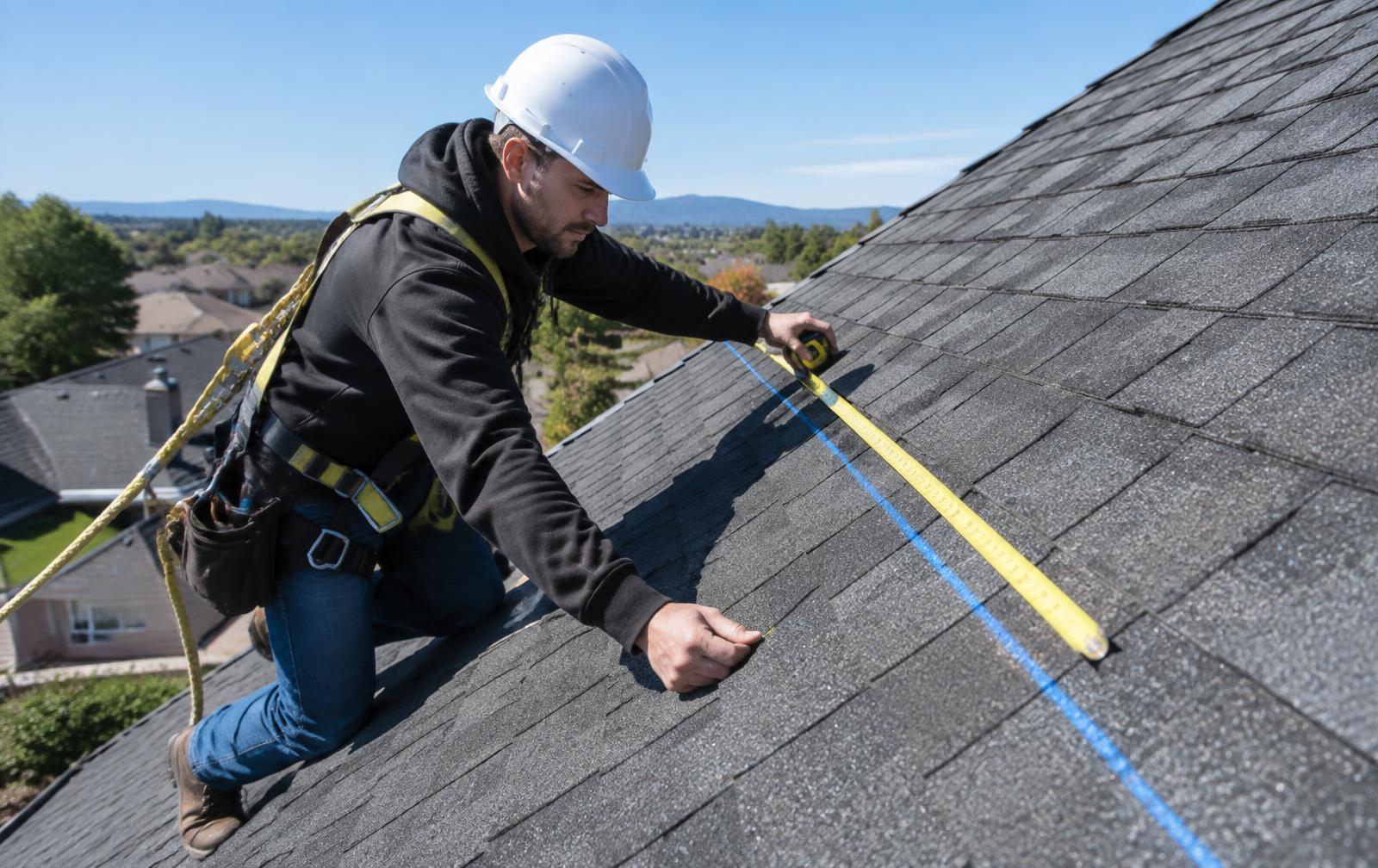
Distinguishing slate preservation work from a replacement request
A homeowner who searches for slate roofing help is not a single type of buyer. Some are trying to preserve a roof that's been on the house for seventy or eighty years, replacing a handful of broken or slipped slates and matching flashing as needed, because the slate itself can outlast the house's other systems if it's kept watertight. Others have a roof that's failed structurally — rotted battens, deteriorated fasteners, widespread cracking from age or an old hail event — and are looking for a full tear-off and reroof, sometimes in slate and sometimes in a synthetic slate alternative once they learn the real cost difference.
The intake record cannot make this distinction for you. A homeowner who types "need slate roof repair" might mean three slipped slates near a chimney, or might mean a roof that's shedding pieces across the yard after every storm. Both descriptions can look similar in a short form field. Your team's first call is where the actual scope starts to separate, using the questions the intake has already surfaced about age, visible extent of the problem and whether this is a first repair or a recurring one.
Why this distinction changes who you send
A three-slate slip repair calls for a slater who can walk the roof safely, match the existing slate size and color reasonably well, and flash correctly around the repair without disturbing surrounding courses. A full replacement conversation calls for an estimator who can talk through natural slate versus a composite or synthetic slate product, lifecycle and cost differences, and what a new installation means for the house's structure and gutters. Sending a repair-focused slater to a sales conversation about a full reroof, or sending your estimator out for what turns out to be a five-slate patch, wastes the trip either way.
Rent Roofing Sites does not decide which of these your company accepts. During onboarding you tell the network whether your slate capability covers repair and localized restoration, full replacement, or both, and that acceptance list is part of what determines whether a given enquiry is routed to you at all. If your crew does repair and small restoration work only, say so — a replacement-focused lead sent to a repair-only crew produces a conversation that can't close.
Qualifying slipped slate, flashing concerns and localized damage reports
Most slate complaints that reach a homeowner's attention start small: a slate visible on the lawn after wind, a stain spreading on a ceiling below a valley, a flashing seam around a chimney or dormer that's been patched before and is leaking again. The intake record captures the problem as the homeowner describes it — where they see it, how long it's been happening, and whether it's new or a repeat issue — because that framing is what your team uses to triage, not to diagnose.
- Visible missing or broken slate: where on the roof, how many the homeowner can see from the ground.
- Active leak location inside the house, which often does not line up directly under the visible slate problem on a sloped roof.
- Flashing-specific complaints: around chimneys, valleys, dormers and skylights, where slate failures are frequently concentrated.
- Repeat versus first-time issue: whether a previous repair was done and by whom, if the homeowner knows.
Why flashing gets its own line of questioning
A large share of reported "slate leaks" are actually flashing failures — copper or lead flashing that's corroded, improperly lapped, or was replaced at some point with a mismatched material that doesn't hold up the same way. A homeowner describing a leak near a chimney after years without trouble is often describing a flashing problem, not a slate field failure. Flagging this distinction in the intake notes, where the homeowner provides enough detail to suggest it, helps your team decide who to send and what tools and stock to bring.
Localized damage reports also matter for scheduling priority. A slate slipped loose and resting on a lower course is a near-term safety and water-intrusion risk that benefits from a faster response than a hairline crack a homeowner noticed during a routine look at old photos. The intake record flags urgency language where the homeowner provides it, but your team still makes the judgment call on how fast a given report needs a look.
TEACHING DIAGRAM
Slate enquiry dossier (illustrative example)
- 1Enquiry
Homeowner calls, submits a form or uses chat on a network-owned slate-relevant site.
- 2Problem description
Localized complaint recorded: missing slate, flashing leak, or general restoration interest.
- 3History and photos
Roof age, prior repairs and any available photographs collected if the homeowner can provide them.
- 4Capability match
Your team checks the described scope against your crew's demonstrable slate repair or restoration capability.
- 5Specialist visit
A slater or estimator walks the roof — the only point an actual material and structural assessment happens.
Collecting roof history, prior repairs and available project photographs
Slate roofs carry history in a way few other roofing systems do. A roof installed in 1948 may have been patched in the 1980s with mismatched slate, re-flashed in the 2000s with modern copper, and never fully inspected since. That history matters to a specialist bidding the work, because it affects what material is already on the roof, what's likely to fail next, and whether a repair can realistically match the existing slate or whether the owner needs to accept a visible patch.
Where a homeowner can provide it, the lead record captures what they know: approximate roof age, any prior repair work and roughly when it happened, and whether they have photographs of the roof, the specific damage area, or the slate itself. A clear photo of a broken slate's edge profile or color can help a specialist gauge, before a truck ever rolls, whether a reasonable match is likely to exist in their current stock or salvage supply.
What photographs can and cannot tell you
- A ground-level photo can show general roof condition, obvious gaps, and rough slate color and size.
- A photo cannot confirm the slate's actual thickness, the fastener condition underneath, or the state of the decking and battens.
- A homeowner's photo of interior water staining can help locate a leak's general area, not confirm its exact source.
- Photos of prior repair invoices or contractor notes, if a homeowner has them, can save real time establishing what's already been done.
None of this replaces a specialist walking the roof. What it does is let your estimator or slater arrive with a working hypothesis instead of starting cold, and it helps you decide internally whether this particular project — based on age, visible material and described history — is a good match for your crew's experience before you commit a visit to it.
Preparing for specialist access and restoration assessment
Slate roofs are typically steeper, older and more fragile underfoot than a standard asphalt roof, and the houses carrying them often have mature landscaping, narrow lot access, or architectural features — turrets, dormers, multiple roof planes — that complicate a straightforward walk of the field. None of that is unusual for this specialty; it's the normal condition of the work, and it needs to be planned for rather than discovered on arrival.
Physical access
Confirm, on the scheduling call, how the roof will actually be reached: ladder placement options, whether a lift is realistic given the property, and whether any part of the roof is inaccessible without specialized rigging. A steep multi-gable slate roof on a property with a tight side yard is a different logistics problem than a simple gable roof with clear ground access on all sides, even if both enquiries describe "a few broken slates."
Assessment expectations
Set the homeowner's expectations before the visit: a specialist assessment on a slate roof is often slower and more deliberate than a standard asphalt walk-through, because safe footing and avoiding further breakage while inspecting are real constraints. Where the project involves a historic property, the homeowner may also be navigating a homeowners' association, a local historic district review, or a lender requirement — your team should ask about any of those early, since they can change the timeline even when the roofing scope itself is clear.
- Confirm roof pitch and general layout from the homeowner's description before the visit.
- Ask about access constraints: fencing, landscaping, overhead wires, shared walls with neighboring properties.
- Ask whether the property sits in a historic district or has any review requirement tied to exterior work.
- Confirm who will be present and whether that person can approve a proposed scope of work.
- Bring slate-specific tools and a reasonable range of matching stock options, based on what the photos and history suggest.
MODEL CALCULATOR
Illustrative Slate Territory Cost Model
A simple model to frame costs against an assumed close rate on slate-relevant enquiries. All numbers are inputs you set — not measured results.
- Quarter cost (rental x 3 + setup) (US dollars)
- $3,488
- Modeled jobs won (leads x close rate) (count)
- 0.9
- Modeled revenue (jobs won x average job value) (US dollars)
- $8,550
Illustrative only. Slate-relevant leads per quarter and close rate are not published figures and must be set by you based on your own market knowledge and crew capability; actual results depend on territory, project mix, and your team's follow-up.
Matching enquiries to demonstrable slate repair and restoration capability
Slate work rewards real experience in a way that's hard to fake on a bid. A crew that has done a handful of asphalt-to-slate transition jobs is not the same as a crew that regularly repairs and restores slate roofs and understands slate grading, nail sickness, headlap requirements and how to source a reasonable match for an older roof. Rent Roofing Sites does not verify or certify a roofer's slate capability — that determination, and the honesty behind it, is the roofing company's responsibility.
What the network does is route enquiries to the one company assigned to a territory and confirmed during onboarding to serve the slate services it claims. If your company lists slate repair and restoration as a served specialty, enquiries that look like slate projects based on the homeowner's description are eligible to route to you within your territory. It is still your team's job, on the first call, to confirm the actual project matches what your crew can do well, and to be straightforward with a homeowner when a job exceeds your current capability rather than taking it on anyway.
A practical self-check before accepting slate as a served specialty
- Has your crew completed slate repair or restoration work in the last two years, not just quoted it?
- Do you have a working relationship with a slate supplier or salvage source for reasonable material matches?
- Does your crew carry the specific tools slate work requires — slate hooks, slate cutters, appropriate fasteners — separate from your standard roofing kit?
- Can your estimator speak credibly to a homeowner about natural slate versus synthetic alternatives, including the real cost and lifecycle tradeoffs?
Being honest about this upfront protects both the homeowner's roof and your company's reputation in a specialty where word of mouth among historic-property owners carries real weight. A company that overstates its slate capability to capture leads risks a bad outcome on an irreplaceable roof, and a disputed job is worse for your business than a territory with fewer slate enquiries but a cleaner match to your actual skill.
Building a slate opportunity review around craft fit and project scope
Because specialty inventory for slate is reviewed per market, and the live network is a small number of sites across PA, TX and IL, a slate roofing territory is not something every roofing company can simply request. A Roofing Market Review is the step where your company and the network look at whether a given market has a site built or buildable for slate demand, and whether that demand lines up with your crew's actual craft fit — not just whether you'd like more leads.
A useful opportunity review covers the existing asset, the realistic scope of slate work your crew can serve, and the terms that would apply. It is not a sales pitch built around projected lead counts, because Rent Roofing Sites does not publish or guarantee lead volumes, rankings or search traffic for any market, and slate search demand specifically is unmeasured the same way every other keyword is.
Questions worth bringing to a slate-specific review call
- Is there an existing site in this territory with slate-relevant content, or would slate coverage need to be built into an existing residential site?
- What does the written agreement say about exclusivity for slate enquiries specifically, versus the territory's broader residential coverage?
- What CRM delivery options are available for my software, and what status are they in — live, built and awaiting connection, or still in testing?
- What happens to a slate enquiry if my company's capacity for that specialty changes mid-term?
- Does the territory's existing demand look more like repair and restoration requests, or full replacement requests, based on the site's current intake history, if any?
A worked illustrative model can frame the cost conversation, even without a published volume figure. If a slate-capable residential territory runs at the $997 per month site rental list price plus a one-time $497 setup on a first plan, and your company closes a single mid-size slate restoration project from that territory across a few months, the arithmetic can work out favorably — but this is a labeled model assumption built on numbers you supply, not a projection of what your territory will produce, and your actual result depends on your market, your close rate and how well your crew's real capability matches what comes in.
| Assumption | Value |
|---|---|
| Monthly site rental (list) | $997 |
| One-time setup (first plan) | $497 |
| Slate projects needed to cover a quarter's cost | Varies by your average job value — model assumption only |
WORKSHEET
Slate Specialist-Fit Checklist
Work through this before accepting slate as a served specialty or scheduling a slate visit.
0 of 9 checked
EXPLAINER VIDEO · 48 SECONDS
Slate Roofing Leads Need Specialist Crews
Narrated explainer with diagrams drawn for this page. No customer data or private screens are shown.
Video transcript
Slate roofs can last for generations, but a wrong repair can break good slate. Only some crews have the skill. Many slate roofs sit on older or historic homes. Matching slate, copper flashing, and local preservation rules all matter. Good intake asks what the owner sees, like slipped or broken slates, and the roof's repair history, without guessing the fix. Send slate leads only to a crew that does slate. Many are repairs or restorations, not full replacements. Slate enquiries are rare and vary by market. Book a Roofing Market Review to see what exists near you.
STRAIGHT ANSWERS
Questions roofers ask
Can I receive slate restoration enquiries without promoting full replacement?
Yes. During onboarding you set which slate services your company accepts — repair and localized restoration, full replacement, or both — and that acceptance list is part of what determines which enquiries route to you. Nothing about the intake assumes every slate enquiry needs a full reroof.
How is a slate specialist matched to an incoming enquiry?
The network routes slate-relevant enquiries within a territory to the one roofing company assigned there, based on the slate services that company confirmed it serves during onboarding. The network does not independently verify slate craft capability; that self-reported acceptance list, and the honesty behind it, is the roofing company's responsibility.
What roof history helps qualify a slate project before the visit?
Approximate roof age, whether and when prior repairs were done, and any photographs the homeowner can provide of the roof or the specific damage area all help. None of it replaces a specialist's physical assessment, but it helps your team gauge, before scheduling, whether the project looks like a fit for your crew's experience.
Does the lead record tell me whether a repair will actually match the existing slate?
No. The record can include photos or a description a homeowner provides, which may suggest slate color and rough size, but confirming an actual material match — and whether your supplier or salvage source can provide it — happens on your side after a visit.
Is slate lead volume guaranteed in my territory?
No. Specialty inventory, including slate, is reviewed per market and is never guaranteed nationally or assumed available. A Roofing Market Review checks what currently exists in a given market before any agreement is discussed.
What if an enquiry turns out to be a job outside my crew's slate experience?
That happens, and it's better to say so to the homeowner directly than to take on a job your crew isn't equipped for. Keeping your accepted slate services current with your onboarding contact helps reduce how often a mismatched enquiry reaches you in the first place.
Can I combine slate with other roofing services in the same territory?
Yes. Most slate-capable companies in the network also serve standard residential repair and replacement, and your acceptance list can include any combination of services your crew actually performs, reviewed and confirmed during onboarding.
See what exists in your market
A Roofing Market Review is a short call. We check which ZIPs and services you want, whether a network asset or territory is open there, and which plan options would apply. No lead counts or results are promised.