Urgent Response Acquisition
Emergency Roofing Leads
An emergency roofing lead starts the same way any other enquiry does on a Rent Roofing Sites property: a homeowner calls a tracking number, fills out a form, or uses chat on a site the network owns and operates in that market. What makes it different is the language in the record — an active leak, water coming through a ceiling, missing shingles after last night's wind — and the speed at which your team needs to act on it.
This page is written for roofing company owners deciding whether to accept urgent enquiries in a territory, and what that acceptance actually commits your team to. It is not a claim that the network dispatches crews, staffs an emergency hotline, or guarantees a response time. The network routes the enquiry to the one roofer assigned to that territory; everything that happens after the phone rings in your office is your operation, your staffing and your judgment call.
A central problem with "emergency" as a lead category is that the word is doing two different jobs. It describes how the homeowner feels about their situation, and it implies a response capability on the receiving end. Those are not automatically the same thing. A homeowner with water on their ceiling at 9pm on a Tuesday is having an emergency by any reasonable definition. Whether your company can do anything about it at 9pm on a Tuesday depends entirely on whether you have someone staffed to answer, a tarp crew on call, or a policy of calling back first thing in the morning.
Because of that gap, this page sets out a straightforward standard: say what hours you actually staff, say what happens when nobody is available, and never let a marketing phrase like "24/7 emergency service" promise more than your crew can deliver. The network will not represent blanket round-the-clock coverage on your behalf, and your written acceptance of emergency enquiries should match your real staffing, not an aspiration.
Updated 2026-10-03. Terms, prices and availability are set by the written agreement for your market.
Defining the urgent roofing work your team can actually receive
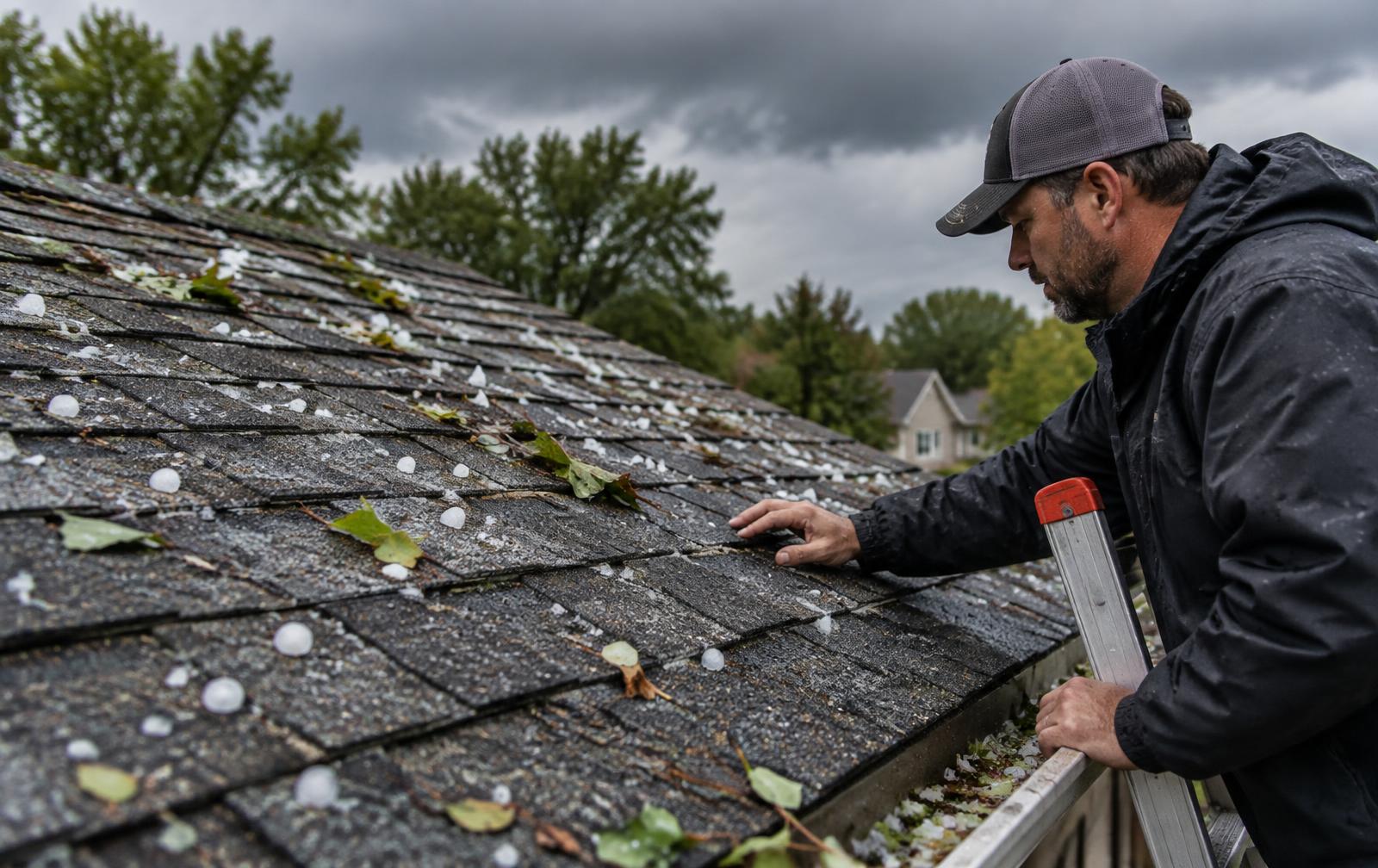
Before a territory can accept emergency enquiries at all, your company needs a working definition of what counts as urgent for your own operation. That definition is not universal. For a company running two repair trucks and a part-time dispatcher, "urgent" might mean an active interior leak during business hours and nothing after 6pm. For a larger operation with a rotating on-call technician, it might extend into evenings and weekends for a narrower list of triggers — active water intrusion, structural exposure after a tree limb or storm event, or a commercial roof open to the sky.
The point of defining this precisely, in writing, before enquiries start arriving, is to prevent two failure modes. The first is under-promising: a crew that could have handled an after-hours leak call doesn't, because nobody told the intake what the company is actually capable of. The second, more damaging mode is over-promising: a homeowner is told or led to believe help is coming fast, and it isn't, because the acceptance list said "emergency" without qualifying what that meant operationally.
What belongs in an emergency acceptance definition
- The specific damage conditions you'll treat as priority: active interior leak, roof deck exposed, storm-torn section, commercial roof breach
- The hours your team is actually staffed to receive and act on these calls, stated as real clock times, not "anytime"
- Whether a tarp-and-stabilize visit is a separate, smaller-scope service from a full repair visit
- The geographic radius you'll travel for an urgent call, which may be tighter than your standard service area
- Who on your team owns the first callback, and what their backup is if they don't answer
A roofing company that only runs standard business hours, Monday through Friday, is not disqualified from accepting urgent enquiries. It simply means the definition has to say so plainly: urgent calls during business hours get a same-day callback; calls received after hours go to voicemail or a fallback message and get a callback the next business morning. That is an honest emergency program. A vague promise of always-on coverage that isn't actually staffed is not.
This definition also protects your crew from being pulled off a scheduled replacement job for something that, once described fully, turns out to be a cosmetic shingle issue that can wait for a normal appointment. Having the criteria written down gives whoever answers the phone a standard to apply instead of reacting to urgency in the caller's voice alone.
Qualifying active leaks, reported damage and immediate access needs
Once a definition exists, the next job is separating what the intake record actually tells you from what it can't. A homeowner describing "water coming through the kitchen ceiling right now" is giving you real, time-sensitive information. A homeowner describing "I think my roof might have storm damage from a few weeks ago" is describing a concern, not an active emergency, even if they clicked the same urgent-sounding button on the site.
The intake record for an emergency-flagged enquiry typically includes the property address, a phone number, the problem as the caller describes it, and whatever urgency language they used. It does not include a photo of the damage unless the caller was able to attach one, it does not include a confirmed cause, and it does not include whether the water is actively running or has already stopped. Those gaps are exactly why the qualifying call your team makes — ideally within minutes, not hours — matters more here than on a routine lead.
Questions a qualifying call should answer fast
- Is water actively entering the structure right now, or did it happen and stop?
- Is the damage isolated to roof covering, or is there a hole, opening, or structural exposure?
- Can the caller describe or confirm the location on the roof, even roughly?
- Is the property occupied right now, and will someone be there to grant access?
- Does the caller have, or can they get, a tarp or temporary covering already in place?
The access question deserves its own attention on urgent calls specifically, because a crew that drives out for an emergency tarp job and can't get onto the property because of a locked gate, an aggressive dog, or an absent tenant has wasted a trip during hours that were already tight. Confirming access in the same call where urgency is established — not as an afterthought during scheduling — is part of what separates a well-run emergency intake from one that burns crew time.
There is also a mismatch worth naming directly: not every reported emergency needs an emergency response, and not every genuine emergency gets described that way by the caller. Some homeowners describe a small, contained drip in urgent language because any water in their house feels alarming. Others underplay a genuinely dangerous situation — an exposed roof deck during active rain — because they don't know how serious it is. Your qualifying call exists to correct for both directions, using the caller's description plus a few direct questions, not to take the urgency label at face value.
| Caller description | Likely priority | Typical next step |
|---|---|---|
| Active water dripping into living space now | High | Same-day call back inside staffed hours; stabilize visit if available |
| Missing shingles after storm, no interior leak reported | Medium | Scheduled visit within normal response window |
| General concern after reading about storms nearby | Low | Standard intake, scheduled like any other enquiry |
TEACHING DIAGRAM
Urgent roofing enquiry timeline (illustrative example)
- 1Enquiry received
Homeowner describes an active leak or storm damage through a network-owned site, form or chat; urgency language is captured as typed.
- 2Acknowledgement
An automated confirmation or AI-answered call lets the caller know the enquiry was received; this is not a confirmed appointment.
- 3Qualifying call
Your team calls back inside staffed hours to confirm active damage, access and occupancy before anything is scheduled.
- 4Roofer contact
The named receiving person or backup logs contact and sets realistic next steps based on real crew availability that day.
- 5Confirmed appointment
A specific visit window is set using real calendar availability — the first point an actual arrival time exists.
Showing accurate operating hours and current service availability
A site that displays "emergency roofing service" without a clear, current statement of hours sets up a homeowner to expect something the roofer can't deliver. This is one of the most common honesty failures in urgent-service marketing across trades generally, not specific to roofing, and it is one the network will not replicate on a roofer's behalf. If your company isn't staffed around the clock, the enquiry path and any messaging tied to your territory needs to say what hours you are staffed, not imply constant coverage.
In practice, this means your acceptance settings in the portal should reflect real staffed windows: for example, "urgent calls answered live 7am to 9pm, 7 days during active storm response periods" is a specific, checkable claim. "24/7 emergency service" attached to a company with no after-hours staff, no on-call rotation and no answering coverage is not a specific claim — it's a phrase that will eventually be tested by a homeowner calling at 2am and getting nothing.
Keeping availability current, not just accurate at setup
Hours and availability aren't static. A two-person repair operation might run extended hours during an active storm season and pull back to standard business hours in a slow month. A company that loses a technician to injury or a competing job might need to narrow its urgent acceptance window temporarily. None of this is a problem for the program — what matters is that your stated availability in the portal tracks your actual capacity at any given time, and that you update it when it changes rather than leaving a stale claim live.
- Review and confirm your urgent-hours setting at least monthly, more often during storm season
- Update availability immediately if a technician or crew becomes unavailable for an extended period
- Treat a lapse in availability as a reason to pause urgent routing temporarily, not a reason to let calls go unanswered silently
- Communicate seasonal staffing changes (added storm-season coverage, holiday reductions) to your onboarding contact
There is a direct cost to getting this wrong in either direction. Understating your hours means your team misses calls it could have handled, and those enquiries may be reassigned or simply lost. Overstating your hours means a homeowner is told, implicitly or explicitly, that help is available when it isn't — which produces frustrated callers, wasted goodwill in that market, and a reputation problem that follows the roofing company, not just the lead source.
Connecting the enquiry to an accountable receiving person
An emergency enquiry routed to a general company line with no named owner is an emergency enquiry that can sit unanswered through no one's fault in particular — everyone assumes someone else is watching it. Urgent intake needs a named person, or a short, ordered list of people, responsible for seeing and acting on it, with a backup if the first person is unreachable.
This is a staffing and process decision your company makes, not something the network can impose. What the network can do is deliver the lead with urgency flags intact — subject line, notes, or a priority marker depending on your CRM connection — so it doesn't sit in a general queue indistinguishable from a routine repair request submitted at a slow hour.
A workable ownership structure
- A primary contact (owner, office manager, or dispatcher) who receives urgent-flagged leads first, during staffed hours
- A named backup who is notified if the primary doesn't acknowledge within an agreed internal window, such as fifteen minutes
- A clear rule for after-hours enquiries: voicemail with a callback promise, an answering service, or a stated next-business-day response — whichever is actually true for your operation
- A log, even a simple one, of who called back and when, so a missed handoff is visible rather than invisible
Smaller companies sometimes assume this level of structure is overkill for a two- or three-person operation. The opposite tends to be true: with fewer people available, an unclear handoff is more likely to mean a call simply doesn't get answered, because everyone is on a roof and nobody checked the phone. A one-line internal rule — "urgent leads always go to the owner's cell first, office line second" — costs nothing to set up and prevents the most common failure.
Delivery status for every urgent lead is visible in your portal regardless of which CRM you use: queued, sent, delivered or failed, with a fallback alert by email or SMS if a CRM push doesn't go through. That status tells you the enquiry reached your system. It does not tell you whether a human looked at it and called back — that link has to be closed by your team's own process, not by the delivery mechanism.
MODEL CALCULATOR
Illustrative Emergency Response Capacity Model
A simple model to frame how many urgent calls your current staffing can realistically absorb. All numbers are inputs you set — not measured results.
- Max calls qualifiable per staffed day (staffed hours x 60 / handle minutes) (count)
- 40
- Max tarp/stabilize visits per crew per day (staffed hours / visit hours) (count)
- 5
- Modeled visits possible across crews (max visits per crew x crews) (count)
- 5
Illustrative only. Call volume, handle time and visit duration vary by crew, property and weather; this model is for capacity planning, not a promise of same-day service for any specific call.
Handling unanswered calls, off-hours requests and unavailable coverage
Even a well-staffed emergency program will occasionally miss a call — a technician is mid-repair on another roof, the office line rings out during a busy storm week, or an after-hours request comes in outside any staffed window at all. The question that matters isn't whether this ever happens; it's what happens next, and whether the homeowner is left with nothing or with an honest path forward.
On the network side, a missed-call text can follow an unanswered call to a tracking number, where consent rules for that number and jurisdiction allow it, letting the homeowner know their call was received and giving them another way to reach your team or leave details. This is a fallback, not a promise of faster service — it tells the caller their enquiry exists in the system, not that a truck is en route.
Designing an honest off-hours path
- A voicemail greeting that states real callback expectations: "we return urgent calls by [time]" rather than silence or a vague promise
- An after-hours message on the site or chat that sets the same expectation in writing, matching what the voicemail says
- A clear internal rule for the first person in the office each morning: urgent voicemails and after-hours form submissions get called first, before routine scheduling
- A decision, made in advance, about whether your company offers any paid after-hours or weekend premium service, and if so, what it costs and who can authorize it
There is also a coverage-unavailable scenario worth planning for directly: a storm event or a run of urgent calls can exceed what your crew can handle in a given window, even with good staffing. When that happens, the honest move is to say so — pause urgent-flagged routing for that territory temporarily, or extend your stated response window, rather than letting enquiries accumulate against a promise your team can't keep that week. The portal lets you adjust acceptance settings when capacity shifts; using it protects both the homeowner's expectations and your company's reputation in that market.
None of this changes what the network does or doesn't do on a missed call. The network's role is capturing the enquiry, attempting delivery with retries and a dead-letter fallback alert if a CRM push fails, and texting back where permitted. It does not dispatch a roofer, dispatch a tarp crew, or take over your company's phone during a surge. That responsibility, and the judgment calls that come with an unusually busy week, stay with your operation.
Reviewing urgent lead response without promising arrival times you cannot meet
Measuring how your company is actually doing on urgent enquiries is useful and worth doing regularly. Promising a specific arrival time as part of your marketing or intake messaging is a different thing, and a riskier one, because an arrival-time promise is a commitment your crew's schedule, traffic, weather and current workload may not let you keep on any given day.
The portal's outcome tracking — new, contacted, appointment, estimate, won, lost — applies to urgent leads the same way it applies to any other enquiry, and reviewing it specifically for urgent-flagged leads tells you something routine leads can't: how long elapsed between the enquiry landing and your team marking it contacted. That gap, tracked over weeks, is a far more honest measure of your emergency program's real performance than any claim printed on a page.
What to review and how often
- Weekly: time from enquiry received to first contact logged, for urgent-flagged leads specifically
- Weekly: count of urgent leads that went to voicemail or after-hours fallback versus live answer
- Monthly: whether your stated staffed hours in the portal still match your actual staffing
- Monthly: job value and outcome on urgent leads, to judge whether the acceptance criteria are producing work worth the crew time diverted to answer them fast
A worked illustrative example helps frame this without inventing a guarantee. Suppose your company accepts urgent enquiries for active leaks during a staffed window of 7am to 8pm, seven days a week during storm season, and your team reviews contact-time weekly. If the review shows most urgent leads are contacted within twenty minutes during staffed hours, that's evidence the program is working as designed — not a number the network publishes or verifies, but one your own portal data can show you. If the review instead shows a pattern of urgent leads sitting for hours before contact, that's a signal to revisit staffing or the acceptance definition, not a reason to add a bigger promise to the marketing.
The language that belongs on any urgent-roofing page or messaging tied to your territory is language about coverage and process: what hours you're staffed, how a call is qualified, who owns the callback, and what happens if nobody's available. The language that doesn't belong is a specific arrival-time guarantee, a blanket 24/7 claim without real staffing behind it, or any suggestion that submitting a form books a dispatch. A Roofing Market Review is the place to work through what an honest urgent-acceptance setup looks like for your specific crew and territory before any of this goes live.
WORKSHEET
Emergency Coverage Card
A short reference your receiving team can check before urgent enquiries start arriving in a territory.
0 of 9 checked
EXPLAINER VIDEO · 60 SECONDS
Is an Emergency Roofing Lead Right for Your Crew?
Narrated explainer with diagrams drawn for this page. No customer data or private screens are shown.
Video transcript
An emergency roofing call usually means water is coming in right now. The first job is safety: people out of the wet room, power off near the leak, nobody climbing a wet roof at night. Emergency leads only work if your coverage is real. Write down the hours you can actually answer and send someone, instead of promising around the clock. On the first call, ask where the water is, how fast it is coming, and whether a tarp or temporary fix today can stop the damage until a full repair. The lead record carries what the caller told us: the address, the problem, and when they need help. Your team confirms the visit and sets an honest arrival window. Emergency enquiries depend on your coverage and on which markets have live sites. Book a Roofing Market Review to see what is open near you.
STRAIGHT ANSWERS
Questions roofers ask
Can I receive emergency leads only during the hours I staff?
Yes. Your acceptance settings should state the real hours your team is staffed to answer urgent enquiries, and routing follows that. There is no requirement or assumption of round-the-clock coverage, and the network won't advertise blanket 24/7 availability on your behalf unless your staffing actually supports it.
What happens when nobody is available to accept the call?
Where enabled and permitted, a missed-call text can let the caller know their enquiry was received. The lead is still recorded and delivered to your CRM with a fallback alert if the push fails. Whether and how quickly someone calls back from there is your team's process, not something the network dispatches on your behalf.
Does an urgent roofing enquiry mean an immediate visit has been booked?
No. An enquiry, even one flagged as urgent, is a homeowner's description of their situation captured online or by phone. A specific appointment only exists once your team has called back, qualified the problem, confirmed access, and set a real time against your crew's actual availability.
Is a tarp or stabilize visit the same thing as a full repair?
Not necessarily. Many companies treat an urgent visit as a smaller-scope stabilization step — covering an active opening or exposed section — separate from the full repair or replacement that follows once the roof can be properly assessed. Your acceptance definition should say which of these, or both, your team provides.
Can my company set a narrower service radius for urgent calls than for regular work?
Yes. It's common for a company's urgent-response radius to be tighter than its standard service area, since a same-day stabilize visit usually needs to be geographically realistic for your crew. Set this separately during onboarding if it differs from your general territory.
Will the network ever claim my company offers 24/7 emergency service if I don't actually staff it?
No. Messaging tied to your territory reflects the staffed hours and acceptance criteria you provide. The network does not add blanket always-on claims, because an unstaffed promise creates a bad outcome for the homeowner and a reputation problem for your company.
How is an urgent lead different from a regular repair lead in my CRM?
Where your CRM connection supports it, an urgent-flagged lead carries notes or a priority marker distinguishing it from a routine enquiry, so it doesn't sit unnoticed in a general queue. The underlying record fields — contact, address, problem description, urgency language — are otherwise similar to any other lead.
See what exists in your market
A Roofing Market Review is a short call. We check which ZIPs and services you want, whether a network asset or territory is open there, and which plan options would apply. No lead counts or results are promised.