1. Pick the account profile
Define the roofs your company can win and produce.
- Building type and roof system
- Square-foot range
- Drive radius
- Owner-occupied vs managed
- Repair, maintenance, restoration, or replacement
FIELD GUIDE
Commercial growth starts with roofs you can service and people who have a reason to care. A giant list of random businesses is not a pipeline.
Choose a tight building profile, map target properties, find the responsible role, lead with a useful inspection or maintenance reason, and run a written follow-up cadence tied to the property.

Define the roofs your company can win and produce.
Start with the building, then connect the owner, manager, facility contact, or procurement path.
Do not open with a vague sales pitch. Give the contact a clear reason to look at the roof.
Use a property timeline so calls, inspections, photos, bids, and renewal dates stay together.
Commercial jobs can take months. Keep every visit, photo, and bid in one job file so nothing is lost when the budget opens.
FROM THE FIELD
Monday: add 20 matching properties. Tuesday: confirm five decision roles. Wednesday: make five useful contacts. Thursday: follow existing inspections. Friday: review which property types moved and tighten next week's list.
REAL PLATFORM VIEW
This screenshot comes from the actual Roofer Back Office in a labeled sample account. It is not an AI-made dashboard. Sample names and 555 phone numbers are used; no real homeowner data appears.
See the Platform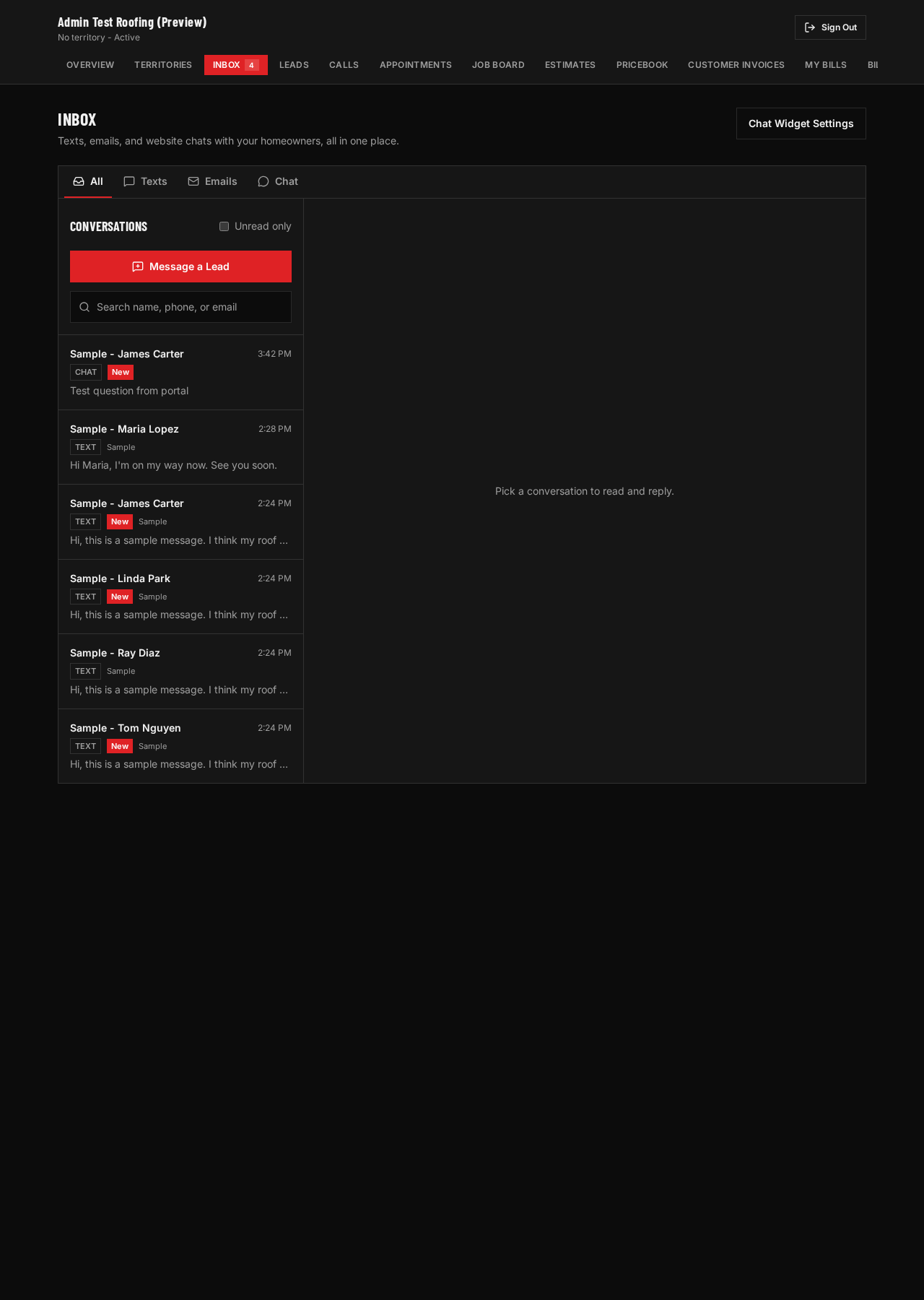
EXPLAINER VIDEO
Licensed stock narration. Real roofing context. Real platform screens with labeled sample data.
Commercial growth starts with roofs you can service and people who have a reason to care. A giant list of random businesses is not a pipeline. Choose a tight building profile, map target properties, find the responsible role, lead with a useful inspection or maintenance reason, and run a written follow-up cadence tied to the property. Define the roofs your company can win and produce. Start with the building, then connect the owner, manager, facility contact, or procurement path. Do not open with a vague sales pitch. Give the contact a clear reason to look at the roof. Use a property timeline so calls, inspections, photos, bids, and renewal dates stay together. Commercial jobs can take months. Keep every visit, photo, and bid in one job file so nothing is lost when the budget opens. Monday: add 20 matching properties. Tuesday: confirm five decision roles. Wednesday: make five useful contacts. Thursday: follow existing inspections. Friday: review which property types moved and tighten next week's list. Here is how it works with us. You rent a territory. Calls and forms from a network-owned site route into your Roofer Back Office. Each lead keeps its source. From the lead page you can book the inspection, build an estimate from your own pricebook, and follow the job to revenue. The screen you see is the real Back Office with labeled sample data. A lead is not a sold job, and we do not promise one. Check My Territory to see if your market is open.
STRAIGHT ANSWERS
Do not assume that. Commercial work usually comes through owners, managers, facility teams, brokers, consultants, and bid channels. Coverage and referrals must be verified case by case.
A smaller property-first list inside your production range is usually more useful than a broad list with no roof or decision-role context.
CHECK MY TERRITORY
Enter the main ZIP you want to work.