
Specialty Acquisition
Roof Maintenance Contract Leads
Roof maintenance contract enquiries from Rent Roofing Sites come from property owners and managers who are looking for an ongoing relationship with a roofing company, not a single repair visit. The caller might manage one building or a dozen, might already have a maintenance provider they're unhappy with, or might be setting up a formal program for the first time. What they share is an interest in recurring roof care rather than a one-time fix.
A maintenance contract enquiry is structurally different from a repair or replacement lead, and treating it the same way undersells both the opportunity and the complexity. A repair lead usually resolves to a single yes-or-no decision on a single roof. A maintenance enquiry can involve multiple buildings, an existing provider relationship with a renewal date, a specific reporting cadence the property manager's own ownership group requires, and a buying decision that moves on a completely different timeline than an emergency repair.
This page is built around qualifying that structure before your team drafts a proposal: how many roofs are actually involved, what maintenance arrangement exists today, what's unresolved from prior service, and who actually signs a maintenance agreement versus who made the call. None of this treats an enquiry as a signed contract — a maintenance pipeline is measured honestly, as enquiries and proposals in progress, not as recurring revenue already on the books.
Whether a maintenance-contract-focused territory is open in your market depends on a Roofing Market Review, because specialty program inventory, including recurring-service demand, is reviewed per market and the live network is a small number of sites across PA, TX and IL. This page explains how the lead program is built so you can evaluate the offer — it is not a claim that a territory is open right now.
Updated 2026-10-03. Terms, prices and availability are set by the written agreement for your market.
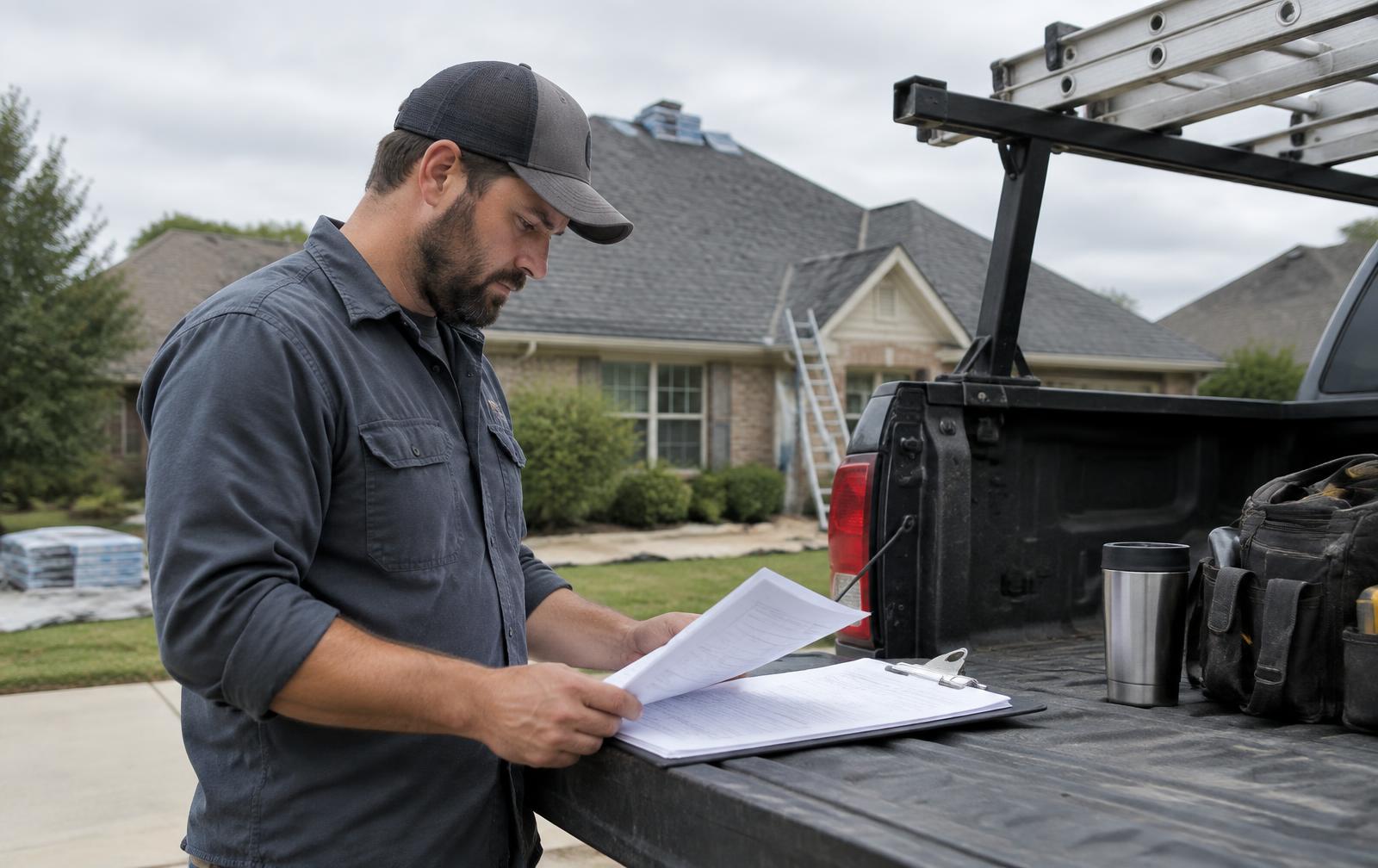
Finding property buyers seeking ongoing roof care rather than one repair
The first qualifying question on any maintenance-sounding enquiry is simple but easy to skip: is this caller actually looking for an ongoing arrangement, or did they just describe their problem using the word "maintenance" while really wanting a single repair? Both happen, and intake needs to tell them apart before your team spends time drafting a program proposal for someone who wanted a one-time fix.
Signals that point toward a genuine ongoing-service intent
- The caller references a maintenance budget, a facilities plan, or a board-approved program rather than a single invoice.
- They mention managing more than one building or roof, even loosely ("our properties," "the portfolio").
- They ask about inspection frequency, response-time commitments, or reporting cadence rather than a repair price.
- They mention a current provider and are comparing options for when that relationship ends or renews.
Signals that point toward a one-time repair need
A caller who says "we need someone to maintain our roof" after describing a single active leak is often really describing a repair, with "maintenance" used loosely to mean "take care of this." Confirming directly — "are you looking for an ongoing service agreement, or help resolving this specific issue first?" — usually clarifies it in one question.
Qualifying building count, roof inventory and current maintenance arrangements
Once ongoing intent is confirmed, the next step is building an accurate inventory of what's actually being managed. A maintenance proposal for one roof looks nothing like one for a twelve-building portfolio, and guessing at scale from a vague first call produces a proposal that misses the mark in either direction.
Ask for each building's address, its approximate roof size if the caller knows it, the roof type, and roughly how old the roof is. Then ask who maintains it today. Some buyers have no plan at all and only call when water comes in. Others already have a contractor whose agreement is ending, which tells you a decision date exists. A few run maintenance with in-house staff and want an outside company only for annual checks. Each answer changes what a useful proposal looks like. Record unknown answers as unknown instead of guessing, and note which buildings the caller can actually authorize work on. A manager who controls three of eight properties is a three-building opportunity until someone with wider authority joins the conversation. That simple record keeps your estimator from pricing a portfolio nobody has offered.
- Number of buildings or properties under the caller's management or ownership.
- Roof type and approximate age for each, where the caller has that information readily available.
- Square footage or general size category, if known.
- Whether all roofs would be included in a single agreement or only a subset.
Capturing the current maintenance arrangement
Most maintenance enquiries don't start from zero — there's usually an existing provider, an informal arrangement, or a prior contract that recently ended or is ending soon. Recording what exists today, even imperfectly, tells your team what they're actually replacing or improving on.
- Is there a current maintenance provider, and is the caller actively dissatisfied, simply comparing options, or facing a provider exit?
- If there's a current agreement, what's the renewal or expiration date, even approximately?
- What does the current arrangement include — scheduled inspections, emergency response, snow/debris removal, warranty tracking?
| Field | Why it matters |
|---|---|
| Building/roof count | Determines proposal scale and site-visit planning |
| Current provider status | Clarifies whether this is a replacement, a comparison, or a first-time program |
| Renewal/expiration date | Sets realistic timing for your proposal to land before a decision is made |
| Included services today | Shows the baseline your proposal needs to match or improve on |
TEACHING DIAGRAM
Portfolio maintenance calendar (illustrative example)
- 1Portfolio inventory
Building count, roof types and current provider status captured at intake.
- 2Active concerns flagged
Unresolved leaks or trouble spots routed to their own repair track, not buried in the maintenance pitch.
- 3Cadence and reporting defined
Inspection frequency, report format and response-time expectations agreed before pricing.
- 4Renewal timing confirmed
Current agreement end date, if any, sets realistic proposal and follow-up timing.
- 5Proposal to signature
Only a signed agreement counts as recurring revenue — enquiries and proposals are tracked separately.
Understanding service history and unresolved repair concerns
A maintenance enquiry often arrives alongside one or more specific concerns that haven't been resolved — a recurring leak, a roof section that's underperformed since a prior repair, or a known issue the current provider hasn't addressed. Separating these active concerns from the general maintenance request matters because they may need attention before, or independent of, a new maintenance agreement being signed.
- Any currently active leaks, known trouble spots, or unresolved issues on any roof in the portfolio.
- Recent repair or replacement history the caller is aware of, including rough timing and which roofs were involved.
- Warranty status, if known — some maintenance programs are structured specifically to preserve manufacturer warranty requirements.
Why unresolved issues shouldn't be buried inside a maintenance pitch
If a caller mentions an active leak while describing their interest in a maintenance program, that leak deserves its own handling track — a service call or repair conversation — rather than being folded silently into a future maintenance agreement timeline. A property manager dealing with water intrusion today isn't going to wait for a maintenance contract to get signed before they want that addressed.
Defining inspection, reporting and response expectations before a proposal
A maintenance agreement is, at its core, a set of promises about cadence and responsiveness: how often roofs get inspected, what gets reported and to whom, and how quickly the company responds when something comes up between scheduled visits. Confirming what the property manager actually expects on each of these fronts before drafting a proposal avoids a mismatch between what your team plans to offer and what the buyer assumed they were asking for.
- Ask how often the caller expects or wants scheduled inspections — common cadences include biannual, quarterly, or seasonal (pre- and post-winter).
- Confirm what reporting format matters to them: a written condition report after each visit, photo documentation, or a simple logged visit record.
- Establish who receives reports — the property manager directly, an ownership group, or a board that reviews maintenance records periodically.
- Clarify response-time expectations for issues found between scheduled visits, and whether emergency response is expected to be part of the same agreement.
Reporting requirements can come from above the caller
A property manager's own ownership group, lender, or insurance carrier may require a specific reporting format or frequency as a condition of financing or coverage. A caller may not volunteer this unless asked directly, so it's worth confirming whether any reporting requirement exists beyond the caller's own preference.
MODEL CALCULATOR
Illustrative Maintenance Territory Cost Model
A simple model to frame territory cost against an assumed number of signed maintenance agreements and their annual value. All numbers are inputs you set — not measured results.
- Month-1 cost (rental + setup) (US dollars)
- $1,494
- Modeled agreements signed per month (enquiries x close rate) (count)
- 0.8
- Modeled annual recurring value from one month's enquiries (US dollars)
- $3,200
Illustrative only. Enquiries-per-month and close rate are not published figures and must be set by you based on your own market knowledge; actual results depend on territory, portfolio mix, and your own maintenance pricing and proposal-to-signature process.
Measuring a maintenance pipeline without treating every enquiry as recurring revenue
It's tempting to multiply every maintenance enquiry by an assumed contract value and annual renewal to project recurring revenue, but an enquiry is not a signed agreement, and counting it as booked revenue before a contract is executed overstates the pipeline in a way that can distort hiring, crew planning, or cash-flow decisions.
A more accurate way to track a maintenance pipeline distinguishes clearly between enquiries received, proposals sent, and agreements actually signed — and only the signed category should be treated as committed, recurring revenue for planning purposes.
Evaluating territory fit for maintenance demand
As with other specialty programs, Rent Roofing Sites does not publish search volumes, keyword difficulty, or lead-count figures for maintenance-contract demand in any market — that SEO data is unmeasured, and the network does not guarantee lead counts or signed-contract volume. What's worth evaluating on a Roofing Market Review call is whether a maintenance-capable territory exists, whether the local site content speaks to portfolio and property-manager buyers specifically, and what the written agreement says about exclusivity and term.
- Is there an existing site in this territory, or would this be a new build?
- Does the current site content and intake distinguish maintenance-program enquiries from one-time repair requests?
- What does the written agreement say about exclusivity and reassignment if the rental ends?
- What CRM delivery options are available for your software, and what status are they in (live, built, in testing)?
- How is maintenance-contract intent flagged versus a general commercial roofing enquiry in the lead record?
Illustrative example, clearly labeled: if a maintenance-capable territory runs at the $997/month site rental list price plus a one-time $497 setup on the first plan, and even one multi-building maintenance agreement is signed in a given period, the recurring value of that single agreement can outweigh the territory cost many times over across its term — but this is a labeled assumption you set with your own contract pricing, not a projected result, and it depends on your market, your proposal-to-signature close rate, and your own maintenance pricing structure.
| Assumption | Value |
|---|---|
| Monthly site rental (list) | $997 |
| One-time setup (first plan) | $497 |
| Maintenance agreements needed to justify ongoing territory cost | Varies by your own annual contract value — model assumption only |
WORKSHEET
Maintenance Opportunity Worksheet
Work through this before a roof maintenance contract enquiry reaches a proposal.
0 of 9 checked
EXPLAINER VIDEO · 45 SECONDS
Turn a Maintenance Enquiry Into a Proper Roofing Contract Conversation
Narrated explainer with diagrams drawn for this page. No customer data or private screens are shown.
Video transcript
A caller asks about maintenance, but first confirm they want an ongoing program, not a one-time repair. Capture how many buildings, what roof types, and the current arrangement and renewal timing. An active leak mentioned along the way gets its own repair track, not buried inside the maintenance proposal. Agree on inspection cadence, reporting and response times before your team quotes a price. Track the opportunity as an enquiry and a proposal, not signed revenue, until an agreement is executed. Maintenance territory varies by market, so book a Roofing Market Review.
STRAIGHT ANSWERS
Questions roofers ask
How do maintenance prospects differ from one-time repair leads?
A maintenance enquiry is interest in an ongoing relationship across one or more roofs, with its own cadence, reporting and renewal timing, rather than a single repair decision. Intake is built to tell the two apart early so your team doesn't build a recurring-service proposal for someone who only wanted one issue fixed.
Can the enquiry include several buildings under one property manager?
Yes. Maintenance enquiries commonly cover a portfolio rather than a single roof. Intake captures building count, roof types and current arrangement details so your proposal is scoped to the actual portfolio, not guessed at.
When should a maintenance opportunity be counted as a signed contract?
Only once an agreement is actually executed. Enquiries and proposals in progress should be tracked separately from signed agreements so your recurring-revenue planning reflects what's actually committed, not what's still under discussion.
What happens if a caller mentions an active leak while asking about maintenance?
That concern is flagged and handled on its own urgency track rather than folded silently into a future maintenance agreement timeline. An active leak typically needs attention sooner than a maintenance contract decision moves.
Does a current maintenance provider mean the enquiry isn't a real opportunity?
No. Many maintenance enquiries come from buyers comparing providers ahead of a renewal date, or dissatisfied with current service. The current provider's status and the renewal timing are captured so your team can plan realistic follow-up.
Do you guarantee my company will receive a certain number of maintenance contract leads?
No. Rent Roofing Sites does not guarantee lead counts, rankings, or signed-contract volume. Maintenance-contract demand is reviewed per market as part of the network's specialty program inventory, and availability varies.
Can maintenance contract leads be delivered to my existing CRM?
Yes, through the same delivery options available on other programs: a generic webhook, a private Zapier app, or email/SMS fallback. Native connections for some CRMs are built and ready to confirm during onboarding, while others are still in testing — ask about your specific CRM's status.
See what exists in your market
A Roofing Market Review is a short call. We check which ZIPs and services you want, whether a network asset or territory is open there, and which plan options would apply. No lead counts or results are promised.