
Contractor Growth Scenarios
Lead Generation for New Roofing Companies
A newly formed roofing company usually doesn't have years of search rankings, a backlog of reviews, or a reputation that travels ahead of a sales call. That's a real disadvantage in a market where homeowners and property managers often choose based on trust signals built over time. Rent Roofing Sites doesn't try to manufacture that history. Instead, the program gives an eligible new company access to a local roofing website, domain and tracking number the network already owns and operates in a given market, matched to a territory under a written agreement.
That access changes where demand comes from, but it doesn't change what your company has to be able to do once the phone rings. A new roofer who takes on a territory before the business can actually answer calls, qualify prospects and show up for assessments on time will burn through enquiries without converting many of them — and the network's enquiry record will show that pattern clearly. This page is built around the opposite approach: confirm operational readiness first, choose a territory your crew can realistically cover, and only then evaluate whether a territory is open.
None of this is a promise that leads exist in your target market on a given day. Specialty and general demand is reviewed per market on a Roofing Market Review call, and the live network today covers a small number of sites across Pennsylvania, Texas and Illinois. A new roofing company considering this program should treat it as one acquisition channel to evaluate among others, not a guaranteed pipeline, a licensing endorsement, or a substitute for the operational basics covered below.
What follows walks through the readiness checks, the territory decision, the intake workflow, how to present real company capability honestly, the distinction between an existing asset and a new build, and how to review your first enquiries before committing further.
Updated 2026-10-03. Terms, prices and availability are set by the written agreement for your market.
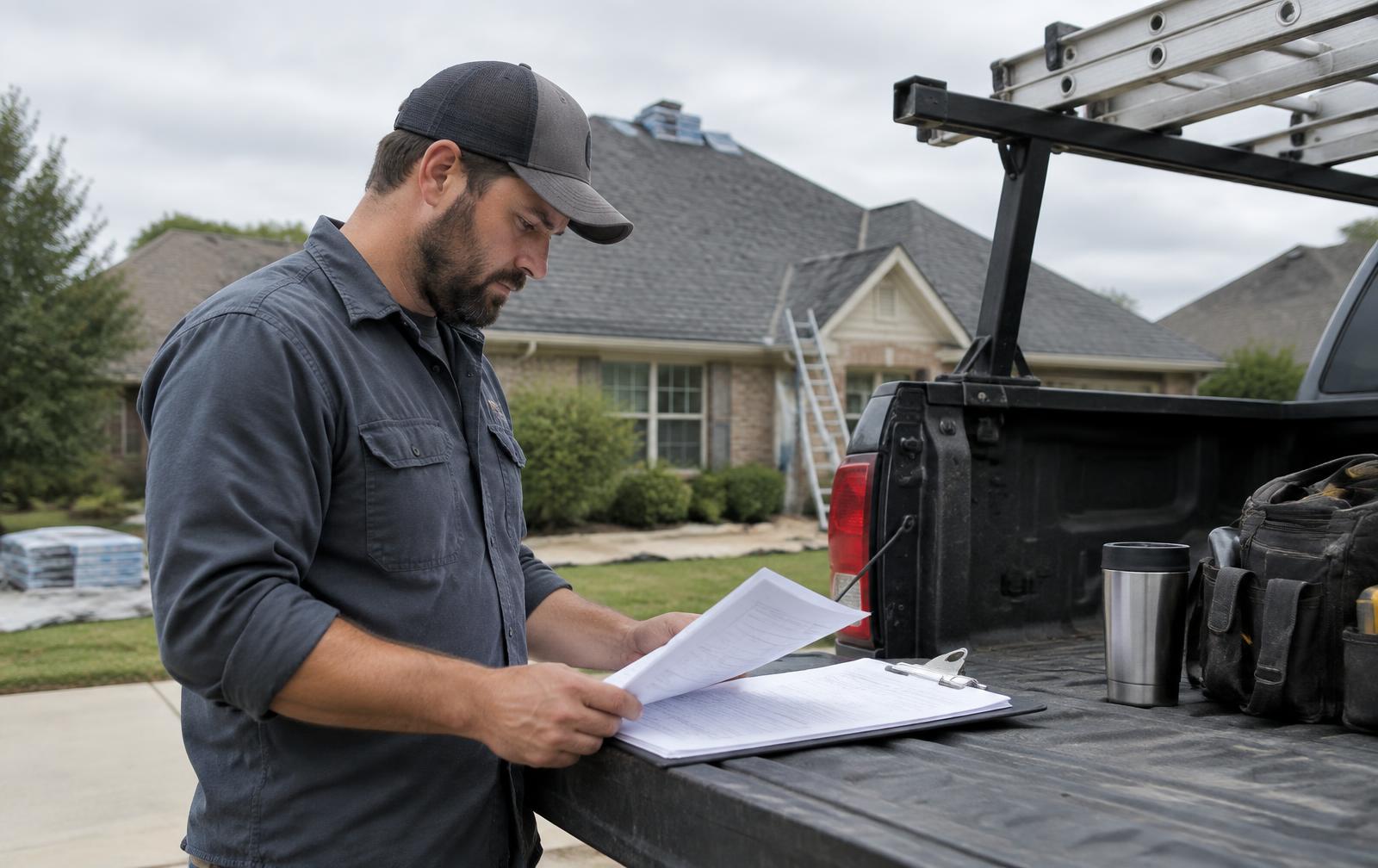
Checking operational readiness before a new roofer starts accepting leads
Before a single enquiry reaches your company, there's a short list of operational questions worth answering honestly. A new roofing company is often still assembling pieces — a crew, a supplier relationship, an insurance policy, a vehicle — and the timing of when leads start arriving should line up with when those pieces are actually in place, not with when the website happens to go live.
Service eligibility
Can your company legally and practically perform the services the territory's site advertises today? A site built around residential roof replacement and repair assumes a crew that can do tear-offs and new installs, not just inspections. If your current crew is better suited to smaller repair work while you build toward full replacements, that's a reason to accept a narrower service list at first rather than a reason to decline the program outright.
Contact reliability
A new company is often run by one or two people wearing several hats. If the owner is also the estimator, also running a crew, and also answering the phone, enquiries can sit unanswered during busy stretches. Before leads start, decide who actually answers calls, checks the CRM, and returns messages within the window your team commits to — and have a backup for when that person is unreachable.
Estimator availability and travel radius
A lead that sits for three days because no one was free to run the estimate is a lead that's effectively gone cold. Map out how many estimates per week your current staffing can realistically run, and compare that to a cautious estimate of enquiry volume before committing to a full territory.
- List every service the territory's existing site content advertises and confirm your crew can perform each one today.
- Name the specific person who owns first response to a new enquiry, plus a backup.
- Estimate how many site visits your current staffing can run in a normal week.
- Confirm basic business requirements are in place: active insurance, any required local licensing, a working business phone line.
Choosing a first service territory the crew can actually cover
A first territory decision is easy to get wrong in either direction: picking an area too small to matter, or picking a wide, unfamiliar area because the asset happens to be available there. Neither mistake is really about the network's inventory — both come down to matching the territory to the business you actually run today.
Start with drive time, not city boundaries
A territory defined by ZIP codes can span a wider area than it looks on a map once real drive times, traffic patterns and crew logistics are factored in. Before accepting a set of ZIPs, drive the boundary roads at a normal work hour and ask whether your crew would actually want to run two jobs a day inside that radius.
Match the territory to a service you already do well
If your new company's strongest capability is residential repair rather than large commercial re-roofs, a territory and site built around commercial work is a mismatch regardless of how active the asset looks. It's better to take a smaller, well-matched territory and prove out the operational workflow before expanding into adjacent services or ZIPs.
Leave room to grow without overcommitting
Because the roofer chooses which accepted services and ZIPs apply, a new company can start with a conservative footprint and expand later rather than agreeing to the widest possible territory from day one. A narrower starting scope is easier to staff and easier to evaluate honestly after the first few weeks.
- Pull the proposed ZIP list and estimate realistic one-way drive time to the farthest point.
- Compare the territory's advertised services against your crew's actual, current capabilities.
- Decide on a conservative starting scope with a clear plan for when to expand it.
- Confirm with the network whether the proposed territory is reviewed as currently available before planning around it.
| Factor | Conservative start | Reason |
|---|---|---|
| Service radius | 15-20 minute drive | Keeps travel time low while the crew is still small |
| Services accepted | 1-2 core services | Matches current crew skill set, avoids overcommitting |
| Review point | 30 days | Gives enough time to see a real pattern before adjusting |
TEACHING DIAGRAM
New-roofer startup readiness flow (illustrative example)
- 1Readiness check
Service eligibility, contact reliability and estimator availability confirmed first.
- 2Territory fit
ZIPs and services sized to current crew capacity, not the widest option available.
- 3Workflow in place
Named recipient, response commitment and CRM destination tested before go-live.
- 4Asset status confirmed
Existing asset or new build clarified so expectations match reality.
- 5First review point
Response, scheduling and close rates reviewed before expanding the program.
Setting up a reliable owner, phone and appointment workflow
Every enquiry the network routes to your company — whether it comes in as a call, a form submission, or a chat message — needs a clear, named path to a person who will act on it. For an established company this workflow might already exist. For a new roofing company, it often has to be built from scratch alongside everything else.
Assigning a real receiving person
Delivery into your CRM, by webhook, native connection, or email/SMS fallback, is only useful if someone is actually watching that destination. Name one person as the primary recipient of new enquiries and one backup, and confirm both know how to check the delivery status (queued, sent, delivered, failed) if something doesn't arrive as expected.
Call handling, including AI receptionist coverage
Calls into a network tracking number may be answered by an AI receptionist, with recordings, transcripts or AI summaries attached where that's enabled and permitted. That coverage helps capture a call that would otherwise go unanswered, but it doesn't replace your team's follow-up — a captured call still needs a human to review it and reach back out with next steps the same day where possible.
A consistent appointment-setting sequence
New companies without an established process sometimes improvise scheduling case by case, which leads to missed callbacks and inconsistent scripts. Write down a short, repeatable sequence: confirm the problem and address, confirm who can be present for the visit, offer a specific appointment window, and send a reminder.
- Name the primary person who monitors the CRM or inbox for new enquiries, plus a backup.
- Decide how fast your team commits to a first response and hold to it.
- Write a short, repeatable intake script covering problem, address, timeline and authority to decide.
- Confirm your CRM delivery destination is actually connected and tested before relying on it.
Presenting real company capability without invented reviews or history
A new roofing company understandably wants to look established in front of an enquiry it just received. The instinct to borrow credibility — a vague claim of "years of experience," a review that doesn't exist, a client list that was never a client list — is one of the fastest ways to damage trust once a homeowner or property manager checks it.
What an honest first conversation sounds like
A new company can present real strengths without inventing a track record: licensed and insured status (where actually true), the specific crew or owner experience individuals bring even if the company itself is new, manufacturer training or certifications held by your team, and a clear, specific description of how you'll run the job. None of that requires a fabricated company history.
Avoiding claims that create liability
Claims about insurance coverage, licensing, or certifications should be stated exactly as true and never implied beyond what's documented. The network does not represent or approve a company's licensing or insurance status — that verification and representation is entirely the roofer's responsibility under the written agreement.
Letting the site's existing proof do its job
The local site your territory is matched to is built around real local detail and site-level trust signals the network maintains, not fabricated reviews. Your team's job on the call is to be consistent with that same honesty standard, not to add invented proof on top of it.
- Never state or imply a years-in-business figure that isn't accurate for the legal entity taking the job.
- Never reference client names, project counts, or reviews that don't exist.
- State licensing and insurance status exactly as documented, with no rounding up.
- Lead with specific, true details: crew training, manufacturer certifications, and how the job will actually run.
MODEL CALCULATOR
30-Day Startup Operating Plan Model
A simple model to frame a first-month decision against your own capacity. All figures are inputs you set, not published averages.
- Modeled estimates scheduled (count)
- 4.8
- Modeled jobs won (count)
- 1.7
- Modeled revenue (US dollars)
- $15,120
Illustrative only. Enquiry volume, response rate, scheduling rate and close rate are not published figures and must be set from your own realistic expectations; actual results depend on territory, asset status and your team's execution.
Understanding the difference between an existing network asset and a new build
Not every territory a new roofing company considers comes with the same starting point. Some have an existing site with a history of traffic and enquiries; others would be a new build with no ranking history and no proven lead flow yet. Treating these as the same thing sets an unrealistic early expectation.
What an existing asset can show you
Where a site has been live and active in a territory, the network can review asset status with you — whether it currently receives organic traffic, how its enquiry history looks, and what services and ZIPs it currently targets. That history is a useful input to your decision, though it's still not a guarantee of future enquiry volume.
What a new build means for timing
A brand-new site and territory has no search ranking and no lead history on day one. If your first territory decision is a new build, plan your business around a ramp period rather than an immediate flow of enquiries, and treat the first weeks as a chance to confirm your intake workflow works, even at low volume.
Asking the right status question before committing
Rather than asking "how many leads will I get," a more answerable question is "what is the current status of this specific asset — live and active, recently launched, or not yet built — and what does that mean for the next 30 to 60 days?" The network can speak to asset status honestly; it cannot forecast enquiry volume with any precision.
- Ask directly whether the territory you're considering has an existing live asset or would be a new build.
- For an existing asset, ask what the network can share about current traffic and enquiry patterns.
- For a new build, plan a ramp period into your business decision rather than assuming immediate volume.
- Revisit the asset status question again at your first scheduled review point.
Reviewing the first enquiries before committing to a larger program
The first batch of enquiries a new roofing company receives through a territory is more useful as a diagnostic than as a revenue event. Before deciding whether to expand services, add ZIPs, or add a second territory, it's worth reviewing what actually happened with those early enquiries against the readiness plan set up at the start.
What to check in the first review
Look at how quickly your team responded to each enquiry, how many turned into a scheduled estimate, and how many estimates turned into signed work. A gap at any stage of that sequence points to a specific, fixable problem — slow response time, a scheduling bottleneck, or a pricing conversation that isn't landing — rather than a reason to assume the lead source itself is the issue.
A labeled illustrative example
Say a new company's first month produces 10 enquiries in a starter territory. If 8 are reached within the committed response window, 5 result in a scheduled estimate, and 2 convert to signed jobs, that pattern says more about the team's response speed and closing process than about the territory's overall quality. This is a labeled example to illustrate how to read a funnel, not a projection of what any specific territory will produce.
Deciding what to do next
If early enquiries convert reasonably well but volume feels low, that's a market-fit or inventory question worth raising on a Roofing Market Review. If volume is reasonable but conversion is weak, the fix is more likely inside your own intake and estimating process than in the lead source. Either way, specialty and general demand is reviewed per market and never guaranteed, so a review point with realistic expectations protects your decision-making.
| Stage | Example count | What a gap here suggests |
|---|---|---|
| Enquiries received | 10 | Baseline for the review period |
| Reached within committed window | 8 | Response speed, staffing coverage |
| Scheduled estimates | 5 | Scheduling process, prospect fit |
| Signed jobs | 2 | Pricing, proposal process, close rate |
WORKSHEET
First-Territory Readiness Checklist
Work through this before accepting a first roofing territory as a new company.
0 of 8 checked
EXPLAINER VIDEO · 52 SECONDS
Your First Roofing Lead Territory: Get Ready Before the Calls Arrive
Narrated explainer with diagrams drawn for this page. No customer data or private screens are shown.
Video transcript
Before you take a territory, list every service the site advertises and check your crew can actually do each one today. Drive the proposed boundary at a normal work hour. A smaller, well-matched territory beats a wide one you can't reliably reach. Every enquiry needs a named person watching for it, plus a backup, and a CRM destination that's actually tested. An existing asset may have traffic history. A new build has none yet, so plan a ramp period into your decision. Set a first-review date with clear criteria. Specialty demand is reviewed per market and never guaranteed, so review your own numbers honestly before expanding.
STRAIGHT ANSWERS
Questions roofers ask
Can a new roofing company participate without years of marketing history?
Yes. The program routes enquiries from a network-owned local site and territory rather than relying on your own company's search history, reviews, or brand recognition. Operational readiness — the ability to answer, schedule and perform the work — matters more than company age.
What needs to be ready before I start receiving network leads?
At minimum: confirmed service eligibility for whatever the territory's site advertises, a named person who reliably answers or monitors incoming enquiries, realistic estimator capacity, and a tested CRM delivery destination. Starting before these are in place usually means enquiries go unanswered.
How does joining an existing asset differ from waiting for a new site to develop?
An existing asset may already have traffic and enquiry history the network can describe when reviewing status with you. A new build has no ranking or lead history yet, so a new company choosing that option should plan around a ramp period rather than expecting immediate volume.
Does the network approve or verify that my company is licensed and insured?
No. The network does not represent, license, or insure roofing companies. Verifying and maintaining your own licensing and insurance, and representing that status accurately, is entirely your responsibility under the written agreement.
Can I start with a small territory and expand later?
Yes. You choose the accepted services and ZIPs for your territory, so a conservative starting footprint that matches current crew capacity is a reasonable approach, with expansion considered once the first territory is actually working.
What happens if my team can't keep up with enquiry volume as a new company?
That's exactly what a first-review checkpoint is for. If response time, scheduling, or close rate show strain, the fix is usually adjusting staffing or territory scope rather than assuming the enquiry source is at fault. Territories can also be paused by the network, with new enquiries routed to a waitlist during that pause.
Is there a guaranteed number of leads for a new company's first month?
No. Rent Roofing Sites does not guarantee lead counts, rankings, or results for any company, new or established. Specialty and general demand is reviewed per market, and the live network today covers a small number of sites across PA, TX and IL.
See what exists in your market
A Roofing Market Review is a short call. We check which ZIPs and services you want, whether a network asset or territory is open there, and which plan options would apply. No lead counts or results are promised.