
Specialty Acquisition
Tile Roofing Leads for a Defined Service Territory
A broken clay or concrete tile is rarely the whole story. Tile roofs fail at the underlayment long before the tile itself gives any visible sign of trouble, and a homeowner reporting "a few cracked tiles" after a storm may actually be describing a roof with a deteriorated felt or synthetic underlayment underneath an otherwise sound tile field. A tile roofing lead program only works for your company if the intake surfaces enough of that picture to route the right scope to the right crew.
Tile leads from Rent Roofing Sites come from local websites, domains and tracking numbers the network owns and operates in a given market. A property owner calls, submits a form, or uses chat on one of these sites, and the enquiry is recorded, matched to a territory, and routed to the one roofing company assigned there.
Because tile work spans a simple broken-tile swap, a partial underlayment replacement that reuses existing tile, and a full tear-off and retile, the intake record is built to capture what tile system is on the roof where the homeowner knows it, what the visible complaint actually is, and how long the condition has existed — not to guess at a scope an online form can't determine.
Whether a tile territory is currently open in your market depends on a Roofing Market Review, because specialty inventory is reviewed per market across the small live network in PA, TX and IL, and it is never guaranteed nationally. This page explains how tile leads are qualified so you can evaluate the offer against your crew's actual tile capability and material access.
Updated 2026-10-03. Terms, prices and availability are set by the written agreement for your market.
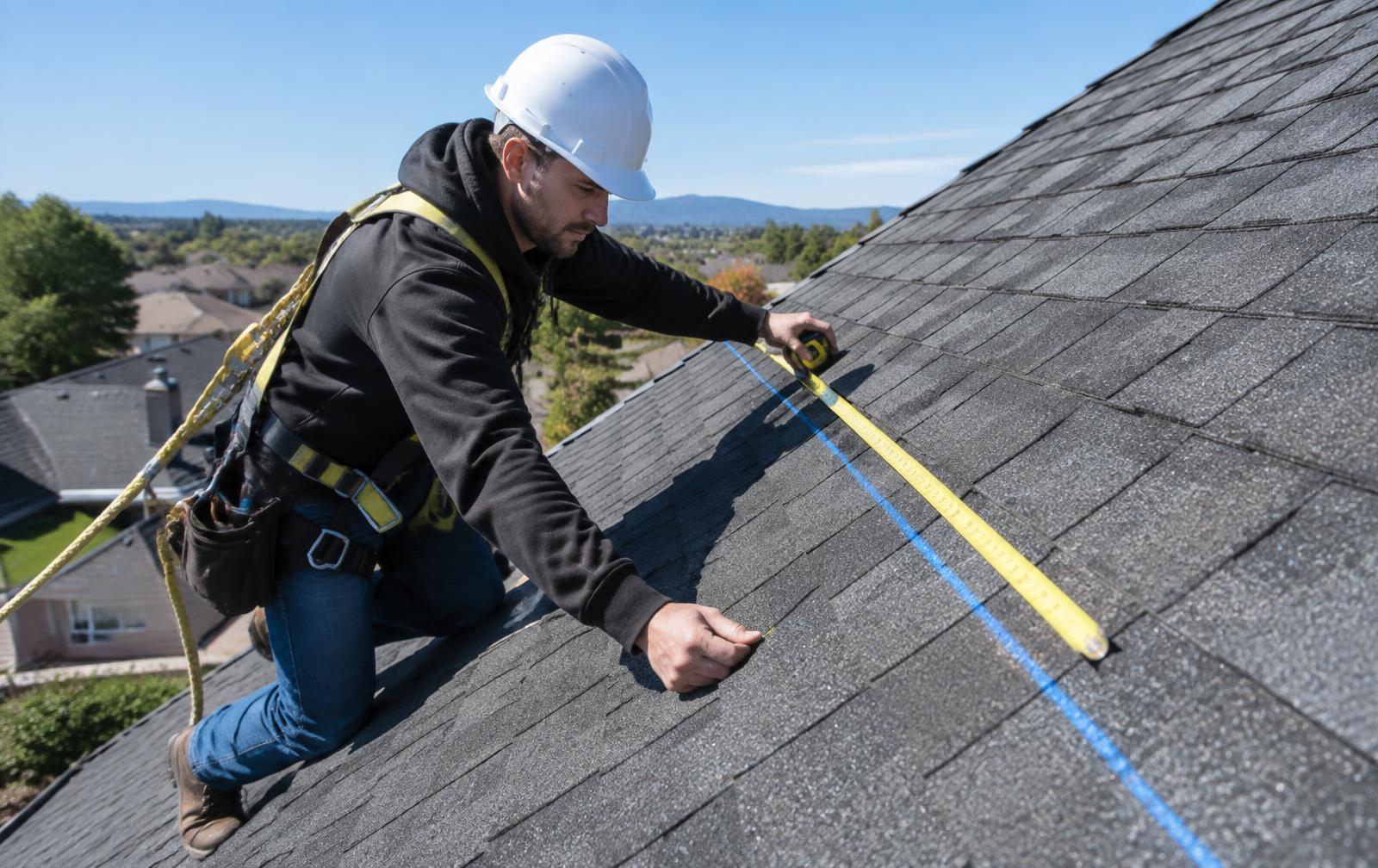
Separating broken-tile complaints from an underlying leak investigation
A homeowner who notices a cracked or slipped tile usually reports exactly that: a visible, physical problem they can point to from the ground or from a photo. What they often can't see is whether the underlayment beneath that section of tile — or beneath an entirely different section of the roof — has already failed and is letting water into the attic or ceiling. Tile is frequently the most durable part of the roof system; the waterproofing layer underneath it, installed decades earlier in many cases, is usually what actually determines whether a roof needs attention.
The intake record captures the homeowner's complaint as given: a broken tile they can see, a leak they've noticed inside, or both reported together. It does not and cannot determine whether these are the same problem. A broken tile near a visible interior stain might be the direct cause, or the stain might trace back to a valley or penetration flashing nowhere near the broken tile a homeowner happened to notice while on a ladder cleaning gutters.
Why this separation changes the visit
A straightforward broken-tile swap, with no reported interior leak, is a short visit: confirm the tile type, confirm you have or can source a match, replace it, done. A reported interior leak alongside visible tile damage is a different conversation — one that needs an estimator or experienced tile roofer who can inspect the underlayment condition broadly, not just patch the visible tile and hope the water problem goes away. Treating every tile enquiry as a simple swap risks sending the wrong person, or sending someone without the tools to lift and reset tile safely to check underneath.
During onboarding you tell the network whether your company serves tile repair, underlayment and re-roof work, or both, and that acceptance list determines whether a given enquiry routes to you. If your crew handles tile repair only and not underlayment replacement, flagging that distinction keeps leads that need deeper work from landing somewhere your team can't actually resolve them.
Recording clay, concrete or unknown tile systems and product information
Tile roofing is not one material. Clay tile, concrete tile, and various profiles within each — flat, S-shaped, barrel, interlocking — all have different weights, fastening methods and sourcing considerations. A repair on a 1990s concrete S-tile roof and a repair on a historic clay barrel-tile roof call for different suppliers, different matching strategies, and in some cases different crew experience entirely.
- Tile material, where the homeowner knows or can describe it: clay, concrete, or unknown.
- General tile profile or shape, described in the homeowner's own words — flat, curved, barrel-style — since few homeowners know manufacturer terminology.
- Any manufacturer or product information the homeowner has, such as from original construction paperwork or a prior repair invoice.
- Approximate roof age and whether any tile has been replaced or added to before, which can signal a mismatched patch already on the roof.
Why "unknown" is still a useful answer
Most homeowners do not know their tile's manufacturer or product line, and that's expected, not a gap in the intake. An "unknown" field paired with a photograph is often enough for an experienced tile roofer to identify the general profile and material on sight, which is one reason requesting photos during intake matters as much for tile as it does for any other specialty repair. Where a homeowner does have old paperwork, even a faded original invoice, that detail can save real time tracking down a discontinued tile's modern equivalent or a reasonable substitute.
The lead record passes along whatever the homeowner provides on these points. It does not involve the network identifying a tile product on the homeowner's behalf, because that identification requires someone experienced with tile roofing looking at a clear photo or the roof itself — work that belongs to your team's qualification process, not the intake form.
TEACHING DIAGRAM
Tile project intake card (illustrative example)
- 1Enquiry
Homeowner calls, submits a form or uses chat on a network-owned tile-relevant site.
- 2Visible concern recorded
Broken or slipped tile, interior leak, or both, captured in the homeowner's own words.
- 3Tile and product details
Material, profile and any manufacturer information gathered where the homeowner can provide it, plus photos.
- 4Capability and availability check
Your team checks described scope against served tile capability and realistic material-matching options.
- 5Specialist visit
An experienced tile roofer inspects tile and, where warranted, underlayment condition in person.
Understanding repair matching and material-availability questions
One of the most common points of friction in tile repair work has nothing to do with the roof itself: it's whether a matching tile is actually available. Many tile profiles are discontinued, regional, or specific to a builder's original supplier, and a homeowner who needs three replacement tiles may be surprised to learn the exact product isn't made anymore.
The intake record cannot resolve this. It can only capture what the homeowner reports about the tile and pass along any photos or product information they provide. Confirming actual material availability — whether your company has reclaimed or salvaged tile in inventory, a supplier relationship for a close match, or needs to propose a different approach such as relocating tile from a less visible part of the roof — happens on your side, after your team has reviewed what's been reported.
Setting expectations before the visit
- Tell the homeowner upfront that an exact match isn't always possible, and that a close match or tile relocation from a less visible area may be the realistic option.
- Ask whether the homeowner has any leftover tile from original construction, which happens more often than expected with careful owners.
- Confirm whether your company maintains its own salvage stock for the tile profiles common in your territory, and flag gaps where you'd need to source externally.
- If an exact match genuinely isn't available, be direct about it on the first call rather than after a wasted site visit.
Being upfront about material-matching limitations protects the relationship with the homeowner and avoids a visit that ends in disappointment neither side saw coming. A company that keeps an informal log of which tile profiles it has reliably sourced before, by territory, tends to handle this conversation better than one working from memory call to call.
Preparing for underlayment, flashing and access assessment
Tile roofs are heavy, and walking one safely requires knowing where and how to step without cracking additional tile — a skill that separates an experienced tile crew from a general roofing crew doing its first tile job. Any visit involving more than a simple swap of an already-broken tile should be planned with that in mind, both for safety and to avoid creating new damage during the assessment itself.
Underlayment condition
Where an enquiry includes a reported interior leak, or where the roof's age suggests the original underlayment is approaching or past its expected service life, your team should plan the visit as an inspection, not a quick patch. Lifting tile to check underlayment condition in a few representative areas, particularly near valleys and penetrations, often tells you more about the roof's real condition than the single broken tile that prompted the call.
Flashing and penetrations
Tile roofs have a lot of penetrations — vents, skylights, chimneys — and tile flashing details are more specialized than standard shingle flashing. A homeowner reporting a leak near a skylight or vent stack on a tile roof is often describing a flashing failure rather than a tile problem, and confirming that distinction before scheduling helps your team bring the right materials.
- Confirm the reported problem location relative to valleys, skylights, vents and chimneys.
- Ask whether the homeowner has noticed the issue worsening after specific storms or simply over time.
- Confirm roof access: pitch, walkable areas, and whether foot traffic needs to be minimized due to tile age or fragility.
- Bring appropriate replacement tile options or a plan for relocation/sourcing based on what the intake and photos suggest.
- Set expectations that a full underlayment assessment may extend the visit beyond a simple tile swap.
MODEL CALCULATOR
Illustrative Tile Territory Cost Model
A simple model to frame costs against an assumed close rate on tile-relevant enquiries. All numbers are inputs you set — not measured results.
- Quarter cost (rental x 3 + setup) (US dollars)
- $3,488
- Modeled jobs won (leads x close rate) (count)
- 1.6
- Modeled revenue (jobs won x average job value) (US dollars)
- $11,664
Illustrative only. Tile-relevant leads per quarter and close rate are not published figures and must be set by you based on your own market knowledge and crew capability; actual results depend on territory, project mix, and your team's follow-up.
Matching tile-project scope to qualified partner capabilities
Rent Roofing Sites routes a tile-relevant enquiry within a territory to the one roofing company assigned there, based on the tile services that company confirmed during onboarding. The network does not verify tile installation experience, supplier relationships, or crew training — that self-reported acceptance list, and the accuracy of it, is the roofing company's responsibility, the same as with any other specialty.
This matters more for tile than for some other specialties because the range of competence required is wide. A company comfortable swapping a handful of broken concrete tiles may have no experience with a full tile tear-off and underlayment replacement, which involves staging, storing and resetting an entire tile field without excessive breakage — a materially different project with different crew, timeline and cost implications.
A practical self-check before accepting tile as a served specialty
- Has your crew completed tile repair, underlayment replacement, or full re-tile work recently, not just quoted it?
- Do you have reliable access to matching or close-match tile for the common profiles in your territory, including salvage options?
- Can your crew walk and work a tile roof without a meaningful risk of creating additional breakage during routine access?
- Can your estimator explain underlayment lifecycle and realistic repair-versus-replacement tradeoffs to a homeowner clearly?
If your company is strong on tile repair but not yet equipped for full underlayment or re-tile projects, listing repair only as your served tile specialty keeps enquiries aligned with what you can deliver well. Overstating capability to capture more leads risks a job that goes badly on a roof system where mistakes — cracked tile during access, a poorly sourced mismatch, an underlayment problem patched over rather than addressed — are visible and can follow a company's reputation in a tile-heavy market.
Assessing the serviceable tile market before activating a territory
Tile roofing demand is not evenly distributed; it concentrates in markets with older construction stock using clay or concrete tile, and in regions where tile is a common building choice. Because specialty inventory for tile is reviewed per market across the live network in PA, TX and IL, a tile territory is evaluated on whether that specific market has, or could reasonably support, a site built to capture tile-relevant search behavior — not treated as a standard offering available everywhere by default.
A Roofing Market Review for tile covers the existing asset in a given territory, the realistic tile scope your crew can serve, and what the written agreement would say about exclusivity and term. It does not include a published search-volume or lead-count figure, because keyword volumes, difficulty and CPC are unmeasured for tile the same as for every other specialty, and the network does not guarantee lead counts, rankings or results for any market.
Questions worth bringing to a tile-specific review call
- Is there an existing site in this territory with tile-relevant content, or would tile coverage need to be built into an existing residential site?
- What does the written agreement say about exclusivity for tile enquiries specifically, within the territory's broader residential coverage?
- What CRM delivery options are available for my software, and what status are they in — live, built and awaiting connection, or still in testing?
- What happens to a tile enquiry if my company's served tile scope changes mid-term, for example dropping full re-tile work?
- Does any existing intake history for the territory suggest more repair requests or more full-replacement interest?
A worked illustrative model can help frame the economics even without a published volume figure. If a tile-capable residential territory runs at the $997 per month site rental list price plus a one-time $497 setup on a first plan, and your company closes one mid-size tile repair-and-partial-underlayment project from that territory across a quarter, the math can work in your favor — but this is a labeled model assumption built on numbers you supply, not a projection, and your actual outcome depends on your market, your close rate and how closely your crew's real tile capability matches the enquiries that arrive.
| Assumption | Value |
|---|---|
| Monthly site rental (list) | $997 |
| One-time setup (first plan) | $497 |
| Tile projects needed to cover a quarter's cost | Varies by your average job value — model assumption only |
WORKSHEET
Tile Lead Qualification Checklist
Work through this before accepting tile as a served specialty or scheduling a tile visit.
0 of 9 checked
EXPLAINER VIDEO · 45 SECONDS
Tile Roofing Leads: Repairs and Building Details
Narrated explainer with diagrams drawn for this page. No customer data or private screens are shown.
Video transcript
Tile roofs fail in their own way. Tiles crack or slip, and the underlayment beneath can wear out even when tiles look fine. Clay and concrete tiles need different handling. Matching the profile and color matters for repairs. Good intake asks where water shows inside, how old the roof is, and whether anyone walked on it recently. Some jobs are spot repairs. Others mean lifting tile and replacing underlayment. Send tile leads only to crews that do tile. Tile enquiries vary by market. Book a Roofing Market Review to check yours.
STRAIGHT ANSWERS
Questions roofers ask
Can tile enquiries distinguish a broken tile from a broader leak concern?
The intake record captures both if the homeowner reports them: a visible broken tile and, separately, any interior staining or leak they've noticed. It cannot determine whether the two are connected — that assessment happens on your team's call and, where warranted, during the visit itself.
What happens when the customer does not know the tile manufacturer?
That's common and still usable. The lead record passes along whatever the homeowner knows, such as general color and shape, along with any photos they can provide. An experienced tile roofer can often identify the general profile and material from a clear photo even without manufacturer information.
Can I limit tile leads to repair work or replacement projects?
Yes. During onboarding you set which tile services your company serves — repair only, underlayment replacement and full re-tile, or both — and that acceptance list is part of what determines which enquiries route to you.
Does Rent Roofing Sites verify that a matching tile is available before sending a lead?
No. Material-matching is a step your team completes using the tile details and photos the homeowner provides. Discontinued or regional tile profiles are common, and confirming availability or a reasonable close match is the roofing company's responsibility.
How do you handle tile leads where an underlayment problem is suspected?
The intake flags a reported interior leak alongside tile damage where the homeowner mentions it, but it does not diagnose underlayment condition. Your team should plan such visits as an inspection rather than a simple tile swap if the roof's age or the reported symptoms suggest a broader issue.
Is tile lead volume guaranteed in my territory?
No. Specialty inventory, including tile, is reviewed per market and is never guaranteed nationally or assumed available. A Roofing Market Review checks what currently exists in a given market before any agreement is discussed.
Can tile be combined with other roofing services in the same territory?
Yes. Most tile-capable companies in the network also serve standard residential repair and replacement, and your acceptance list can include any combination of services your crew actually performs, confirmed during onboarding.
See what exists in your market
A Roofing Market Review is a short call. We check which ZIPs and services you want, whether a network asset or territory is open there, and which plan options would apply. No lead counts or results are promised.