
Delivery & Accountability
Roofing Lead Verification
Lead verification in this program is the set of checks a roofing enquiry goes through before and after it's delivered: is the contact reachable, is the ZIP inside the assigned territory, is the service one your company accepts, and is this a new opportunity rather than a duplicate of one already on record. Those checks don't decide whether a homeowner will hire you — they decide whether the enquiry is a legitimate match for your agreement.
That distinction matters because "verified" and "ready to buy" are not the same claim, and this page is written to keep them separate. A verified lead is one that passed the contact, territory, service and duplicate checks that define eligibility under a written agreement. It says nothing about how motivated the homeowner is, how large the job might be, or whether they'll ultimately choose your company over a competitor they're also calling.
The same checks apply across channels — call, form, chat — though a call carries additional billing-specific rules under the Pay Per Call program, covered separately on that page. This page focuses on the broader verification logic: what makes an enquiry eligible in the first place, what disqualifies one, how duplicates and spam are filtered out, and what happens when your team disagrees with a verification outcome.
None of this is phrased as a guarantee of lead quality in the sense of close rate or contract value. What's verified is eligibility against documented rules — not homeowner intent, and not a promise about the job's size or likelihood of closing. Where a dispute arises, it's reconciled against the written rules in your agreement, using the evidence available for that enquiry, which is the process this page walks through in detail.
Updated 2026-10-03. Terms, prices and availability are set by the written agreement for your market.
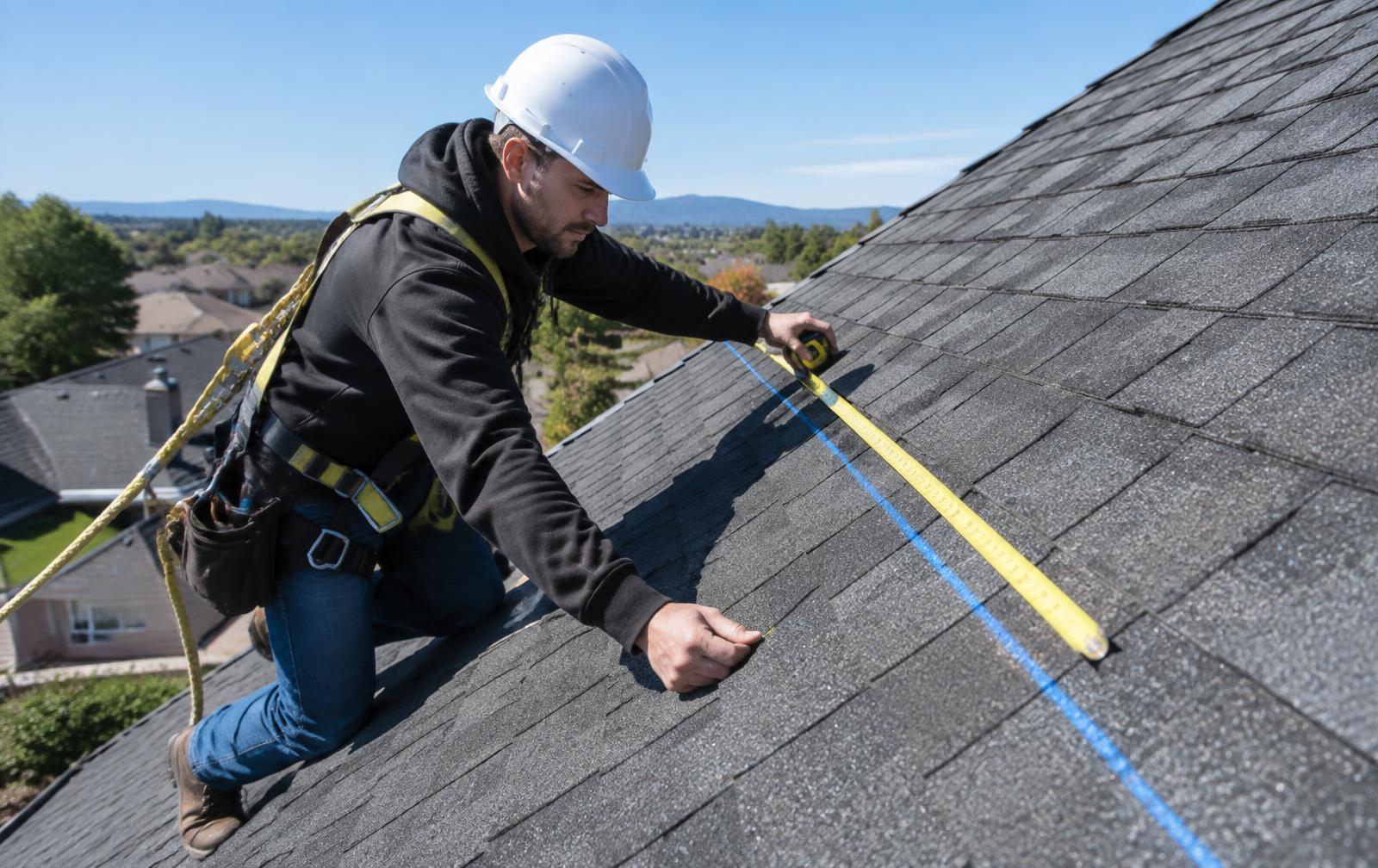
Defining a valid roofing enquiry before the first lead arrives
A valid enquiry is defined in writing before a territory goes live: the ZIPs it covers, the services your company accepts, and — for Pay Per Call — the minimum talk time and the other billable-call criteria. Verification checks an incoming enquiry against that pre-agreed definition rather than against a judgment call made after the fact.
This order matters. If the rules were written only after a dispute came up, every disagreement would turn into a negotiation about what should have counted. Instead, the territory agreement sets the boundaries first — accepted ZIPs, accepted services, minimum talk time where Pay Per Call applies — and every enquiry that follows is checked against those same boundaries, consistently.
What the definition typically covers
- ZIP codes included in the assigned territory
- Services your company has agreed to accept (repair, replacement, inspection and others, since not every roofer accepts every service)
- For Pay Per Call: the agreed minimum talk-time threshold and the full list of billable-call criteria
- What counts as a duplicate of an existing opportunity
Where your company later changes which services it accepts, or a territory's ZIP boundaries are adjusted, the written agreement is the mechanism for updating the definition — verification rules shift with the agreement, not independently of it. A Roofing Market Review is the place to confirm or revise that definition before changes take effect.
Checking contact information, service fit and territorial eligibility
Every enquiry is checked on three dimensions: can the contact actually be reached, does the ZIP fall inside the assigned territory, and does the requested service match what your company has agreed to accept. An enquiry can fail on any one of these and still have been a real, honest contact from a real homeowner — verification is about agreement fit, not honesty.
Contact reachability
For forms and chat, this means a phone number in a plausible, reachable format. For calls, reachability is inherent — a connected call is, by definition, a reachable number — but a call that never connects, goes to voicemail, or is missed is not eligible as a billable Pay Per Call contact regardless of any other factor, because no actual conversation took place.
ZIP-to-territory matching
The property or caller ZIP is matched against the territory's defined ZIP list. Where a ZIP is never captured at all — a caller who hangs up before providing one, or a form submitted without it — the enquiry's territorial fit is unknown rather than confirmed, and it's recorded that way rather than assumed to be in or out of territory.
Service fit
The requested service (repair, replacement, inspection, coating and so on) is checked against the list your company has accepted under the agreement. A homeowner asking about a service your company doesn't perform in that market is a real enquiry, but it isn't eligible under your specific agreement, and it's flagged as a service mismatch rather than delivered as a standard lead.
| Check | Pass condition | If it fails |
|---|---|---|
| Contact reachability | Valid phone / connected call | Not billable (calls); flagged for forms and chat |
| ZIP in territory | Captured ZIP matches assigned list | Flagged as out-of-territory or unknown fit |
| Service match | Requested service is in accepted list | Flagged as service mismatch |
| Not a duplicate | No existing open opportunity for this contact | Linked to existing record, not counted as new |
TEACHING DIAGRAM
Validity decision card (illustrative example)
| Enquiry | Contact reachable | ZIP in territory | Service accepted | Outcome |
|---|---|---|---|---|
| A: Repair call, correct ZIP | Yes | Yes | Yes | Eligible |
| B: Second call from existing contact | Yes | Yes | Yes | Duplicate — linked, not new |
| C: Coating request, service not accepted | Yes | Yes | No | Service mismatch |
| D: Form from a ZIP outside the list | Yes | No | Yes | Out of territory |
| E: Form with no ZIP entered | Yes | Unknown | Yes | Insufficient evidence — fit unknown |
Separating duplicate enquiries, spam and unrelated sales calls
Beyond fit, every enquiry is also checked against a short exclusion list: is this a duplicate of an existing opportunity, and is this actually a homeowner with a roofing need rather than spam, a vendor pitch, a job applicant, or a wrong number. Each of these gets filtered before, or flagged clearly alongside, delivery, so your team isn't spending estimator time qualifying obvious non-fits.
Duplicates
Duplicate checking matches on phone number and existing open opportunity, the same logic used for attribution reporting. A second call or form from someone who already has an open lead on file is linked to that record instead of generating a new, separately billable one.
Spam, vendors, applicants and wrong numbers
- Spam or automated contact attempts with no real service need described
- Vendors, suppliers or sales calls directed at the roofing company rather than from a homeowner seeking roofing work
- Job applicants calling about employment rather than roofing service
- Wrong numbers — a caller who reached the tracking number by mistake and has no roofing need
For Pay Per Call specifically, these categories are explicitly listed among the non-billable reasons in the written agreement: a call that connects and lasts past the minimum talk time is still not billable if it turns out to be a vendor pitch or a wrong number, because length of call alone was never the qualifying criterion.
Why a valid enquiry is different from a booked or sold roofing job
A verified enquiry has passed the contact, territory, service and duplicate checks. It has not been diagnosed, estimated, scheduled, or sold. Conflating "verified" with "ready to close" sets an expectation the checks were never designed to meet, and it's worth stating plainly so a roofing company isn't disappointed by a verified lead that doesn't turn into an appointment.
Homeowner motivation, budget, competing quotes, and the actual scope of the roofing problem are all outside what any intake check, ours or anyone else's, can determine before your team speaks with the person directly. A homeowner can be perfectly verified — real contact, correct territory, accepted service, not a duplicate — and still decide not to proceed, shop other roofers, or turn out to need work outside what they originally described.
What verification does and doesn't claim
- Does claim: the contact, territory, service and duplicate checks were run and passed
- Does not claim: the homeowner is ready to sign, the job size, or the likelihood of closing
- Does not claim: the roof problem matches what the homeowner described before your team inspects it
Where the Calendar OS booking flow is used, a booked appointment is a stronger signal than a bare verified enquiry — the homeowner chose a specific time from the assigned roofer's open slots, which takes more commitment than answering intake questions. Even then, a booked appointment is a request and a reserved time, not a signed contract, and some booked visits will still end without a sale.
MODEL CALCULATOR
Hypothetical Dispute-and-Credit Model
A labeled, hypothetical example using your own assumptions about dispute volume, not a published dispute rate.
- Modeled disputes upheld (count)
- 2
- Modeled credit restored (count)
- 189.2
Hypothetical only. Dispute volume and upheld rate are not published figures; every dispute is actually decided against the written billable-call rules for your agreement, not by an assumed percentage.
Submitting a quality dispute with useful evidence
A quality dispute is a claim that a specific enquiry — most often a Pay Per Call charge — shouldn't have been counted as billable or valid under the written rules, and it's resolved fastest when it's tied to a specific lead ID and a specific rule, not a general complaint that "the leads have been bad lately."
Useful evidence for a dispute includes the lead or call record ID, the specific billable or eligibility criterion you believe wasn't met (wrong ZIP, wrong service, under the minimum talk time, duplicate, vendor call, wrong number), and any detail from the actual conversation that supports the claim. Where call recording and transcripts are enabled and permitted for a given territory, those records are the most direct evidence available for a Pay Per Call dispute specifically.
Building a disputable case
- Identify the specific lead or call record ID in question.
- Name the specific written rule you believe was violated — don't start from "this wasn't a good lead."
- Pull any available evidence: recording, transcript, form fields, or the territory's ZIP and service list.
- Submit the dispute referencing the ID and the rule, not a general monthly volume complaint.
A dispute built around "this call only lasted 90 seconds and our agreement sets a 2-minute minimum" is resolvable in minutes against the call log. A dispute built around "this lead didn't turn into a sale" isn't a verification dispute at all, since a no-sale outcome, by itself, doesn't establish that the enquiry was invalid.
Reviewing disputed leads and applying the contracted remedy
A submitted dispute is reconciled against the written rules for that program, using the evidence available for that specific enquiry: the call record and recording or transcript where enabled and permitted, the form or chat transcript, the territory's ZIP and service list, and the duplicate-match history on the contact.
The remedy applied, if the dispute is upheld, is whatever the written agreement specifies for that situation, most commonly for Pay Per Call: the charge is reversed and the prepaid credit is restored. Remedies beyond what's written into the agreement, such as automatic replacement leads for a disputed form or chat enquiry, are not assumed unless they're part of that specific program's terms.
What a review typically confirms or rejects
| Dispute basis | Evidence checked | Typical outcome if confirmed |
|---|---|---|
| Call under minimum talk time | Call log duration | Charge reversed, credit restored (if Pay Per Call) |
| Wrong service / outside agreement | Service field vs. accepted list | Charge reversed or lead excluded from count |
| Duplicate of existing opportunity | Phone number / opportunity match history | Second charge or count removed |
| "Didn't result in a sale" | No written rule ties outcome to validity | Not a verification dispute on its own |
A HYPOTHETICAL illustration of the mechanics, using assumptions you supply rather than a measured outcome: say your company disputes 3 Pay Per Call charges in a month at $97 each, and 2 are upheld because the call logs show they fell under the agreed minimum talk time. Under a standard Pay Per Call remedy, that would restore $194 in prepaid credit — a model you can run with your own dispute history, not a published average dispute rate.
For roofing companies weighing whether verification rigor is worth it in a given market, a Roofing Market Review is the place to look at dispute history alongside territory inventory, since the two are connected: a market with tighter ZIP boundaries and a clearer accepted-service list tends to produce fewer disputable mismatches in the first place.
WORKSHEET
Lead-Quality Scorecard
A documented record for reviewing any enquiry's eligibility and, where contracted, a dispute remedy.
0 of 8 checked
EXPLAINER VIDEO · 46 SECONDS
What Makes a Roofing Lead Verified
Narrated explainer with diagrams drawn for this page. No customer data or private screens are shown.
Video transcript
Verification starts with the contact: a reachable phone, a real person, and not a repeat of an existing job. Then the request: a real roofing problem, a service you accept, and a property ZIP inside your territory. The source is kept too: the site, the page or number, and the time it came in. A long call is only one check. The caller must be the homeowner or a decision-maker, and every reason is listed. If there is a dispute, recordings and transcripts, where enabled and permitted, are checked against the written rules. Book a Roofing Market Review to learn more.
STRAIGHT ANSWERS
Questions roofers ask
Does a verified roofing lead mean the homeowner is ready to sign?
No. Verification confirms the contact, territory, service and duplicate checks were passed. It says nothing about the homeowner's budget, motivation, or how many other roofers they're calling.
How do you decide whether two enquiries are duplicates?
By matching phone number and existing open opportunity. A second contact from someone who already has an open lead on record is linked to that record rather than treated as a new, separately counted enquiry.
How can I challenge an enquiry that falls outside my agreement?
Submit a dispute referencing the specific lead or call ID and the specific written rule you believe was violated — ZIP, service, talk time, duplicate status — along with any available evidence such as a call recording or transcript. It's reviewed against those written rules, not against a general complaint about lead quality.
Is a long phone call automatically a qualified lead?
No. Talk time is one factor among several. A call can clear the minimum duration requirement and still fail eligibility for being a vendor call, a wrong number, outside the agreed service list, or outside the territory.
What if a lead's ZIP code was never captured during the call or form?
The territorial fit is recorded as unknown rather than assumed to be in or out of territory. An incomplete record is saved as-is; it isn't guessed at to fill the gap.
Does a no-sale outcome mean a lead was invalid?
Not on its own. A verified enquiry can fail to become a sale for reasons unrelated to its validity — the homeowner chose another contractor, decided to wait, or the scope changed. A dispute needs a written-rule basis, not just a lost sale.
Are verification rules the same for calls, forms and chat?
The core checks — contact, territory, service, duplicate status — apply across all three channels. Calls carry additional Pay Per Call billing criteria, including a minimum talk-time threshold, that forms and chat enquiries don't have.
See what exists in your market
A Roofing Market Review is a short call. We check which ZIPs and services you want, whether a network asset or territory is open there, and which plan options would apply. No lead counts or results are promised.