THE PROBLEMThe problem nobody puts in the demo
Texas sits at the top of every hail map in America. The corridor from Dallas-Fort Worth down through Austin and out toward Stephenville takes more hail events in a typical year than most states see in a decade. If you roof in Texas, hail maps are not a novelty — they are a way of life.
And that is exactly the problem. Texas hail is the worst-kept secret in roofing. When a swath crosses DFW, it is not just the local companies who see it. Storm chasers from across the country watch Texas hail maps all spring, and the trucks roll in within hours. The bigger the storm, the bigger the swarm.
So the Texas roofer faces a strange reality: the best hail market in the country is also the most contested. The map that tells you where the work is tells ten thousand other roofers the same thing — and in Texas, they actually come.
LET'S BE HONESTWhat it is really costing you
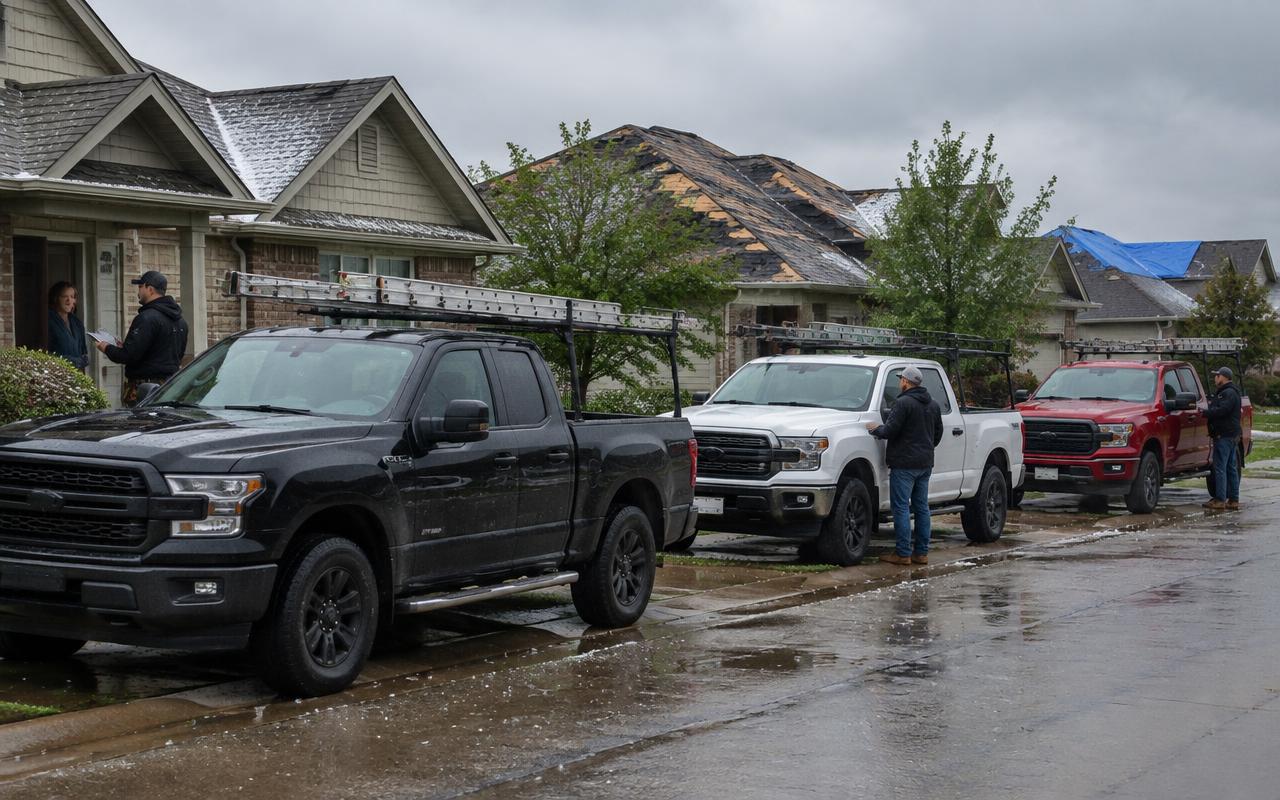
If you worked a DFW hail event recently, you already know. Neighborhoods around Dallas get blanketed within 48 hours — door hangers, yard signs, knocks at dinner time. Homeowners in hail alley are so over-pitched that many will not open the door at all. The swarm has trained them to distrust everyone, including you.
The economics punish the local roofer most. You have the real office, the real reputation, the real warranty — and you are competing on doorsteps against fly-in crews who will be three states away when the warranty call comes. They can undercut you because they will never service the work. You cannot. Every swarm season, that dynamic costs established Texas roofers jobs they should have won.
And the window is short. Texas storm money concentrates in the first weeks after an event. While you are canvassing contested streets, the motivated homeowners — real damage, real insurance, ready to sign — are searching online for a roofer they can trust. In the most searched hail market in America, whoever owns that search owns the storm.
THE FAILED FIXWhy more data never fixed it
The standard Texas playbook is escalation: better maps, faster deployment, bigger canvassing teams, earlier mornings. It works just enough to keep everyone doing it — and every season the swarm gets bigger, the homeowners get colder, and the margins get thinner.
Some Texas roofers try to out-market the swarm with bought leads. In a market this contested, shared leads are at their worst: the same homeowner sold to multiple buyers, hammered by calls, and conditioned to shop purely on price. You pay premium prices for the privilege of joining a race to the bottom.
Maps, speed, and shared leads all fail for the same reason: they are shared. In Texas, anything everyone can buy, everyone buys. The only durable edge in a swarm market is something the swarm cannot have — exclusive ownership of the inbound channel in your town.
THE REAL FIXOwn the call, not just the map
Here is the move the swarm cannot counter. When hail hits a Texas town, the homeowners most likely to buy do not wait for the door-knockers — they search. 'Hail damage roof repair' plus their town. 'Roof inspection after hail.' In a market where homeowners distrust strangers at the door, the company they find and call themselves carries instant trust.
Rent Roofing Sites builds and operates local roofing sites town by town, each with a real local phone number, routing every inbound call and form request to exactly one roofer. While the swarm fights over doorsteps in Dallas or Austin, the territory holder's phone rings with homeowners who already chose to reach out.
And in Texas, you can start free. The Free Exclusive Territory Pilot lets a qualified roofer lock an open territory and receive its inbound inquiries at zero cost and zero risk. The swarm gets the map. You get the calls.
01Why Texas hail is different
Texas combines frequency, size, and population density in a way no other hail market matches. The DFW metroplex alone puts millions of roofs under recurring hail swaths, and the Austin corridor adds more. That is why Texas hail maps are watched nationally — the volume of work is real.
But the same factors that make Texas attractive make it brutal. National storm-chasing operations build their entire seasons around Texas events. The local roofer is not just competing with the company across town — they are competing with a traveling industry.
02What Texas hail maps actually tell you
Texas hail maps — from NOAA reports to paid swath tools — show where hail fell and how big it was. They are useful for verifying events and planning which suburbs to focus on. What they cannot show is which homeowner will buy, and they cannot keep a single competitor off your street.
In the most-watched hail market in the country, treat the map as public information — because it is. Your strategy has to include something that is not public: exclusive demand.
03How established Texas roofers beat the swarm
The roofers who win long-term in Texas share one trait: homeowners come to them. Referrals, local brand, and search presence turn the trust problem around — instead of convincing a skeptical homeowner at the door, they answer calls from homeowners who already want them.
An exclusive inbound territory is that advantage, systematized. The local site, the local number, and the routing make you the company your town finds first — storm after storm, year after year, while the swarm resets to zero each time.
04How the Free Exclusive Territory Pilot works
Apply for your Texas territory. If it is open and you are a fit, we route the inbound calls and form requests from our local site to you — exclusively. You answer, book, and close with your own process and CRM. We do not manage jobs, estimates, or crews.
The pilot is free. If you continue, pricing is set in a written agreement — published site rent is $997 per month per site, with setup and per-call terms documented in writing. If the market does not produce, you risked nothing.
05Who should apply — and who should not
Apply if you are an established Texas roofer who can answer fast and close warm inquiries — the kind of company the swarm cannot imitate. The territory model turns your reputation into the first call instead of the fifth knock.
Do not apply expecting guaranteed lead counts. Storm demand depends on weather and market, and we never invent numbers. What we promise is exclusivity, honest routing, and a free way to prove your market.
06A week in the life: the chaser vs the holder in DFW
A hail event crosses the Metroplex on a Sunday. The chaser watches the map Sunday night, drives in Monday, and spends the week knocking doors alongside dozens of other crews — local and flown-in — working the same subdivisions. The territory holder wakes up Monday to a ringing phone: homeowners across the town searched, found the local site, and called.
By Friday, the chaser has a stack of maybes and a fuel bill. The holder has a schedule of inspections with homeowners who asked for them. Texas storms are big enough for everyone — but only one model lets you keep what you win.
07The fly-in problem, and why locals keep losing to it
Texas hail attracts national storm operations with professional canvassing machines. They arrive fast, knock hard, and price aggressively because they will not be around to service the work. Established local roofers — with real offices, real warranties, and real accountability — lose jobs to operators who will be gone by winter.
The inbound channel is the local roofer's revenge. When a homeowner searches and finds the local site, they get a real local company. The fly-in crew cannot buy that position, because it is not for sale to the swarm. One territory, one roofer.
08Building a Texas storm business that compounds
The roofers who build lasting Texas storm businesses share a pattern: they pick their ground and deepen it. Reviews accumulate, referrals multiply, and each storm season starts stronger than the last. The asset is not storm data — it is local position.
An exclusive inbound territory is that position, systematized. The local site and number keep working between storms, so when the next swath crosses your town, you are not starting over. You are cashing in on ground you already own.
09Your next step
If you are a Texas roofer tired of splitting the best hail market in America with every chaser who owns a map, the exit is here. Apply for the Free Exclusive Territory Pilot with your target ZIP and we will tell you honestly whether it is open.
If it is, you will see real inbound inquiries from your market before you pay anything. The swarm keeps the map. You keep the calls. Proof first, zero risk.
10The questions smart roofers ask before switching
Roofers who have been burned by lead sellers ask the right questions, and you should too. Is the lead shared? No — one roofer per territory, full stop. Is the homeowner expecting the call? Yes — they initiated it. Can I see it work before I pay? Yes — that is the entire point of the free pilot.
Ask the same questions of your current lead sources. If the answers come back shared, cold, and pay-first, you already know why the margins feel thin. The model is the margin.
11What happens after the pilot
If the pilot produces real inquiries and you want to keep the territory, the terms are simple and written down before you commit: $997 per site per month, with setup and per-call terms spelled out in the agreement. No surprise fees, no long lock-in invented after the fact.
If the pilot does not convince you, you walk away having spent nothing. That is what zero risk means, and it is why the offer is structured this way — we would rather prove the channel than pitch it.
12The real cost of doing nothing
Texas produces more hail work than any state, and every season you chase it with shared maps, the fly-in crews take their cut of your backyard. The local roofer who owns the inbound channel is the one operation the swarm cannot undercut. Position compounds, and so does the cost of waiting.
The free pilot removes every excuse for waiting. No money, no lock-in, no risk — just an honest look at what inbound demand in your Texas market actually looks like. The only expensive option left is standing still.