THE PROBLEMThe problem nobody puts in the demo
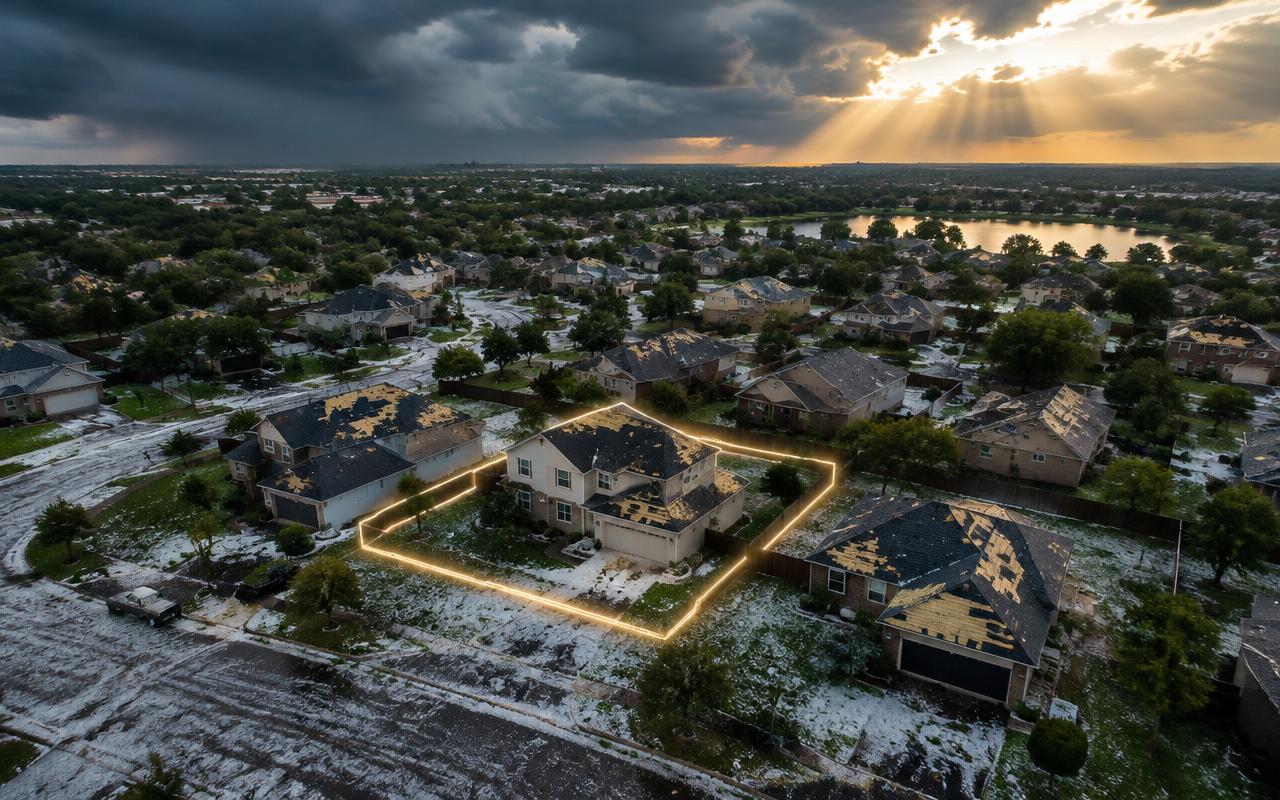
Colorado's Front Range — Denver, Colorado Springs, and the corridor between — sits in one of the most hail-prone zones in North America. The elevation, the moisture, and the storm track combine to put Front Range roofs under hail with a regularity that roofers in most states cannot imagine.
Colorado hail maps tell that story clearly. Season after season, the swaths stack up over the same suburbs. For a roofer, that looks like opportunity — and it is. The catch is that it looks like opportunity to everyone else too. The Front Range is not a secret. It is a destination.
So the Colorado roofer works in a paradox: one of the best hail markets in the country, with one of the most crowded competitive fields in the country. The map shows you where the hail fell. It also shows every competitor you have. Same map. Same streets. Same doors.
LET'S BE HONESTWhat it is really costing you
Work a Denver or Colorado Springs hail event and you will feel it within a day. The affected neighborhoods fill with trucks. Homeowners get pitched repeatedly in the first 72 hours. Front Range homeowners are among the most storm-savvy in the country — they have been through this before, they know the drill, and they are hard to impress on a doorstep.
That sophistication cuts against the cold canvasser. Colorado homeowners know their insurance rights, know the storm-chaser playbook, and increasingly refuse to engage with anyone who knocks. The roofers who win their business are the ones they sought out themselves — the ones they found, vetted, and called.
And the season compresses everything. Colorado's hail window concentrates demand into intense bursts. When the window opens, the roofer who already owns the inbound channel collects the demand. The roofer still studying the map is already behind.
THE FAILED FIXWhy more data never fixed it
The usual Colorado playbook is the same escalation you see everywhere: better swath data, faster deployment, more canvassers, earlier mornings. In a market this sophisticated, escalation buys less every year. The homeowners are smarter, the field is more crowded, and the doorstep pitch is closer to dead.
Some roofers try shared leads to escape the doors. In a market where homeowners are this pitched-out, shared leads convert poorly and expensively — the same contact sold to multiple buyers, each one calling a homeowner who has already heard it all.
Maps, speed, and shared leads fail in Colorado for the same reason they fail everywhere: they are shared. In a sophisticated market, shared tools produce shared results. The only durable edge is something exclusively yours — the inbound channel in your town.
THE REAL FIXOwn the call, not just the map
The move that works in Colorado is the one that matches how Colorado homeowners actually buy. After hail, they research. They search for local roofers, read, compare, and call the company they chose. That self-directed process is exactly what an exclusive inbound territory captures.
Rent Roofing Sites builds and operates local roofing sites town by town, each with a real local phone number, routing every inbound call and form request to exactly one roofer. When the next Front Range swath drops, the territory holder does not chase — the homeowners who searched find the local site and call.
And you can start free. The Free Exclusive Territory Pilot lets a qualified roofer lock an open Colorado territory and receive its inbound inquiries at zero cost and zero risk. The crowd gets the map. You get the calls.
01Why the Front Range hails so much
The Front Range's geography is a hail machine: high elevation, strong sun heating the plains, and moisture colliding along the mountains. The result is one of the highest hail frequencies in North America, concentrated along the Denver–Colorado Springs corridor where millions of roofs sit.
That concentration is why Colorado hail maps are watched so closely — and why the market attracts storm operators from across the country every season.
02What Colorado hail maps actually tell you
Colorado hail maps — NOAA reports, radar swaths, paid trackers — show where hail fell and estimated sizes. They are useful for verifying events and planning. What they cannot do is tell you which homeowner will buy, or keep a single competitor off your street.
In a market this watched, treat the map as public information — because it is. A durable Colorado strategy needs an asset that is not public: exclusive demand in your town.
03Selling to the most storm-savvy homeowners in America
Front Range homeowners have seen every pitch. They know about deductibles, depreciation, and storm-chaser red flags. The practical effect: cold approaches fail at higher rates here than almost anywhere, and trust-based inbound approaches win at higher rates.
An exclusive inbound territory aligns with that reality. The homeowner researches, finds the local site, and calls on their own terms — which is the only terms on which a sophisticated homeowner buys.
04How the Free Exclusive Territory Pilot works
Apply for your Colorado territory. If it is open and you are a fit, we route the inbound calls and form requests from our local site to you — exclusively. You answer, book, and close with your own process and CRM. We do not manage jobs, estimates, or crews.
The pilot is free. If you continue, pricing is set in a written agreement — published site rent is $997 per month per site, with setup and per-call terms documented in writing. If the market does not produce, you risked nothing.
05Who should apply — and who should not
Apply if you are an established Colorado roofer who answers fast and closes warm inquiries — the kind of company a research-driven homeowner is looking for.
Do not apply expecting guaranteed lead counts. Storm demand depends on weather and market, and we never invent numbers. What we promise is exclusivity, honest routing, and a free way to prove your market.
06Texas towns we see roofers ask about most
The Metroplex, San Antonio, Austin, and the corridor between them produce the most consistent hail demand in the country, and they are the territories roofers ask about first. Smaller markets along the Red River and out toward Abilene and Lubbock produce fewer events but far less competition for the inbound channel.
Wherever you want to work, the check is the same: tell us the ZIP and we will tell you honestly whether it is open. Texas is big enough that there is almost always a strong market available — but the best-known ones go first, and they do not come back often.
07A week in the life: the Front Range scramble vs the held town
A hail event crosses the Front Range on a Thursday. The chaser watches the swath, deploys Friday, and spends the weekend knocking doors in subdivisions already working through a stack of other companies' door hangers. The territory holder spends the same weekend answering calls from homeowners who searched, vetted, and chose to dial.
Colorado's hail window is short and intense. The roofer who owns the inbound channel collects it. The roofer who chases it splits it with everyone else who saw the same map.
08Why Colorado homeowners buy differently
Front Range homeowners have been through repeated hail cycles. They know their deductibles, know the claim process, and know the storm-chaser red flags by heart. That sophistication means the cold doorstep pitch — already weak elsewhere — is close to worthless here.
It also means the inbound call is worth more here. A Colorado homeowner who searches, researches, and calls has done real due diligence. They arrive informed, motivated, and ready to move. That is the best sales conversation in storm roofing, and it only happens inbound.
09The compounding advantage in a repeated-hail market
Because the Front Range hails so regularly, position compounds faster here than almost anywhere. A roofer who owns a town's inbound channel collects demand storm after storm, season after season, building reviews and referrals on each cycle.
The chaser gets no such compounding. Each event is a fresh scramble in a market full of skeptical homeowners. Same weather, same towns — one business is an asset, the other is a treadmill.
10Your next step
If you are a Colorado roofer ready to stop scrambling for the most contested storms in the country, the move is simple. Apply for the Free Exclusive Territory Pilot with your target ZIP and we will tell you honestly whether it is open.
If it is, you will see real inbound inquiries from your market before you pay anything. The crowd keeps the map. You keep the calls. Proof first, zero risk.
11The questions smart roofers ask before switching
Roofers who have been burned by lead sellers ask the right questions, and you should too. Is the lead shared? No — one roofer per territory, full stop. Is the homeowner expecting the call? Yes — they initiated it. Can I see it work before I pay? Yes — that is the entire point of the free pilot.
Ask the same questions of your current lead sources. If the answers come back shared, cold, and pay-first, you already know why the margins feel thin. The model is the margin.
12What happens after the pilot
If the pilot produces real inquiries and you want to keep the territory, the terms are simple and written down before you commit: $997 per site per month, with setup and per-call terms spelled out in the agreement. No surprise fees, no long lock-in invented after the fact.
If the pilot does not convince you, you walk away having spent nothing. That is what zero risk means, and it is why the offer is structured this way — we would rather prove the channel than pitch it.
13The real cost of doing nothing
The Front Range will hail again next season — it always does. The only question is whether the calls go to you or to the scramble. Every season you wait, another roofer's local position gets deeper and harder to displace. Position compounds, and so does the cost of waiting.
The free pilot removes every excuse for waiting. No money, no lock-in, no risk — just an honest look at what inbound demand in your Colorado market actually looks like. The only expensive option left is standing still.