01Start with one lead list
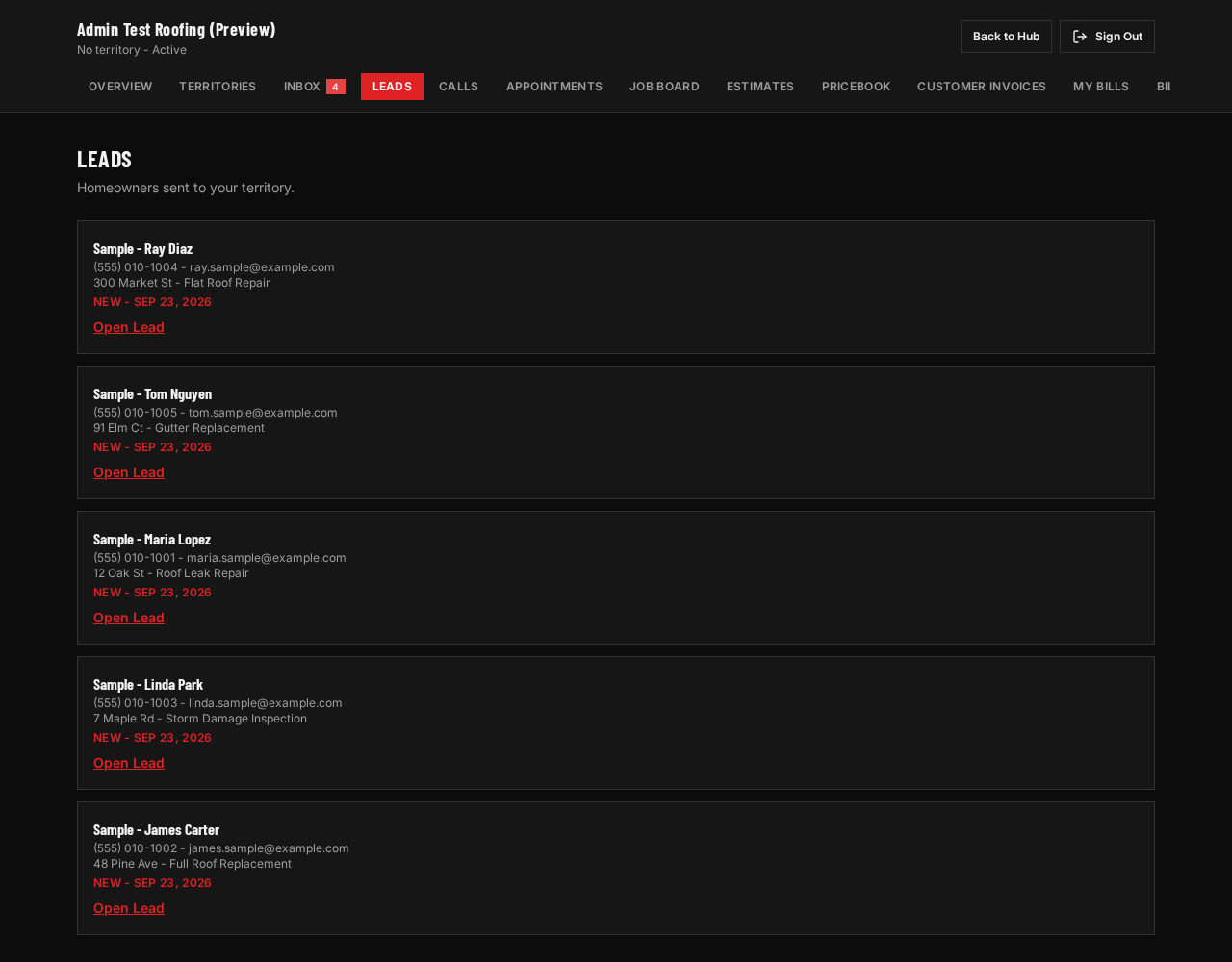
Every call, form, text, Facebook message, referral and door knock should land in one place. If your leads live in a notebook, two phones, an email inbox and a spreadsheet, you will lose some. Not because anyone is lazy, but because no one can see the whole picture.
Pick the one place. It can be a CRM, a shared spreadsheet, or even a whiteboard on day one. The rule is simple: if it is not in the list, it does not exist. Then make it easy to add leads. A form on your website should drop straight in. Your call tracking should log missed calls. Your team should be able to add a lead from a phone in under a minute.
Write down where each lead came from. Source is the single most useful field you will ever track. It tells you which marketing to keep and which to cut.
- Name, phone, address, ZIP
- Source (site, ad, referral, door knock)
- Problem: leak, storm, age, insurance, commercial
- Date and time it came in
- Who owns it
02Give every lead one owner and one deadline
A lead with two owners has no owner. Assign each new lead to one person the moment it lands. That person is responsible for the first call and for moving the lead to its next stage.
Set a callback rule your team can actually hit. Many roofers aim to call back new web leads within minutes during business hours, because homeowners often contact more than one company. Whatever rule you choose, track it. A simple column for 'first contact time' will show you fast who is keeping up.
After hours, send an automatic text that says who you are, that you got the message, and when someone will call. Then call when you said you would. Trust starts with that first promise.
03Use a short, fixed set of stages
You do not need sixteen stages. You need a handful that everyone understands the same way. A good starting set is: New, Contacted, Inspection set, Estimate sent, Won, Lost. Insurance and commercial work may add one or two more, such as Claim filed or Bid due.
Each stage should have a clear exit rule. 'Contacted' means you actually spoke to the person, not that you left a voicemail. 'Estimate sent' means the homeowner has a written number in hand. Clear rules make your reports honest.
Review the list every morning. Anything stuck in a stage too long gets a next step or gets closed out. Old leads clogging the board hide the fresh ones.
- New
- Contacted
- Inspection set
- Estimate sent
- Won
- Lost (with a reason)
04Separate sales from production
Once a job is sold, it becomes a production job with its own checklist: material order, permit, dumpster, crew date, inspection, final photos, collection. Mixing sales follow-ups and production tasks in one messy list is how materials get missed.
Hand off with a short form. The salesperson fills in roof type, squares, color, special items like skylights or chimneys, access notes and the homeowner's preferred contact method. Production should not have to call the homeowner to ask questions sales already answered.
If you already use a roofing CRM or production tool, use its job view for this. If not, a shared calendar and a one-page job sheet will carry you a long way.
05Put photos and paperwork in the job, not on phones
Photos are evidence. They protect you on insurance claims, warranty questions and payment disputes. Make it a rule that every inspection and every finished job gets photos saved to the job record the same day, not left in someone's camera roll.
Do the same with signed contracts, change orders, permits and warranty registrations. If a crew lead quits tomorrow, you should not lose a single document.
- Before, during and after photos
- Signed agreement
- Permit and inspection notes
- Material delivery slip
- Warranty registration
06Run your week with three numbers
Owners who stay organized look at a few numbers every week instead of a giant report every quarter. Start with three: new leads by source, inspections set, and jobs won. Add dollars sold once those three are reliable.
These numbers tell you where to act. Lots of leads but few inspections means your first call is weak or slow. Lots of inspections but few wins means pricing, presentation or follow-up needs work. Few leads means you need more demand, and no amount of software will fix that.
07Choose software last, and keep it small
Now that you know your stages, owners, hand-off and numbers, you can judge software honestly. Ask each vendor to show your exact process during the demo. Ask what it costs for your real number of users, what setup and training cost, and how you get your data out if you leave.
Many good tools exist, from roofing-specific CRMs to general field-service apps. The best one is the one your team will actually open every day. A simple tool used well beats a powerful tool nobody updates.
If you want to compare total cost against the cost of getting more leads, use our software versus territory calculator on the roofing CRM guide.
08A 30-day plan to put it all in place
Week one is about capture. Pick your one list, connect your web form and phone tracking to it, and move every open lead from notebooks, texts and inboxes into it. Do not try to clean old data perfectly; just get every live opportunity in one place with a name, phone, address and source. Tell the team that from Monday on, a lead that is not in the list does not exist.
Week two is about ownership and speed. Assign every open lead to one person. Write your callback rule on the wall. Turn on an after-hours text that tells homeowners who you are and when someone will call. Each morning, look at every lead that came in yesterday and check when it was first contacted. Praise the people who hit the rule and coach the ones who did not.
Week three is about stages and hand-off. Agree on your stage names and the exit rule for each. Build a one-page job sheet sales fills in when a job is sold, and require it before production schedules anything. Start saving photos and signed paperwork to the job record the same day. Week four is about numbers: start a simple weekly review of leads by source, inspections set, jobs won and dollars sold.
At the end of thirty days you will have something most roofing companies never build: a clear picture of where work comes from, where it gets stuck, and who is responsible for moving it. That picture is what lets you hire, add trucks, or spend more on marketing without the wheels coming off.
09Common mistakes that undo good systems
The first mistake is letting exceptions pile up. One salesperson keeps leads in his own phone because he has always done it that way, and soon two others do the same. Treat the one-list rule as non-negotiable, and make it easy to follow by giving everyone a quick way to add a lead from the field.
The second mistake is building too many stages, custom fields and automations in the first month. Every extra field is one more thing people skip. Start with the minimum and add only when a real problem shows up. The third mistake is reviewing numbers once a quarter. Weekly reviews catch a slipping callback rule or a dead lead source while you can still fix it.
The last mistake is assuming organization alone will grow the company. It protects the leads you have. Growth still needs a steady supply of new homeowners who are ready to talk to a roofer.
10What a missed lead really costs
A missed call is not just one lost job. It is the marketing money you spent to make the phone ring, the referral that job would have produced, and the review that would have helped you win the next one. When owners add those up, the true cost of a slow callback is usually much higher than they expected.
Use the calculator on this page with your own numbers. Enter how many calls and forms you get, how many slip through, your close rate and your average job. The result shows sales you never got the chance to quote. Then pick one change, like a shared lead list or an after-hours text, and measure the difference next month.
11Organizing as you grow from one crew to five
With one crew, the owner can hold most of the business in their head. With two or three crews, that stops working. Jobs overlap, materials arrive on different days, and the phone rings while you are on a roof. This is the stage where a written process stops being optional.
Add one role at a time. Many roofing companies first hire an office manager who owns the lead list, scheduling and paperwork. Next comes a dedicated salesperson, then a production manager who owns crews, materials and quality. Each role gets a clear list of what they own, so nothing falls between people.
Hold a short weekly meeting with each role. Sales reviews new leads and open estimates. Production reviews next week's schedule and material orders. The office reviews collections and paperwork. Fifteen focused minutes each beats a two-hour meeting nobody wants to attend.
As you add crews, standardize everything you can: job sheets, photo rules, safety checks and clean-up. Standards let new people do good work fast and let you check quality without being on every roof. That is how owners get their evenings and weekends back.
12Fix the demand side too
Organization multiplies what comes in. It cannot create leads out of nothing. Once your office can handle more work without dropping balls, the next question is where steady new calls will come from.
That is the part we work on. Rent Roofing Sites owns local roofing websites and tracking numbers. When a territory is open, one roofer rents it, and calls and forms from that site go to that roofer with the source attached. The lead can be delivered into the CRM you already use, so your new system stays the single list. We do not promise rankings or a set number of leads; your written agreement spells out the terms.