THE PROBLEMThe problem nobody puts in the demo
Missouri roofers deal with a little bit of everything. Spring storms roll in from Kansas and Oklahoma. Humid air from the south feeds them. Hail, high winds and heavy rain hit Kansas City, St. Louis, Springfield, Columbia, Joplin and the towns in between. The Missouri hail map rarely stays quiet for long once spring arrives.
Missouri also has a mix of housing that makes roofing interesting. St. Louis has older brick neighborhoods with steep roofs and decades of patch jobs. Kansas City has fast-growing suburbs like Lee's Summit, Blue Springs and Liberty. Springfield and the Ozarks have their own mix of older homes and new builds. A hail map shows none of that. It just shows color.
And every storm company in the region can see the same color. Kansas City sits right on the state line, so crews from Kansas can work Missouri suburbs in minutes. St. Louis draws crews from Illinois. Springfield is a short drive from Arkansas and Oklahoma. Missouri swaths fill up fast.
The core problem is the same as everywhere: a hail map is weather. It cannot tell you which homeowner wants a roofer, which one already signed, or which one is renting and cannot approve anything.
LET'S BE HONESTWhat it is really costing you
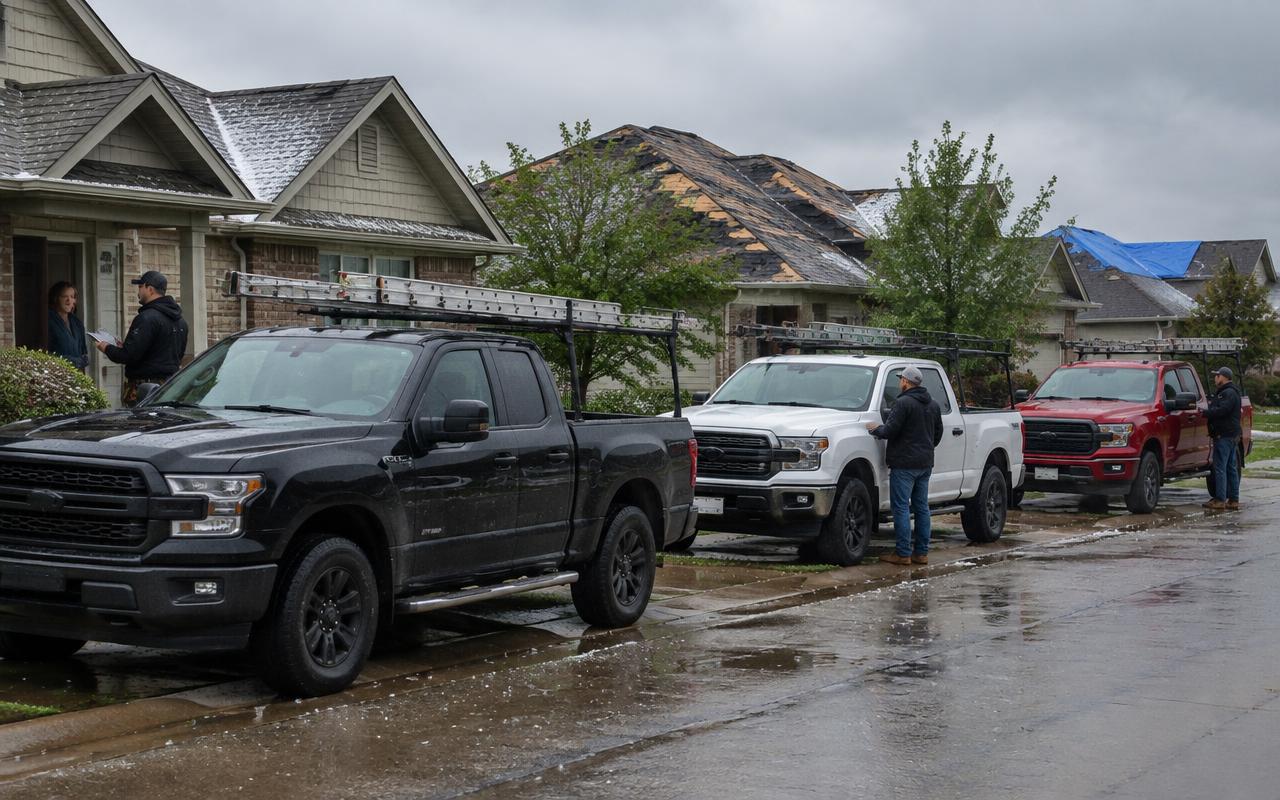
Picture a big storm in the south Kansas City suburbs. By the next afternoon, signs from out-of-state companies line the main roads. Door knockers work every subdivision. Homeowners get three pitches before dinner. Some stop answering the door. Your honest crew walks into that same wall of suspicion.
Or picture a storm in St. Louis County. Older homes, older roofs, homeowners who have seen contractors come and go. Many are wary of anyone knocking after a storm. They have heard the stories about deposits taken and crews never seen again. Your reputation helps, but only if they know it is you.
Then there is price. Crews passing through can bid low because they will not answer the phone next year. You have a local name to protect and warranties to honor. You can match their price and lose margin, or hold your price and lose the job.
When the season ends, the swaths are worked over and the crews move on. If your pipeline depended on chasing storms, it slows down right when you most want steady work.
THE FAILED FIXWhy more data never fixed it
The usual move is to buy more storm data: better hail swaths, faster alerts, address lists, canvassing apps. Missouri roofers often stack several of these subscriptions.
They help you plan. They do not help you stand alone. Your competitors buy the same tools, and many work across state lines with the same alerts. The swath becomes a starting gun, not an advantage.
No hail map tells you who wants help. No canvassing app makes a wary homeowner trust a stranger. Better data just makes the same hard race run faster.
THE REAL FIXOwn the call, not just the map
Be the roofer homeowners find on their own. After a Missouri storm, many homeowners search for roof repair, hail damage roof inspection, or roofer plus their town before anyone knocks. Whoever answers that search gets the call.
Rent Roofing Sites builds and ranks local roofing sites for specific towns, such as Lee's Summit, O'Fallon, Chesterfield, Nixa or Columbia. Calls and requests from each site route to one roofer, the company holding the territory. That homeowner is not sold to anyone else.
When the homeowner calls you first, the dynamic flips. You did not interrupt them. They asked for help. In a state where homeowners are wary of storm crews, that is a huge advantage.
01Why Missouri is crowded after storms
Missouri's two biggest metros both sit on state lines. Kansas City spans Missouri and Kansas. St. Louis sits across the river from Illinois. That means storm crews from two states can work the same neighborhoods within minutes of a swath appearing.
Add Springfield's closeness to Arkansas and Oklahoma, and you get a state where almost every good storm attracts outside crews. Being local only helps if homeowners can find you first.
02What Missouri hail maps really show
Most hail maps use NOAA NEXRAD radar, dual-polarization hail detection, hail size estimates and public storm reports. Missouri has good radar coverage around its major cities.
Good coverage still means estimates. Radar sees the storm in the air, not shingles on a house. Older roofs may show damage from smaller hail, while newer impact-resistant roofs may come through larger hail fine. The map cannot tell the difference.
- Radar shows likely hail areas, not roof-by-roof damage.
- Roof age and material change what hail does.
- No map shows ownership, intent or competitor activity.
03Older St. Louis roofs need honest roofers
Many St. Louis neighborhoods have older homes with steep roofs, multiple layers or past repairs. After a storm, it can be hard to separate new hail damage from years of wear. Homeowners need someone who will tell them the truth.
That is exactly the kind of roofer homeowners want to call, and exactly the kind of conversation that goes better when they called you. An inspection you were invited to do is calmer, more honest and more likely to lead to the right work.
04The real math of a Missouri storm push
Add up the full cost: map subscriptions, canvasser pay, fuel, signs, door hangers and the discounts you gave to beat low bids. Divide by signed jobs. Then compare with jobs that started from a homeowner calling you.
Inbound jobs usually cost less, close faster and hold better margins. That is the case for owning your town's inbound channel.
05How the exclusive territory works in Missouri
We build a local roofing website for your town and work to rank it for real homeowner searches. It has a local phone number and a short form asking for name, phone, property ZIP and roofing problem.
Each lead is saved the moment it arrives, then routed to the roofer holding the town. You see it in your portal, with a recording when available, and we can deliver it to your CRM, email or text where supported. We never sell that homeowner to other roofers.
06Two Missouri roofers, one April storm
Hail crosses Lee's Summit and Blue Springs. Roofer A sends reps into the swath the next morning. By midday, they are working beside crews from Kansas and two other states. Homeowners are polite but tired. A few inspections get booked.
Roofer B holds the Lee's Summit territory. That morning, homeowners searching hail roof inspection Lee's Summit find the local site and call. Every call goes to Roofer B. Her team spends the day booking inspections with homeowners who asked.
07Wind, rain and leaks between hailstorms
Missouri storms often bring heavy rain and strong wind with or without hail. Homeowners deal with leaks, lifted shingles and damaged flashing all year. Hail maps miss most of that.
A local site that answers roof repair and leak searches keeps your territory busy even when the hail map shows nothing.
08What the pilot does not promise
We do not guarantee a number of calls. Rankings take time and storms vary. We do guarantee exclusivity during the pilot, tracking for every routed lead, and written terms before any paid plan.
09Who should apply
Licensed and insured Missouri roofing companies that answer the phone, do honest inspections, and plan to be serving their town for years.
- Serves the Missouri town you want to hold.
- Responds quickly to inbound calls.
- Treats wary homeowners with patience and honesty.
10Three Missouri storm myths
Myth one: being local is enough. It helps, but only if homeowners know you are local before the crews knock. A ranked local site makes that clear.
Myth two: crews from across the state line will leave you the leftovers. They often take the easiest jobs first and push prices down on the rest.
Myth three: older neighborhoods are too hard to sell after storms. They are hard to sell cold. When the homeowner calls you, the conversation is much easier.
11Try this before you apply
Search roof repair plus your Missouri town. Count the true local roofers and the lead sellers who share homeowners with several companies. Imagine every caller from that search reaching only you. If that is worth testing, apply.
12Keep the map as background
Your hail tracker still helps you know when storms hit and talk with homeowners and adjusters. Just let it be background. Let homeowners who searched and called be your main lead source.
13Kansas City vs St. Louis: two different playbooks
Kansas City roofers often face newer suburbs, HOAs and crews crossing the state line from Kansas within minutes. Homeowners there tend to compare several companies quickly, and reviews matter a lot. A local site that shows real service details and a local number helps you stand out before the comparison even starts.
St. Louis roofers deal with more older homes, steeper roofs, past repairs and homeowners who have seen many contractors come and go. Patience and honest explanations win there. When those homeowners call you first, you have the time to walk them through what you found instead of fighting for their attention on the porch.
Springfield, Columbia and Joplin each have their own mix. That is why territories are built town by town, not as one big Missouri blanket.
14How a Missouri territory call reaches you
A homeowner in your town searches for help and finds our local site. They call the local number or fill out the short form. The lead is saved the moment it arrives, so even if your office is slammed after a storm, it cannot be lost. Then it routes to your company alone. You get the details in your portal and, where supported, in your CRM.
15What happens at the end of the pilot
When the pilot ends, you look at every call and form routed to you from your Missouri territory and decide whether it is worth keeping. If it is, any paid terms are written down for you to read before they start. If it is not, you walk away. There is no long contract to begin, and the leads you already received stay in your records.
16Your first call checklist
When a Missouri homeowner calls from your territory, start by saying who you are and where your office is. Ask what they noticed and when. Ask whether they own the home. Book a time that works for them, and text a confirmation with your name so they know who is coming.