THE PROBLEMThe problem nobody puts in the demo
A plain hail map shows where hail probably fell. A hail damage tracker goes a step further. It tries to estimate where that hail was big enough, or lasted long enough, to damage roofs. Some tools color areas by damage likelihood. Some score individual addresses. Some combine hail size with roof age or property data.
For a roofer, that sounds like exactly what you want: not just weather, but damaged roofs. A damage map feels like a list of jobs waiting to be sold.
But here is the honest truth. A damage tracker is still a model. It takes radar estimates, adds assumptions about what hail does to roofs, and produces a probability. It cannot climb a ladder. It cannot see the bruise under a granule. It cannot tell you who owns the house, whether they care, or whether a competitor signed them yesterday.
And because damage trackers are sold to many roofers, the high-damage zones on your screen are the high-damage zones on everyone's screen. The map that tells you where to go tells your competitors the same thing.
LET'S BE HONESTWhat it is really costing you
Picture a storm night. Your damage tracker turns a neighborhood deep red. You send reps at dawn. By ten in the morning they are tripping over crews from three other companies, all holding the same red map. Homeowners get knocked five times before lunch.
Then the inspections start, and reality shows up. Some red-zone roofs have clear damage. Some have very little. Some are new impact-resistant shingles that came through fine. Meanwhile, a few streets outside the red zone, homeowners with real damage never got a knock because the map said yellow.
Each wasted inspection costs time and trust. Each homeowner told your roof is fine after a stranger knocked becomes more skeptical of the next roofer. And each red zone squeezes prices as competitors fight over the same doors.
The tracker did its job: it estimated damage. It just was never built to find homeowners who want you.
THE FAILED FIXWhy more data never fixed it
When damage trackers fall short, many roofers buy a more advanced one: finer resolution, more property data, address-level damage scores, owner contact info. Each upgrade makes the map look more like a lead list.
But a sharper probability is still a probability. More property data does not create homeowner intent. And competitors can buy the same upgrades, so the red zones stay crowded.
Damage trackers are useful for planning and for supporting a real inspection. As your main lead source, they keep you in the most crowded part of the market.
THE REAL FIXOwn the call, not just the map
The surest signal of roof damage is a homeowner who noticed a problem and asked for help. After a storm, many homeowners spot granules in the gutters, dents on vents, a missing shingle or a new leak. They search for hail damage roof repair, roof inspection, or roofer plus their town. Then they call.
Rent Roofing Sites builds and ranks local roofing websites for specific towns. Calls and requests route to one roofer, the company holding that territory. That homeowner is not sold to anyone else.
When the homeowner calls, the damage tracker becomes what it should be: background for an inspection the homeowner asked for, not a guess you pay to chase.
01How hail damage trackers work
Most damage trackers start with radar-based hail estimates from NOAA's NEXRAD network, such as estimated maximum hail size. Some add public storm reports. Then they apply rules or models: for example, hail above a certain size is more likely to damage asphalt shingles, and longer-lasting hail is more likely to cause damage than a brief burst.
Some tools add property data like roof age or building type to adjust the estimate. The result is a damage likelihood shown as colors or scores.
- Input: radar hail estimates and storm reports.
- Model: assumptions about what hail does to roofs.
- Output: a probability, not an inspection.
02Why 'damage' on a map is still a guess
Real roof damage depends on many things a map cannot see: the exact size and density of hailstones at that house, wind direction during the storm, roof age, shingle type, roof slope and how well the roof was installed. Two houses on the same street can fare very differently.
That is why honest roofers always say the same thing: the map is a clue, the inspection is the answer.
03What homeowners notice after hail
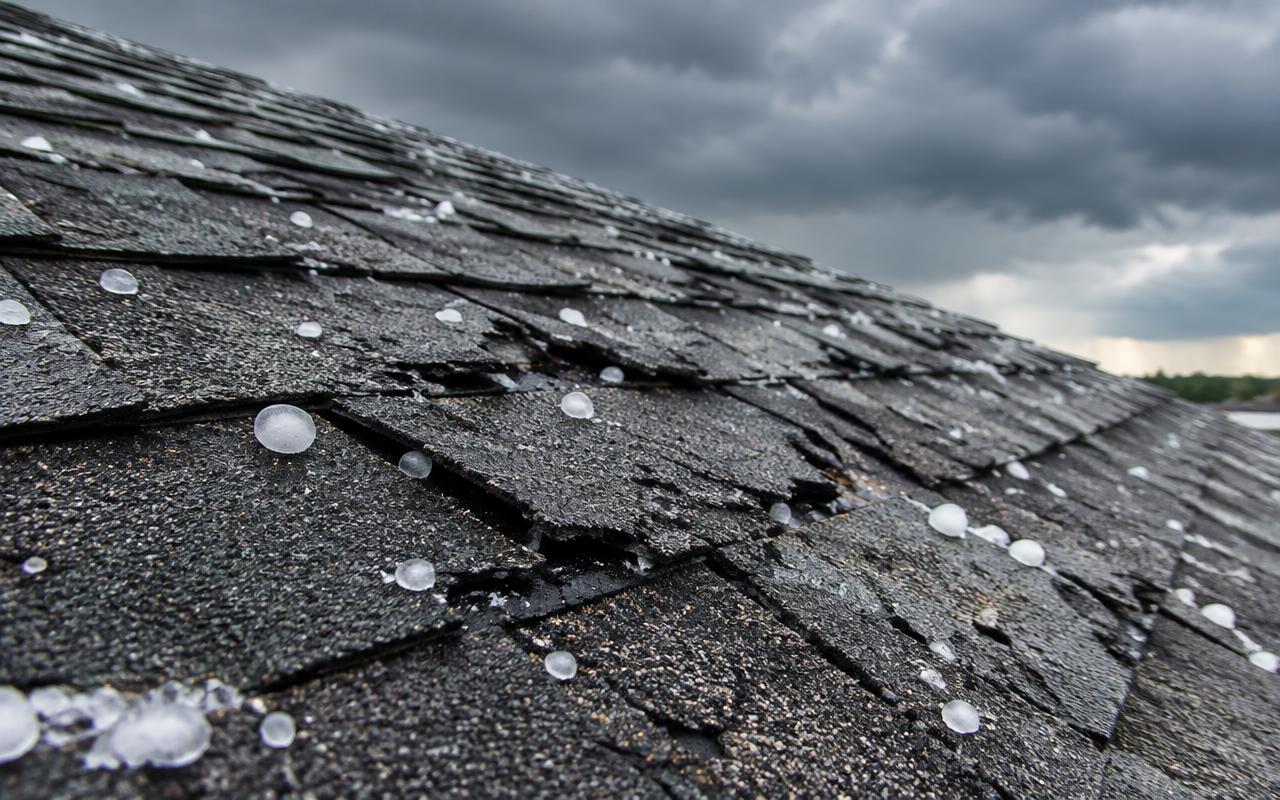
Homeowners often notice signs before any roofer knocks: dents on gutters, downspouts or mailboxes, granules collecting at the bottom of downspouts, dings on vents or skylights, damaged siding or screens, or a new stain on a ceiling.
When they see these signs, many search for help. That search is a much stronger signal than any damage model, because the homeowner is looking at their own property.
04The real cost of chasing red zones
Add up the tracker subscription, canvasser pay, fuel, signs, wasted inspections on undamaged roofs and the discounts you gave to beat competitors in crowded zones. Divide by signed jobs.
Compare that with jobs that started from a homeowner calling you. For most roofers, inbound wins on cost, close rate and margin.
05How the exclusive territory works
We build a local roofing website for your town and work to rank it for real homeowner searches. It has a local number and a short form asking for name, phone, property ZIP and roofing problem.
Every lead is saved the moment it arrives, then routed to the roofer holding the town. You see it in your portal, with a recording when available, and we can deliver it to your CRM, email or text where supported. That homeowner is never sold to another roofer.
06Two roofers, one red zone
Roofer A sends four reps into a deep-red zone. They knock two hundred doors, book a dozen inspections, and find real damage on about half. Several of those homeowners are also talking to competitors.
Roofer B holds the territory next door, which the tracker colored yellow. Her phone rings with homeowners who found dented gutters and granules and searched for an inspection. Most of them have real damage, because they saw it themselves. She did not need a red map to find them.
07Using a damage tracker the right way
Damage trackers are useful once a homeowner calls. They help you understand the storm, set expectations before the inspection, and support your documentation if the homeowner decides to talk with their insurance company.
Be honest about what the tracker shows. Tell the homeowner it is an estimate, and let your inspection photos tell the real story.
08What the pilot does not promise
We do not promise a number of calls. Rankings take time and storms vary. We promise exclusivity during the pilot, tracking of every routed lead, and written terms before any paid plan.
09Who should apply
Licensed and insured roofing companies that do honest inspections, answer calls quickly, and want homeowners who already suspect damage to reach them first.
- Serves the town you want to hold.
- Documents inspections with clear photos.
- Tells homeowners the truth, even when damage is minor.
10Three damage-tracker myths
Myth one: red means damaged. Red means likely. Plenty of red-zone roofs are fine, and plenty of yellow-zone roofs are not.
Myth two: a better model means better leads. A better model means a better estimate of weather impact. It still knows nothing about homeowner intent.
Myth three: homeowners cannot spot hail damage. Many can spot the signs around it, like dented gutters and granules. When they do, they search, and that search is your best lead.
11Try this before you apply
Search hail damage roof inspection plus your town. Look at who answers. Imagine every homeowner from that search, people who already suspect damage, calling only you. If that is worth testing, apply.
12Keep the tracker, change its job
You can keep your damage tracker for planning and inspection prep. Just stop making it your lead source. Let homeowners who noticed damage and called become your pipeline.
13What to tell a homeowner who saw a damage map
More homeowners now look at hail damage maps themselves before they call a roofer. Some arrive convinced their roof is ruined because their street was red. Others assume they are fine because their street was yellow.
Be the roofer who explains it simply. The map is an estimate of where damage was likely. The inspection is what tells you about your roof. Then show them the photos. That honest explanation is often the moment a homeowner decides to trust you with the job.
14How a territory lead reaches you
A homeowner in your territory notices dents, granules or a leak and searches for help. They find our local site and call or fill out the short form. The lead is saved the moment it arrives, then routed only to your company. You see it in your portal, with a recording when available, and can receive it in your CRM where supported.
15What happens at the end of the pilot
When the pilot ends, you look at every call and form routed to you from your local territory and decide whether it is worth keeping. If it is, any paid terms are written down for you to read before they start. If it is not, you walk away. There is no long contract to begin, and the leads you already received stay in your records.
16Your first call checklist
When a homeowner calls about possible hail damage, ask what they saw: dents on gutters or vents, granules at the downspouts, damaged siding or screens, a leak or a stain. Ask when the storm was. Ask whether they own the home. Then book an inspection and check the storm history for that date before you arrive.
At the visit, compare what the homeowner noticed with what you find on the roof. Show photos of both. When the evidence lines up, the conversation about next steps is easy. When it does not, say so honestly. Either way, you leave as the roofer they trust.
After the visit, send the homeowner a short summary with your photos and the storm date. If they decide to talk with their insurance company, they will already have clear, honest documentation in hand, and they will remember who gave it to them.
If the roof turns out to be fine, tell the homeowner plainly and show them why. Suggest what to watch for after the next storm. Many roofers skip this step, but it is the one homeowners talk about. The next time something happens to their roof, or a neighbor asks for a name, yours is the one they share.