THE PROBLEMThe problem nobody puts in the demo
ZIP-code hail trackers are popular for a good reason. They turn a messy storm map into a simple list. These ZIPs got hail. These got big hail. Send the crew here first. For planning, that is handy.
But think about who else is reading that list. Every storm company with the same tracker sees the same ZIPs ranked the same way. The hottest ZIP after a storm becomes the most crowded ZIP by the next morning.
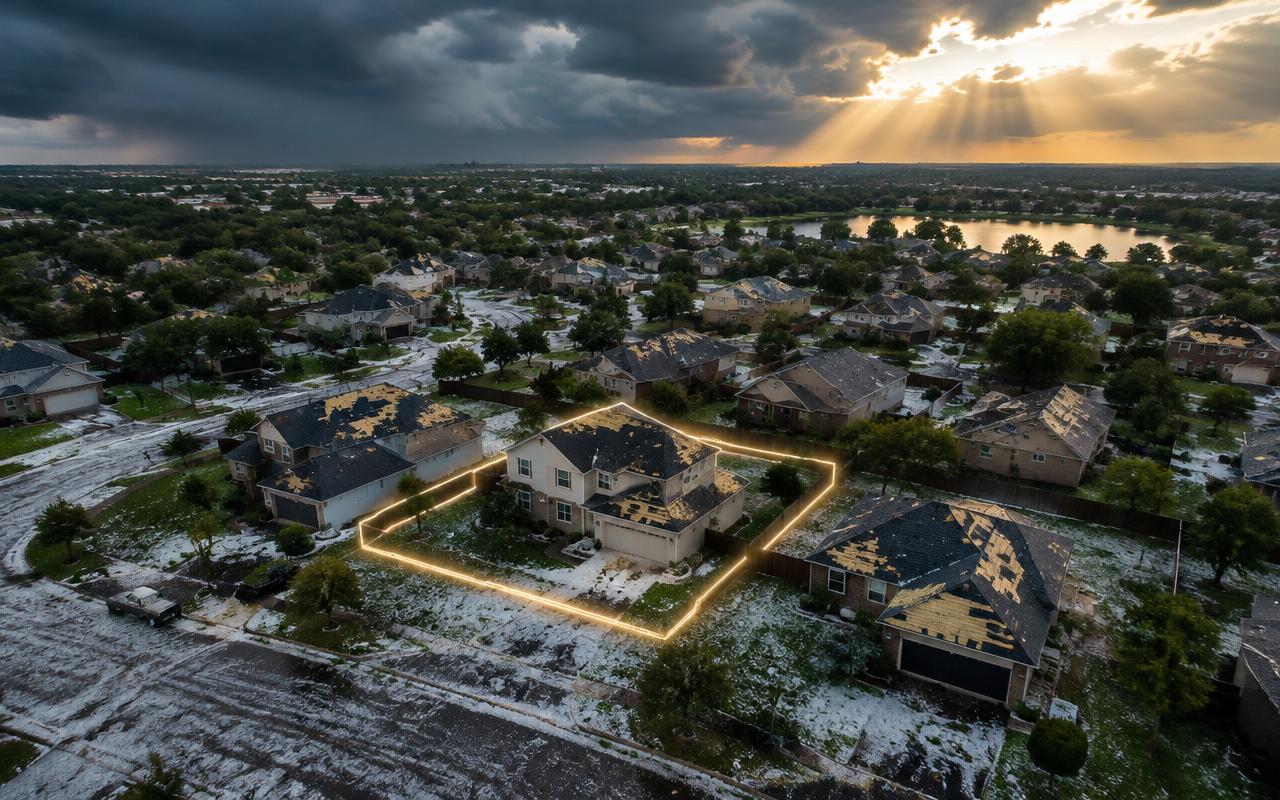
And a ZIP is big. It can hold thousands of homes. The tracker cannot tell you which of those homes were damaged, which owners want help, or which already signed with someone. It just tells you hail was reported somewhere in the ZIP.
So ZIP trackers create a race. Everyone runs to the same ZIPs, knocks the same doors and fights over the same homeowners. Winning that race costs more every year.
LET'S BE HONESTWhat it is really costing you
You have probably lived this. A storm hits. The ZIP report shows three red ZIPs. You send reps. So does everyone else. By day two, every door in those ZIPs has hangers from four companies. Homeowners start ignoring the doorbell.
You drive across town, burn fuel and pay canvassers to compete in a ZIP you might not even normally serve. Your home ZIPs, where your reputation is strongest, sit unattended because the storm skipped them.
When the hot ZIPs cool off, the crowd moves on and so does your pipeline. You are back to watching the tracker for the next red ZIP.
This is the core frustration: you are always reacting to weather instead of building something that brings homeowners to you.
THE FAILED FIXWhy more data never fixed it
The common answer is a faster or more detailed tracker: alerts by ZIP the moment hail is reported, ZIP-level history going back years, rankings of the best ZIPs to canvass.
All of that sharpens the race. None of it lets you leave the race. Your competitors can subscribe to the same ZIP alerts. The ZIP still has no idea which homeowner wants you.
Data about ZIP codes is not ownership of a ZIP code. That is the difference that matters.
THE REAL FIXOwn the call, not just the map
Instead of chasing whichever ZIP got hit, own a territory and let its homeowners find you. When people in that area search for roof repair, hail damage help or a local roofer, our local site answers. Calls and requests route to one company: you.
Rent Roofing Sites builds and ranks local roofing sites for specific towns and service areas. The roofer who holds the territory receives the inbound calls and forms from it. We do not split those homeowners among several roofers.
Now storms help you instead of crowding you. When hail hits your territory, more homeowners search, and they reach you. When hail hits elsewhere, you keep getting repair and replacement calls at home.
01How ZIP-code hail trackers are built
Most ZIP hail trackers start with NOAA radar and public storm reports, then summarize the results by ZIP boundary. Some show the largest estimated hail in each ZIP, some show how much of the ZIP fell inside a swath, and some keep years of ZIP history.
That makes them good for planning and for understanding which areas see frequent hail. It does not make them good at finding willing homeowners. A ZIP report has no idea who lives in each home or what they want.
- Good for: storm planning, history, rough targeting.
- Weak for: knowing which roofs were damaged.
- Silent on: homeowner intent and competitor activity.
02Why ZIPs are a poor unit for selling
ZIP codes were made for mail delivery, not roofing. One ZIP can include a new subdivision with fresh roofs, an older neighborhood near the end of its roof life, apartments where tenants cannot approve work, and commercial strips. Treating all of it as one target wastes effort.
A town or service area with a local website lets homeowners self-select. The ones who need help search and call. You stop guessing which part of the ZIP to work.
03The real cost of chasing hot ZIPs
Add your tracker subscription, canvasser pay, fuel, door hangers and any discounts you gave to beat competing bids in a hot ZIP. Divide by signed jobs from that ZIP. Then compare with jobs from homeowners who called you directly.
For most roofers, the inbound jobs are cheaper and more profitable, even before counting the hours saved.
04How an exclusive territory works
We build a local roofing site for your territory and work to rank it for real searches. Each site has a local number and a short form asking for name, phone, property ZIP and roofing problem. Every lead is saved first, then routed to the roofer holding the territory.
You see each lead in your portal, and we can deliver to your CRM, email or text where supported. Your territory's leads do not go to other roofers.
05Storms become a bonus, not a race
When hail hits your territory, more homeowners search for help, and they reach you. You do not need to win a race against trucks from other states, because the homeowners who reach out are calling your number.
When storms miss your territory, you are not forced to chase ZIPs across the metro. Your local site keeps answering repair, leak and replacement searches at home.
06Honest limits
We do not guarantee a number of calls. Rankings take time and demand varies by town and season. We do guarantee exclusivity during the pilot, tracking for every routed lead, and written terms before any paid plan.
07Who should apply
Established roofing companies that want to build a steady local pipeline instead of chasing storms across ZIP codes. Companies with proper licensing and insurance and a team that answers the phone quickly.
- Serves the territory you want.
- Can respond to calls quickly.
- Wants long-term local reputation, not a one-season push.
08Keep your ZIP tracker for context
A ZIP hail tracker is still useful for knowing when storms hit your territory and for history during inspections. Use it as background. Let homeowners who searched and called be your main lead source.
09Next step
Choose the area you want to own. Apply for the Free Exclusive Territory Pilot. We will tell you honestly whether it is open and walk you through what happens next.
10Two roofers, one red ZIP
A storm turns one ZIP code bright red on every tracker. Roofer A sends his whole team there, forty minutes from his shop. They work the ZIP for a week alongside six other companies. Margins get thin. Several jobs are signed, but at prices he would never accept at home.
Roofer B does not chase the red ZIP. She holds a territory closer to home. Her local site keeps ringing with repair, leak and inspection calls from her own area all week. When hail hits her territory a month later, more homeowners search and call, and those calls go to her office.
Roofer A had a busy week. Roofer B built a business. That is the difference between racing ZIPs and owning a territory.
11Why local roots beat storm reach
Homeowners prefer roofers who are close by. They want someone who can come back quickly if something goes wrong, who knows local codes and suppliers, and who their neighbors have used.
Chasing distant ZIPs throws away that advantage. Owning a territory near your shop makes it your strongest selling point.
12How to choose a territory to apply for
Start with the area where you already do your best work: close to your shop, where your crews know the streets and your reviews come from. Think about whether your team can respond quickly to every call there.
Then apply. We will tell you whether that area is open and how the territory is defined. If it is taken, we will tell you that too, and you can join the waitlist or pick another nearby area.
13What you will see in your portal
Every routed call and form shows up in your roofer portal with the homeowner's details, the roofing problem, the time it came in and a recording when available. You can mark what happened: contacted, appointment, estimate, won or lost.
That makes it easy to judge the pilot with real numbers from your own territory, not promises.
14How a territory lead reaches you
A homeowner inside your territory searches for roof help and finds our local site. They call the local number or fill out a short form with their name, phone, property ZIP and roofing problem. The lead is saved the moment it arrives so it cannot be lost. Then it routes to your company and nobody else from us.
You get the details in your roofer portal, with a recording when available. We can also deliver the lead to your CRM, email or text where supported. If a delivery to your CRM ever fails, the lead stays safe in our system and still shows in your portal.
There is no ZIP report to check and no route to plan. The homeowner already told you where they live and what they need.
15What happens at the end of the pilot
When the pilot ends, you look at the calls and forms routed to you and decide whether the territory is worth keeping. If it is, any paid terms are written down for you to review before they start. If it is not, you walk away. No long contract to begin.
16Three ZIP-code myths
Myth one: the reddest ZIP is the best ZIP. Often it is the most crowded ZIP, which means lower trust and thinner margins.
Myth two: you have to follow hail to stay busy. Repair, leak and replacement searches happen every week in every town. A territory that answers them keeps you busy without chasing.
Myth four: you need a ZIP tracker to know when hail hits your own territory. Your phone will tell you. When hail lands in your town, more homeowners search and more of them call. The tracker can confirm the storm date, but the calls tell you where the work is. That is a much better signal than a red square on a map.
Myth five: owning a territory means giving up storm work. It means the opposite. Storms inside your territory bring more calls to you, without a race.
Myth three: a bigger area is always better. A territory you can serve fast and well beats a huge area where callbacks take days. Homeowners reward quick, local service.